


Pollution and Environmental Testing – METS Laboratories
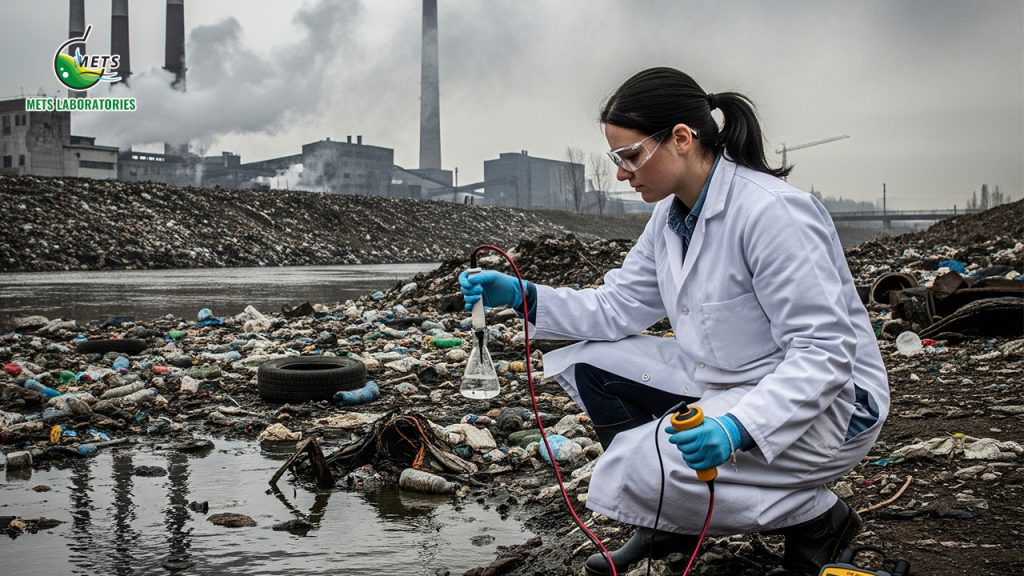
Pollution and environmental testing are critical for safeguarding ecosystems, human health, and regulatory compliance. By partnering with an accredited laboratory for routine pollution and environmental testing, industrial facilities can proactively identify contamination and avoid costly regulatory penalties. As industrialization and urbanization accelerate, monitoring air, water, soil, and waste becomes essential to mitigate contamination risks. Environmental testing evaluates physical, chemical, and biological parameters to detect pollutants, assess ecological impacts, and enforce sustainable practices.
Pollution testing covers a wide range of contaminants, including heavy metals, volatile organic compounds (VOCs), pesticides, microplastics, and biological pathogens. These analyses help industries, governments, and researchers implement corrective actions, comply with environmental laws, and promote conservation efforts.
Core Global Importance of Pollution and Environmental Testing
- Protection of Human Health
Environmental testing plays a crucial role in safeguarding public health by detecting hazardous pollutants that pose significant risks to human well-being. Substances like lead and arsenic can accumulate in the body over time, causing irreversible damage to vital organs and nervous systems. Fine particulate matter (PM2.5) penetrates deep into lung tissue, exacerbating respiratory conditions like asthma and COPD, while benzene exposure is directly linked to leukemia. Through comprehensive testing programs, environmental scientists can identify contamination hotspots in air, water, and soil, allowing for targeted interventions such as water filtration upgrades, emission controls, and public health advisories. This proactive approach significantly reduces population-wide exposure to dangerous contaminants before they can cause widespread health crises. - Ecosystem Preservation
Modern industrial and agricultural activities generate complex pollutants that threaten ecological balance. Heavy metals from manufacturing, pesticide runoff from farms, and microplastics from consumer waste disrupt aquatic food chains and degrade terrestrial habitats. Environmental testing provides the scientific basis for ecosystem protection by quantifying pollutant levels in water bodies, soil, and air. This data enables conservationists to identify vulnerable species, implement protective measures for critical habitats, and track the effectiveness of restoration projects. Regular monitoring is particularly vital for wetlands, coral reefs, and old-growth forests that serve as biodiversity hotspots and natural carbon sinks. - Regulatory & Legal Compliance
Stringent environmental regulations form the backbone of pollution control efforts worldwide. The Clean Air Act, Clean Water Act, and Hazardous Waste Rules establish legally enforceable standards that industries must meet. Environmental testing provides the objective evidence needed to demonstrate compliance, with accredited laboratories generating legally defensible data. Non-compliance can trigger severe consequences including daily penalty fees, operational shutdowns, and criminal liability for corporate officers. Beyond avoiding penalties, rigorous testing helps industries maintain their social license to operate by demonstrating environmental responsibility to stakeholders and communities. - Pollution Source Identification
Modern environmental forensics combines advanced analytical techniques with investigative methodologies to pinpoint pollution sources. Isotopic fingerprinting, chemical profiling, and air dispersion modeling can distinguish between multiple potential contaminant sources in complex industrial areas. This capability is particularly valuable for addressing legacy pollution issues and allocating cleanup responsibilities. In cases of environmental accidents like oil spills or chemical releases, rapid source identification enables more effective emergency response and helps establish liability for damages. The resulting data also informs better urban planning and industrial zoning decisions to prevent future contamination issues. - Climate Change Mitigation
Accurate measurement of greenhouse gas emissions forms the foundation of effective climate action strategies. Environmental testing quantifies emissions from industrial processes, energy generation, and agricultural activities, enabling organizations to identify reduction opportunities. This data supports carbon trading programs, helps nations meet their Paris Agreement commitments, and validates corporate sustainability claims. Advanced monitoring techniques can even detect methane leaks from pipelines and landfills – a critical capability since methane has 84 times the global warming potential of CO₂ over 20 years. Continuous emissions monitoring systems are now becoming standard at major industrial facilities worldwide. - Sustainable Industrial Practices
Environmental testing drives innovation in industrial processes by providing the metrics needed to evaluate cleaner production methods. Life cycle assessments based on testing data help companies minimize waste, reduce energy consumption, and design products for recyclability. In the circular economy context, material purity testing enables safe reprocessing of waste streams into new raw materials. Many industries now use environmental testing data to earn sustainability certifications, qualify for green financing, and gain competitive advantage with environmentally conscious consumers. This transformation is creating new business models where waste from one process becomes feedstock for another, dramatically reducing overall environmental impacts.
Primary Compliance Purpose of Pollution and Environmental Testing
- Pollution Monitoring – Tracks industrial, vehicular, and urban emissions.
- Risk Assessment – Evaluates health and ecological hazards from contaminants.
- Compliance Verification – Ensures adherence to environmental laws.
- Research & Policy Development – Supports scientific studies and regulatory frameworks.
- Remediation Planning – Guides cleanup of contaminated sites.
Broad Classification of Pollution and Environmental Testing Matrixes
Type | Description |
Air Quality Testing | Measures pollutants (PM2.5, PM10, CO, SO₂, NO₂, O₃, VOCs) in ambient, indoor, and industrial air |
Water Quality Testing | Analyzes drinking water, wastewater, and surface water for contaminants (heavy metals, bacteria, chemicals) |
Soil & Sediment Testing | Detects pollutants (pesticides, hydrocarbons, heavy metals) affecting agriculture and ecosystems |
Noise Pollution Testing | Monitors industrial, traffic, and urban noise levels |
Waste & Hazardous Material Testing | Evaluates industrial, biomedical, and electronic waste for safe disposal |
Biodiversity & Ecotoxicity Testing | Assesses the impact of pollutants on plants, animals, and aquatic life |
Industrial Applications of Pollution and Environmental Testing
- Public Health Protection – Ensures safe air, water, and soil to prevent diseases.
- Regulatory Compliance – Meets EPA, CPCB, WHO, and other global standards.
- Industrial Pollution Control – Monitors emissions and effluents from factories.
- Remediation & Cleanup – Guides decontamination of polluted sites (brownfields, oil spills).
- Climate Change Studies – Tracks greenhouse gases and carbon footprints.
- Sustainable Development – Supports eco-friendly urban planning and industrial growth.
Key Pollution and Environmental Testing Parameters & ISO Standards
Parameter | ISO Standard |
Particulate Matter (PM2.5/PM10) | ISO 23210 |
Sulfur Dioxide (SO₂) | ISO 10498 |
Nitrogen Dioxide (NO₂) | ISO 6768 |
Volatile Organic Compounds (VOCs) | ISO 16000-6 |
Parameter | ISO Standard |
Heavy Metals (Pb, Hg, Cd) | ISO 5667 |
Microbial Contamination (E. coli) | ISO 9308 |
Pesticides & Herbicides | ISO 6468 |
Parameter | ISO Standard |
Petroleum Hydrocarbons | ISO 16703 |
Heavy Metals (As, Cr, Ni) | ISO 11047 |
Parameter | ISO Standard |
Industrial Noise Levels | ISO 9612 |
Traffic Noise Monitoring | ISO 1996 |
What Pollution and Environmental Testing Capabilities METS Laboratories Offers
NABL accredited, METS LABORTORIES INDIA PVT.LTD can test to a variety of the established methods (e.g., ISO, ASTMD, AOAC, APHA, FSSAI, BIS,)
- Our laboratory conducts testing on a wide range of products, materials, and components to verify compliance with standards, specifications, and regulatory requirements. Our team is happy to provide expert advice and guidance to ensure the appropriate water testing is carried out for your needs.
- Our dedicated, experienced, and friendly team is here to help—providing expert knowledge, guidance, and access to cutting-edge water testing capabilities and technologies in our laboratory.
- We conduct comprehensive product evaluations for appearance, quality, and performance. Our technical support network provides expert guidance—answering questions, interpreting results, and assisting with quality assurance program management.
- We participate in inter-laboratory proficiency testing and comparative analyses to ensure accuracy, reliability, and compliance with industry standards.
- We implement and maintain rigorous ISO/IEC 17025:2017 accreditation, ensuring internationally recognized standards for testing competence, measurement accuracy, and operational excellence in every analysis.
- We maintain strict customer confidentiality by treating all data as proprietary information.
- AccreditedISO/IEC 17025:2017 compliant services
- End-to-end environmental monitoring and sampling
- Customized test plans for industry, agriculture, urban planning, and residential safety
- Advanced instrumentation: GC-MS, ICP-OES, AAS, HPLC, FTIR, etc.
- On-site sampling by trained professionals
- Digital reports with compliance interpretation
- Emergency testing and quick-turnaround options
Beyond numbers, we offer peace of mind by delivering science you can trust and reports you can act on.
What Our Comprehensive Analytical Workflow Ensures
- Data Integrity: Every result is generated and verified under strict quality assurance.
- Compliance: All tests conform to the latest regulatory and industry-specific guidelines.
- Transparency: Clear, easy-to-understand reports and consultation support.
- Confidentiality: Your data remains secure, private, and protected.
- Environmental Stewardship: Our labs follow eco-friendly practices and aim to minimize testing-related waste and emissions.
Who Needs Our Accredited Pollution and Environmental Testing Services?
- Industrial Facilities: To monitor effluents, emissions, and workplace safety
- Construction and Real Estate: For soil contamination, water logging, and indoor air quality
- Municipal Corporations: To assess urban air and water quality
- Schools, Hospitals & Hotels: For ensuring safe indoor environments
- Agricultural Communities: To test irrigation water and soil health
- NGOs & Research Institutions: For pollution studies and policy advocacy
- Citizens & RWAs: For local monitoring and complaint-based testing
Protect Consumers. Satisfy Authorities. Boost Market Confidence.
In today’s sustainability-driven world, businesses are held accountable by customers, investors, and regulators alike. METS Laboratories empowers you to:
• Protect your workforce and surrounding communities
• Achieve compliance with CPCB, SPCB, MoEF&CC, WHO, and ISO standards
• Build a reputation as an environmentally responsible brand
• Avoid costly penalties and legal action due to non-compliance
• Earn stakeholder trust with verified environmental claims and ESG reporting
Environmental testing isn’t just a legal formality—it’s a strategic asset.
Frequently Asked Questions
How do I book a test?
You can contact METS Laboratories via phone, email, or our website to schedule sampling or drop off a sample at our facility.
Is your lab accredited?
Yes, METS Laboratories is accredited under ISO/IEC 17025:2017.
How long does it take to get results?
Turnaround time depends on the parameters, but standard reports are typically delivered within 3–7 working days.
Do you provide on-site sampling?
Yes, we have trained field teams who follow strict SOPs for on-site sample collection.
Can I get help understanding the report?
Absolutely. We offer report interpretation and guidance on corrective actions or next steps.
What locations do you serve?
We serve clients across India and can coordinate with international partners when required.
Can you help with regulatory approvals?
Yes, our test reports are accepted by government authorities, and we can assist in documentation for environmental clearances.