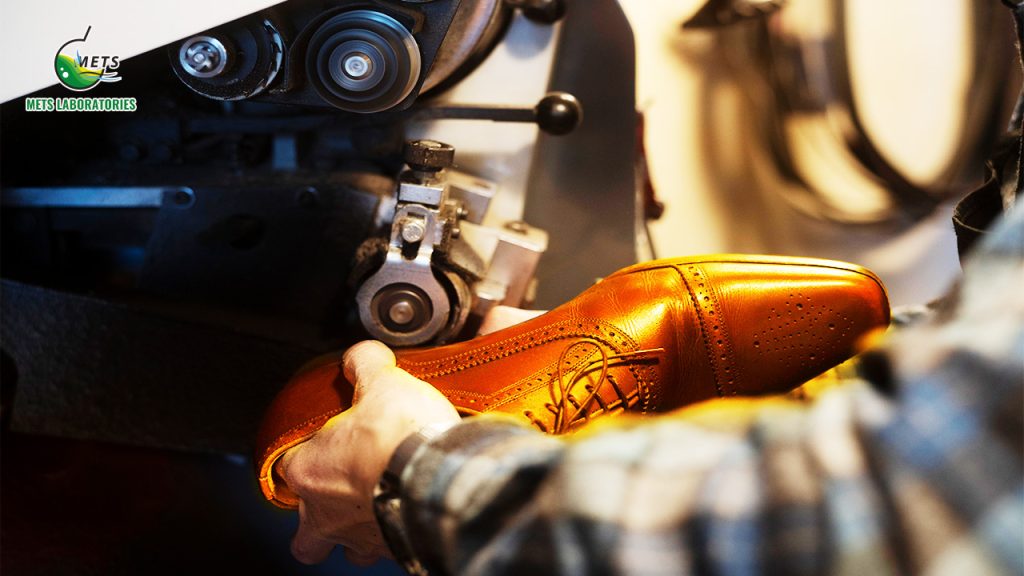
Footwear and Leather Product Testing – METS Laboratories
Footwear and leather product testing is a systematic process used to evaluate the performance, quality, safety, durability, and comfort of footwear products. This specialized testing ensures that shoes and leather goods meet both customer expectations and regulatory requirements. By performing footwear and leather product testing at different stages of development—from prototypes to mass-produced units—manufacturers can effectively maintain brand reputation and consumer safety.
The Importance of Footwear and Leather Product Testing
Footwear testing is essential to ensure product quality, safety, comfort, and durability. It helps manufacturers meet regulatory standards, reduces the risk of product failure or injury, enhances customer satisfaction, and protects brand reputation.
Footwear testing plays a crucial role in the design, production, and sale of all types of shoes—from athletic and casual footwear to industrial safety boots. It ensures that shoes not only look good but also perform reliably, safely, and comfortably in real-world conditions.
Footwear testing verifies that materials, construction, and final products meet high-quality standards. It checks for:
Durability – How long the shoe lasts under normal or extreme usage.
Material Integrity – Ensures soles, uppers, laces, and other components perform as expected.
Craftsmanship Consistency – Identifies defects in stitching, bonding, and finishing.
Without testing, poor-quality footwear could reach consumers, resulting in dissatisfaction, complaints, and brand damage. Footwear must protect the wearer, especially in environments with safety risks. Testing helps prevent injuries caused by:
Slips or falls due to poor grip.
Crushed toes from dropped objects (in safety shoes).
Electrical shocks in hazardous workplaces.
Chemical exposure from harmful substances in materials.
Safety-related tests (like slip resistance, toe impact, or puncture resistance) are legally required for certain types of shoes.
Purpose and Benefits of Footwear and Leather Product Testing
The purpose of footwear testing is to evaluate the performance, safety, durability, and quality of shoes to ensure they meet specific standards and user expectations. safety and compliance to ensure the footwear meet industry standard . Critical for occupational footwear (e.g., steel-toe boots, anti-slip soles)
Performance Evaluation Tests how shoes perform under real-world conditions (e.g., walking, running, sports). includes grip, cushioning, flexibility, breathability, and water resistance.
Durabitity and wear resistance Assesses resistance to wear and tear over time. Involves outsole wear tests, abrasion tests, and sole bonding strength.
Comfort and Fit Ensures proper ergonomic design .Evaluates insole support, pressure distribution, and thermal comfort.
Material Quality Tests the quality of materials (leather, synthetic, rubber, etc.) Looks at tensile strength, colorfastness, tear resistance, and aging. Looks at tensile strength, colorfastness, tear resistance, and aging.
Consumer Satisfaction and Brand Reputation Ensures the product delivers on promised features. Reduces the risk of returns, complaints, and negative reviews.
Product Development and Innovation Helps R&D teams improve future footwear designs. Identifies material or design weaknesses early.
Comprehensive Types of Footwear and Leather Product Testing
We offer a comprehensive range of tests across various parameters, categories, and product types:
These tests evaluate the structure and durability of the footwear.
Physical testing of leather involves evaluation its mechanical and aesthetic properties to ensure durability, quality and suitability for intended application. These test include assissing tensile strength, tear resistance, flexing endurance colorfastness abrasion resistance among others . They are crucial for manufacturing to meet industry standard, comply with regulation and ensure customer satisfaction.
# Tensile strength measures the leather ‘s ability to with stand pulling forces before breaking. indicate the leather’s overall strength and durability.
# Tear strength evaluates the leather’s resistance to tearing, an important factor for product may experience stress. Determines how easily a tear can propagate through the leather.
# Flexing endurance tests the leather ‘s ability to withstand repeated bending and flexing without cracking or damage. importance for items like footwear and upholstery that undergo repeated movement.
# Abrasion resistance assesses the leather’s ability to withstand wear and rubbing ensuring long term appearance and durability. Importance for items bag , belt and shoes that are subjected to daily wear.
# Colourfastness test how well the leather ‘s colour resists fading, staining colour transfer due to various factors like light, rubbing and moisture.
Focuses on how the shoes feels and functions during use
Comfort testing in footwear industry is critical process used to ensure shoes comfortable, fitting and safe for wearers. Involves both subjective assessment by wearer and objective measurements to evaluate various aspects of footwear comfort, includes fit, cushioning, arch support and breathability.
# Dynamic testing uses foot models that move in a walking motion to simulate real world wear and assess comforts parameter.
# Static testing involves evaluating the shoes ’s comfort in a stationary position considering factor like fit and pressure distribution.
# Panel testing a group of wears provides feedback on the shoes comfort, fit and overall feels.
Ensure the shoes can handle various climate condition
Water and weather resistance testing in the footwear industry is crucial for ensuring product quality and consumer satisfaction, particularly for outdoor and work footwear. The tests evaluate a shoes ability to repel or resist water, preventing water penetration and keeping the foot dry under various condition. This involves simulating real world wear and tear through dynamic flexing in water and assessing the extent water penetration
Waterproof testing this assess a shoe’s ability to prevent water penetration. It can involve immersing the shoes in water or subjective it to water spray.
Dynamic water resistance testing this simulates walking in wet condition by flexing the shoes in water and assessing water penetration after a certain number of flex cycle.
Weather resistance testing this evaluates the footwear’s resistance to various weather element, including UV light and heat
Measure the shoes ability to prevents slip and falls
Slip and grid testing in the footwear industry is crucial for ensuring and safety footwear. These tests evaluate the friction between a shoes sole and various surface to assess how well a shoes grips and prevents slips and falls. The results help manufacture, retailers and consumer make informed decision about footwear suitability for decision environment
Coefficient of friction this is the primary measurement indication the level of resistance between the sole and the surface.
Whole shoes testing tests are often conducted on the entire shoes, not just the sole material, to account for interaction between upper and outsole.
Test done on various types of footwear like safety footwear, leather footwear, casual footwear, winter footwear, working boots etc.
Applies to occupational or certified protective footwear
Safety shoe testing in the footwear industry is crucial for ensuring worker safety and compliance with industry standards. These tests evaluate the shoe's ability to protect against various workplace hazards, including impacts, compression, punctures, and electrical hazards. Testing also assesses other critical factors like slip resistance, durability, and resistance to chemicals and extreme temperatures.
Impact Resistance This test simulates the impact of falling objects by dropping a weight onto the shoe's toe area and measuring the force transmitted to the foot.
Compression Resistance This test assesses the shoe's ability to withstand crushing forces, simulating the weight of heavy objects pressing down on the foot.
Puncture Resistance This test evaluates the sole's ability to resist sharp objects penetrating the shoe, protecting the wearer from injuries caused by stepping on nails or other hazards.
Electrical Hazard Resistance This test measures the shoe's ability to protect the wearer from electrical shocks, ensuring safety in environments with electrical risks.
Chemical Resistance: Safety shoes must also be tested for resistance to chemicals that may be present in the workplace, ensuring the wearer's safety from harmful substances
Chemical testing of footwear is essential to ensure product are safe for consumer and complaint with international regulation. Testing helps identify potentially hazardous substance in footwear materials that could pose health risks , such as allergic reaction, irritation , or even more serious condition.
Chromium VI a known carcinogen often used in leather tanning.
Azo dyed some azo dyed can release carcinogenic, aromatic, amines upon degradation.
Formaldehyde can cause allergic reactions and irritation, used in some leather processing and textile treatments.
Heavy metals including Lead,Cadmium,Arsenic,Copper,and Zinc, which can be present in various material and dyes used in footwear.
Phthalates used as plasticizers in PVC and other material, linked to endocrine disruption and other health issues.
Dimethyl fumarate ( DMFu ) a biocide previously used to prevents mold, now banned in many markets due to allergic reactions it can cause.
Chlorinated phenols (PCP, TeCP TriCP) used as pesticides, fungicides, and preservatives.
Organotin compound used as stabilizers and biocides in materials like PVC and PU
Protect Consumers: By identifying hazards early, we help avoid skin irritations, toxic exposures, and product failures.
Satisfy Authorities: We support compliance with REACH, CPSIA, GB, ISO, and other standards with test reports ready for audits and regulatory inspections.
Boost Market Confidence: Independent third-party verification assures your partners and customers of quality, reliability, and legal compliance.
Frequently Asked Questions
How long does footwear testing take at METS Laboratories?
Standard turnaround time is 5–7 working days, depending on test scope and sample complexity.
Can I get a customized testing plan?
Absolutely. We offer tailored packages based on material composition, market destination, and buyer requirements.
Do you test children's footwear specifically?
Yes. We follow stringent CPSIA and EN 71 standards to ensure child safety in design and chemical composition.
Are your reports accepted internationally?
Yes, METS Laboratories is ISO/IEC 17025 accredited. Our reports are globally recognized by brands, buyers, and regulatory authorities.
Can METS help with product recalls or complaints?
We support root cause analysis and offer guidance to help manage post-market surveillance and compliance rectification.