

Hazardous & Restricted Chemicals Testing Services – METS Laboratories
Hazardous substance restrictions in products are regulations and guidelines aimed at limiting or eliminating the use of certain chemicals or materials that can be harmful to human health or the environment. These restrictions are typically implemented through laws and regulations at the national, regional, or international levels. Examples include restrictions on lead, mercury, cadmium, and certain flame retardants in consumer products. Deploying accredited hazardous and restricted chemicals testing services is an absolute requirement to verify that consumer, electrical, and industrial products comply with these evolving global mandates. By partnering with a certified testing facility, manufacturers can systematically screen complex multi-material assemblies for banned compounds before mass production, avoiding market rejections, protecting end-user safety, and satisfying international customs entry metrics.
Importance of Hazardous & Restricted Chemicals Testing Services
Many restricted chemicals and substances continue to be used in the production process. The Restricted substances are practical tool to help alert your business as to whether the chemicals and materials used in your products are permitted.
Restricted substances & Hazardous chemicals testing enables you to control the use of these substances in your own processes, as well as those of suppliers and retailers across your supply chain. This makes testing increasingly important, as most major brands now insist that their stakeholders and partners conform to restricted chemicals guideline.
Limiting or eliminating the use of hazardous substances in products is essential for several reasons;
- Protecting Human Health: Many hazardous substances may have serious adverse effects on human health. Workers involved in manufacturing are exposed to toxic elements that are part of the manufacturing process. Even end users may be at risk, especially in case of malfunction or defective components that may provoke exposure to harmful materials and cause injuries and illnesses. The risk of harm is reduced by restricting their use.
- Product Safety: Limiting hazardous substances in products ensures that consumers can use them without worrying about potential health risks. This increases the trust they place on the goods they purchase.
- Global Trade: Many countries have regulations regarding hazardous substances. For companies engaged in global trade, complying with these regulations is key as it helps avoid trade barriers and legal issues. Besides regulatory requirements, more and more companies are seeking the value of differentiating their products from those of their competitors and hence generate greater trust in their brand.
- Environmental protection: Hazardous substances can also harm the environment. When discarded, products containing these substances can contaminate soil and water, pollute the ecosystems and have long-lasting consequences on the fauna, flora and future farming crops.
Hazardous & Restricted Chemicals Controlling in India
India manages hazardous and restricted chemicals through several key regulations and agencies, with the overarching goal of protecting public health and the environment. The main legislation is the Environment (Protection) Act, 1986, which provides a framework for regulating hazardous substances. Key rules include the Manufacture, Storage and Import of Hazardous Chemicals (MSIHC) Rules, 1989, and the Chemical (Management and Safety) Rules (CMSR), which is still in draft form and is expected to replace the MSIHC Rules. The key Regulations and agencies in India;
- Environment (Protection) Act, 1986: This is the primary legislation for environmental protection in India, encompassing the management of hazardous substances.
- Manufacture, Storage and Import of Hazardous Chemicals (MSIHC) Rules, 1989: These rules, framed under the Environment (Protection) Act, regulate the manufacture, storage, and import of hazardous chemicals.
- Chemical (Management and Safety) Rules (CMSR): This upcoming regulation, often referred to as “India REACH,” is designed to streamline chemical management and safety. It will replace the MSIHC Rules and the Chemical Accidents (Emergency Planning, Preparedness and Response) Rules, 1996.
- Central Pollution Control Board (CPCB): The CPCB is a key authority involved in monitoring and regulating hazardous chemicals, including those imported into India.
- State Pollution Control Boards (SPCBs): SPCBs play a vital role in enforcing regulations related to hazardous chemicals at the state level.
- National Environment Tribunal Act, 1995: This act provides a legal framework for liability and compensation related to accidents involving hazardous substances.
Key Aspects of Chemical Control;
- Hazardous Waste Management: Rules are in place to ensure the safe handling, storage, transportation, and disposal of hazardous waste.
- Chemical Accidents: The rules emphasize prevention, preparedness, and response to chemical accidents, including the establishment of crisis groups at various levels.
- Substance Registration and Notification: The CMSR will likely require the notification of all chemicals and the registration of a list of priority chemicals.
- Restricted and Banned Substances: Regulations also address the use of specific restricted or banned substances in products, like those related to RoHS (Restriction of Hazardous Substances)
International Alignment: The CMSR is designed with similarities to the European Union’s REACH regulation, aiming to align India’s chemical management system with international standards.
In essence, India’s approach to hazardous and restricted chemicals involves a multi-pronged strategy that combines legislation, regulatory bodies, and international cooperation to minimize risks and promote responsible chemical management
Hazardous & Restricted Chemicals Testing Services in METS Laboratories
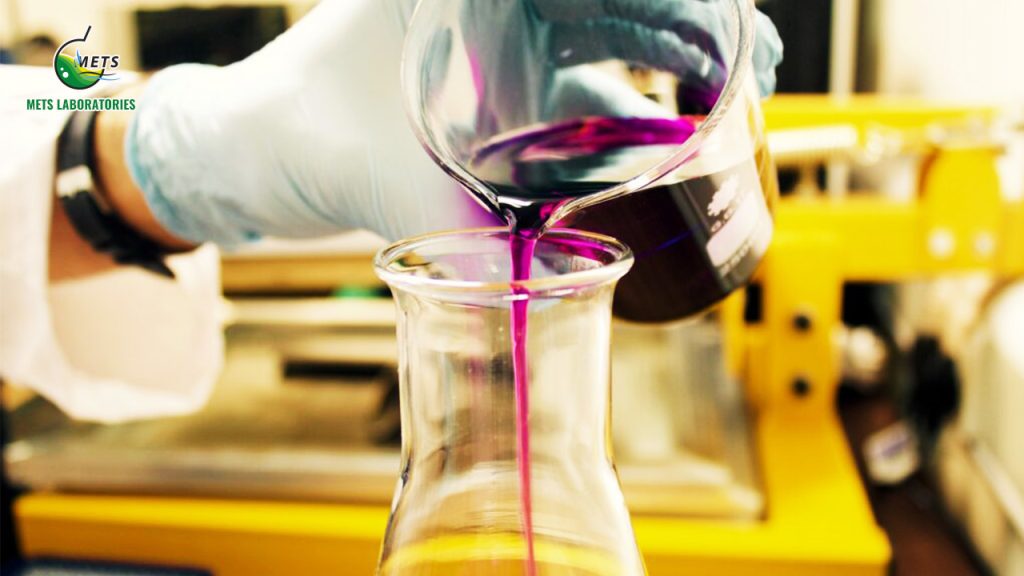
Our hazardous and restricted chemicals testing division analyze materials to ensure compliance with regulations like RoHS, REACH, and CPSIA, as well as to identify and quantify hazardous substances. These testing division utilize specialized equipment and methodologies to assess chemical composition, identify restricted substances, and determine levels of hazardous materials in various products and materials.
Why Choose METS Laboratories for Hazardous & Restricted Chemicals Testing Services?
We are well-equipped with laboratory facilities to offer restricted & hazardous chemicals testing solutions that help to comply with legislation. We keep you updated on forthcoming changes to restricted chemicals compliance and guidelines and how these changes will affect your products. The key aspects of Hazardous and restricted chemicals testing in METS Laboratories,
- Compliance Testing: METS Laboratories conduct tests to verify if products meet the requirements of various regulations, such as RoHS (Restriction of Hazardous Substances) and REACH (Registration, Evaluation, Authorization, and Restriction of Chemicals).
- Substance Identification and Quantification: We analyze materials to identify specific chemical substances and quantify their presence, including restricted substances and those exceeding permissible limits.
- Hazardous Material Assessment: We can identify and assess the presence of hazardous materials, including heavy metals, phthalates, and other potentially harmful substances.
- Industry-Specific Testing: We offer testing services tailored to specific industries and their unique regulatory requirements, such as the electronics industry for RoHS compliance or the textile and apparel industry for MRSLand RSL
- Product Safety and Quality: Our testing services ensures product safety, quality, and compliance with legal requirements, protecting consumers and the environment.
Our testing parameters and methods;
- RoHS Testing: Includes testing for lead, cadmium, mercury, hexavalent chromium, polybrominated biphenyls (PBBs), and polybrominated diphenyl ethers (PBDEs).
- REACH Testing: Focuses on the identification and registration of chemical substances, as well as assessing and managing their risks.
- CPSIA Testing: Involves testing for lead and phthalates in children’s products.
Our Specific methods & Facilities may include;
- X-ray Fluorescence Spectroscopy (XRF)
- Inductively Coupled Plasma Optical Emission Spectrometry (ICP-OES)
- Gas Chromatography-Mass Spectrometry (GC-MS)
- UV-Vis Spectrophotometry
- High Performance Liquid Chromatography (HPLC)
- LC-MS/MS
- Wet Chemistry.
Accreditation and Standards: We are accredited to ISO/IEC 17025, signifying their competence and ability to produce valid results.
METS operate under Good Laboratory Practice (GLP), Good Manufacturing Practice (cGMP), and other relevant industry standards.
What We Ensure?
- Data Integrity: Every result is generated and verified under strict quality assurance.
- Compliance: All tests conform to the latest regulatory and industry-specific guidelines.
- Transparency: Clear, easy-to-understand reports and consultation support.
- Confidentiality: Your data remains secure, private, and protected.
- Environmental Stewardship: Our labs follow eco-friendly practices and aim to minimize testing-related waste and emissions.
Who It’s For?
- Manufacturers, importers, and distributors of EEE products (e.g., electronics, cables, circuit boards, batteries).
- Industrial Facilities: To monitor effluents, emissions, and workplace safety
- Construction and Real Estate: For soil contamination, water logging, and indoor air quality
- Municipal Corporations: To assess urban air and water quality
- Schools, Hospitals & Hotels: For ensuring safe indoor environments
- Agricultural Communities: To test irrigation water and soil health
- NGOs & Research Institutions: For pollution studies and policy advocacy
- Citizens & RWAs: For local monitoring and complaint-based testing
Protect Consumers. Satisfy Authorities. Boost Market Confidence.
In today’s sustainability-driven world, consumer goods brands, electronics manufacturers, and industrial suppliers are held strictly accountable by consumers, global retail buyers, and international trade regulators alike. METS Laboratories empowers your enterprise to:
- Protect your supply chain, end consumers, and brand reputation from hazardous material contamination or toxic chemical exposure risks.
- Achieve complete market compliance by executing analytical protocols that conform cleanly to current ECHA REACH frameworks and international hazardous substance control directives, global RoHS mandates, CPSIA safety guidelines, and ISO 17025 certified testing methodologies.
- Build a premium brand reputation rooted in scientifically validated chemical profiles, non-toxic components, and clean material transparency.
- Avoid costly shipment rejections at international borders, massive product recall campaigns, and severe financial penalties due to unverified material compositions.
- Earn long-term stakeholder and investor trust with verified chemical data and transparent product safety ESG reporting.
Utilizing professional hazardous and restricted chemicals testing services isn’t just a legal formality—it’s a powerful strategic asset for market entry and supply chain resilience.
Frequently Asked Questions
How do I book a test?
You can contact METS Laboratories via phone, email, or our website to schedule sampling or drop off a sample at our facility.
Is your lab accredited?
Yes, METS Laboratories is accredited under ISO/IEC 17025:2017.
How long does it take to get results?
Turnaround time depends on the parameters, but standard reports are typically delivered within 3–7 working days.
Do you provide on-site sampling?
Yes, we have trained field teams who follow strict SOPs for on-site sample collection.
Can I get help understanding the report?
Absolutely. We offer report interpretation and guidance on corrective actions or next steps.
What locations do you serve?
We serve clients across India and can coordinate with international partners when required.
Can you help with regulatory approvals?
Yes, our test reports are accepted by government authorities, and we can assist in documentation for environmental clearances.