

- Mets Admin
- July 31, 2026
- Testing Insights
- 0 Comments
Introduction to Bacterial Endotoxin Testing in Dialysis Water
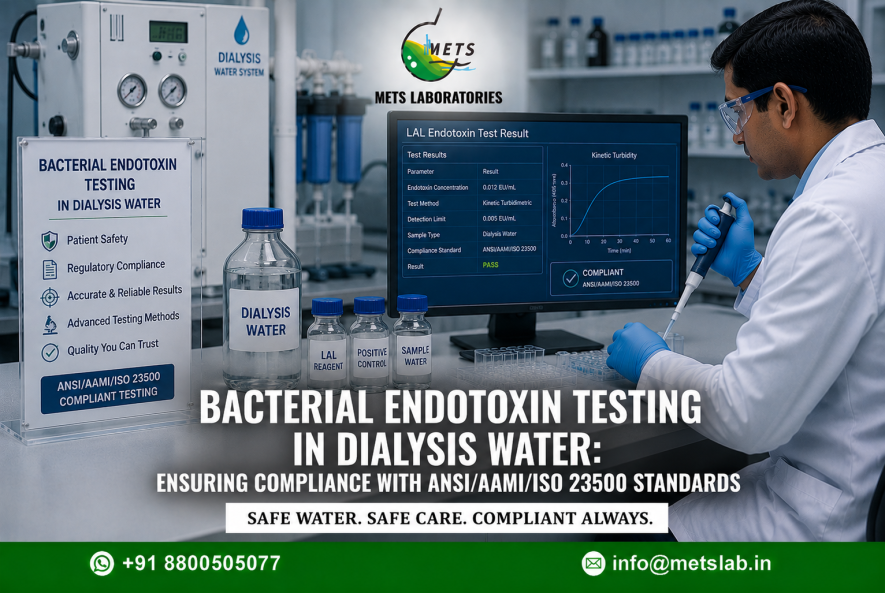
Water quality is a critical factor in the safety and effectiveness of hemodialysis treatment. Since dialysis patients are repeatedly exposed to large volumes of purified water during therapy, maintaining microbiological purity is essential to minimize the risk of adverse health effects. Performing routine bacterial endotoxin testing in dialysis water is vital to detect heat-stable lipopolysaccharides (LPS) released from Gram-negative bacteria, preventing pyrogenic reactions and ensuring compliance with stringent medical standards.
Even when viable bacteria are eliminated through water treatment and disinfection, endotoxins may remain in the dialysis water distribution system and pose serious health risks. Elevated endotoxin levels can trigger pyrogenic reactions, inflammation, and other complications in patients with compromised immune function.
To safeguard patient health, internationally recognized standards such as the ANSI/AAMI/ISO 23500 Series and ISO 13959 establish stringent microbiological and endotoxin quality requirements for water used in hemodialysis and related therapies. Routine bacterial endotoxin testing enables healthcare facilities to verify water quality, demonstrate regulatory compliance, and ensure safe dialysis treatment.
Why Is Bacterial Endotoxin Testing in Dialysis Water Important?
Bacterial endotoxins are biologically active toxins released when Gram-negative bacteria grow or break down. Unlike live microorganisms, endotoxins are highly resistant to heat and may persist in dialysis water even after successful disinfection.
During hemodialysis, contaminated water can compromise dialysate quality, increasing the risk of pyrogenic reactions and chronic inflammatory responses in patients. Regular endotoxin monitoring is therefore an essential component of dialysis water quality management.
Routine testing helps healthcare facilities to:
- Verify compliance with ANSI/AAMI/ISO 23500 and ISO 13959 requirements.
- Monitor the performance of reverse osmosis (RO) and water purification systems.
- Detect microbial contamination before it affects patient safety.
- Identify biofilm-related contamination within water distribution systems.
- Support preventive maintenance and corrective action programmes.
- Demonstrate compliance during hospital quality audits and regulatory inspections.

Applicable Standards (ANSI/AAMI/ISO 23500) and Regulations
Dialysis water quality should be monitored in accordance with internationally accepted standards and recognized laboratory practices.
Key references include:
- ANSI/AAMI/ISO 23500 Series – Preparation and quality management of fluids for hemodialysis and related therapies.
- ISO 13959 – Water for hemodialysis and related therapies.
- ISO/IEC 17025:2017 – General requirements for the competence of testing and calibration laboratories.
- Good Laboratory Practice (GLP)
- Applicable national healthcare regulations and hospital quality management systems.
These standards specify microbiological quality requirements, endotoxin limits, sampling practices, and monitoring frequencies to ensure patient safety.
Acceptance Criteria for Dialysis Water Quality
Routine monitoring should include bacterial endotoxin analysis and microbiological examination to ensure compliance with internationally accepted limits.
Parameter | Action Level | Maximum Allowable Limit |
Bacterial Endotoxins | ≥ 0.125 EU/mL | < 0.25 EU/mL |
Total Viable Count (TVC | ≥ 50 CFU/mL | < 100 CFU/mL |
Exceeding the action level indicates that the dialysis water system should be investigated and corrective measures implemented before contamination reaches unacceptable levels.


Common Sources of Endotoxin Contamination in Water Systems
Endotoxin contamination may originate from several points within the dialysis water treatment and distribution system.
Common causes include:
- Biofilm formation inside storage tanks and distribution pipelines.
- Inadequate disinfection or sanitization procedures.
- Poor maintenance of reverse osmosis membranes and filtration systems.
- Stagnant water within distribution loops.
- Damaged filters or compromised water treatment components.
- Delayed microbiological monitoring and corrective actions.
Routine testing enables early detection of contamination and supports effective preventive maintenance.
Clinical and Operational Risks of Non-Compliance
Failure to monitor dialysis water quality may result in significant clinical and operational consequences, including:
- Pyrogenic reactions during dialysis treatment.
- Chronic inflammatory complications in patients.
- Biofilm development within water distribution systems.
- Non-compliance with ANSI/AAMI/ISO standards.
- Adverse findings during hospital audits and inspections.
- Increased equipment maintenance costs.
- Productivity losses due to system shutdowns.
- Reputational damage and reduced patient confidence.
Routine laboratory testing minimizes these risks and supports continuous quality improvement.
How METS Laboratories Supports Dialysis Water Testing Services
METS Laboratories provides comprehensive dialysis water testing services to hospitals, dialysis centres, healthcare institutions, and medical device manufacturers.
Our services include:
- Bacterial Endotoxin Testing
- Total Viable Count (TVC)
- Complete Chemical Analysis
- Heavy Metal Testing
- Dialysis Water Quality Assessment
- Regulatory Compliance Support
- Technical Interpretation of Test Results
Testing is performed in our ISO/IEC 17025:2017 accredited laboratory using validated analytical methods and calibrated instrumentation to ensure accurate, reliable, and traceable results. Our experienced technical team helps healthcare facilities maintain compliance with recognized standards while supporting patient safety and operational excellence.
Conclusion: Ensuring Patient Safety Through Routine Testing
Maintaining dialysis water quality is essential for ensuring safe and effective hemodialysis treatment. Routine bacterial endotoxin testing in dialysis water, together with comprehensive microbiological testing services and chemical analysis, helps healthcare facilities verify compliance with ANSI/AAMI/ISO 23500 and ISO 13959 requirements, identify contamination at an early stage, and implement timely corrective actions.
At METS Laboratories, we deliver accurate and timely testing services using internationally recognized analytical methods. Contact METS Laboratories today for dependable dialysis water testing solutions that support patient safety and operational excellence.
At METS Laboratories, we are committed to delivering accurate, reliable, and timely dialysis water testing services using internationally recognized analytical methods and quality systems. Our comprehensive testing solutions help hospitals and dialysis centres maintain the highest standards of water quality, regulatory compliance, and patient care.
Partner with METS Laboratories for dependable dialysis water testing solutions that support patient safety and operational excellence.
Frequently Asked Questions (FAQs)
What is the acceptable endotoxin limit in dialysis water?
How frequently should dialysis water be tested?
Which method is commonly used for bacterial endotoxin testing?
Why are both endotoxin and microbiological tests required?
Why choose METS Laboratories for dialysis water testing?
Manufacturers and Exporters Recommend Us
Dedicated professionals committed to providing you with accurate and reliable testing services. Get METS Lab services today from the best lab experts & get the accurate reports from our laboratory.