

Animal Food & Feed Testing Services – METS Laboratories
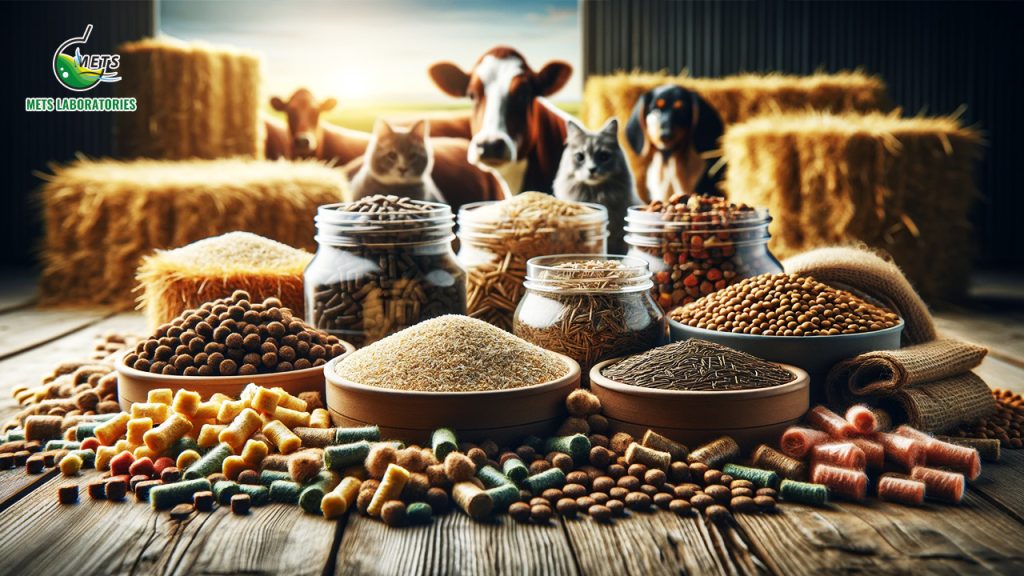
Animal food and feed play a crucial role in livestock health, productivity, and food safety. Ensuring the quality and safety of animal feed is essential to prevent nutritional deficiencies, toxin exposure, and disease transmission. Deploying accredited animal feed testing services helps verify compliance with regulatory standards, enhances animal welfare, and safeguards the food supply chain. By implementing a precise testing workflow, commercial feed mills and livestock managers can systematically map dry matter percentages, protein quality indexes, and microbial limits. Locking in these nutritional variables before commercial distribution prevents mass livestock illness, protects manufacturing yields, and fulfills strict international agricultural customs criteria.
Feed testing involves analyzing various parameters, including nutritional content (proteins, fats, carbohydrates), contaminants (mycotoxins, heavy metals, pesticides), microbiological safety (Salmonella, E. coli), and adulterants (melamine, antibiotics). These tests ensure that animal feed meets safety and quality standards for livestock, poultry, aquaculture, and pets.
Importance of Animal Feed Testing Services
- Ensures Animal Health & Productivity
Animal feed is the foundation of livestock nutrition, directly impacting growth, immunity, and overall well-being. Poor-quality or imbalanced feed can lead to:
- Malnutrition – Deficiencies in proteins, vitamins, or minerals weaken animals, reducing weight gain and milk/egg production.
- Disease susceptibility – Weak immunity increases vulnerability to infections, raising veterinary costs and mortality rates.
- Reproductive failures – Nutrient deficiencies can cause infertility, miscarriages, or low birth weights in offspring.
- Precise nutrient profiling – Ensures feed meets species-specific dietary requirements (e.g., poultry vs. cattle).
- Performance optimization – Balanced feed improves feed conversion ratios (FCR), enhancing growth rates and farm profitability.
- Early issue detection – Identifies nutrient gaps before they affect herd health.
- Prevents Toxin Exposure
Animal feed can be contaminated by natural toxins or industrial pollutants, posing severe health risks:
- Mycotoxins (e.g., aflatoxins) – Produced by molds in improperly stored grains; cause liver damage, cancer, and immunosuppression.
- Heavy metals (lead, cadmium, arsenic) – Enter feed via polluted soil/water; accumulate in organs, causing chronic toxicity.
- Endotoxins & pesticides – Linked to neurological disorders and metabolic disruptions.
How testing mitigates risks:
- Screening high-risk ingredients – Corn, soybean, and cottonseed are prone to mycotoxins.
- Preventing bioaccumulation – Stops toxins from entering the food chain via meat, milk, or eggs.
- Regulatory enforcement – Ensures toxin levels comply with WHO/CODEX limits.
- Regulatory Compliance
Global feed safety regulations are stringent to protect animals and consumers:
- FSSAI (India) & FDA (USA) – Mandate limits for contaminants like aflatoxins (20 ppb in feed).
- EU Commission – Bans certain antibiotics and enforces strict pesticide residue thresholds.
- CODEX Alimentarius – Sets international standards for feed additives and labeling.
Consequences of non-compliance:
- Legal penalties – Fines, recalls, or facility shutdowns.
- Trade restrictions – Rejected exports due to failed safety checks.
- Brand reputation damage – Loss of consumer trust.
Testing ensures:
- Documentation for audits – Lab reports validate compliance.
- Supply chain transparency – Tracks contaminants to their source.
- Protects Human Food Safety
Contaminated feed introduces hazards into the human food supply:
- Antibiotic residues – Overuse in feed contributes to antimicrobial resistance (AMR) in humans.
- Mycotoxin carryover – Aflatoxin M1 appears in milk, linked to liver cancer.
- Heavy metals – Lead in meat affects child cognitive development.
Testing’s role in food security:
- Prevents zoonotic risks – Stops pathogens (e.g., Salmonella) from entering animal products.
- Supports residue monitoring – Ensures withdrawal periods for veterinary drugs are followed.
- Detects Adulteration & Fraud
Economic adulteration is rampant in the feed industry:
- Protein inflation scams – Melamine (added to mimic protein) caused pet deaths in 2007.
- Filler ingredients – Sawdust, urea, or sand dilute feed quality.
- Mislabeling – False claims about organic/non-GMO status.
Testing counters fraud via:
- Chemical fingerprinting – HPLC/MS detects synthetic additives.
- Proximate analysis – Verifies crude protein/fat content matches labels.
- Supports Sustainable Farming
Quality feed aligns with eco-friendly practices:
- Reduces waste – Precise formulations minimize overfeeding and excreta pollution.
- Lowers carbon footprint – Efficient digestion cuts methane emissions from livestock.
- Promotes circular agriculture – Safe byproducts (brewers’ grains, oilseed meals) are recycled into feed.
Classification of Animal Feed Testing Services
Type | Description |
Nutritional Analysis | Evaluates protein, fat, fiber, moisture, and energy content |
Mycotoxin Testing | Detects aflatoxins, ochratoxin, fumonisins, and other fungal toxins |
Heavy Metal Testing | Screens for lead, arsenic, cadmium, and mercury contamination |
Microbiological Testing | Checks for harmful bacteria (Salmonella, E. coli, Listeria) |
Pesticide Residue Testing | Identifies traces of insecticides, herbicides, and fungicides |
Adulterant Detection | Detects melamine, urea, and other illegal additives |
GMO Testing | Verifies genetically modified ingredients in feed |
Vitamin & Mineral Analysis | Ensures proper nutrient levels for animal health |
Strategic Purpose of Animal Feed Testing Services
- Quality Assurance – Confirms nutritional adequacy and safety.
- Regulatory Compliance – Meets national and international feed standards.
- Risk Management – Identifies contaminants before they affect animals or consumers.
- Research & Innovation – Supports new feed formulation development.
- Supply Chain Safety – Ensures feed integrity from production to consumption.
Applications of Animal Feed Testing Services
- Livestock & Poultry Health – Ensures balanced nutrition and prevents toxin-related illnesses.
- Food Safety Compliance – Meets FSSAI, FDA, EU, and CODEX regulations.
- Aquaculture Feed Quality – Prevents contamination in fish and shrimp feed.
- Pet Food Safety – Ensures safe and nutritious diets for companion animals.
- Feed Manufacturing QC – Maintains consistency and quality in feed production.
- Research & Development – Supports innovation in animal nutrition and feed formulations.
Key Feed Testing Parameters (ISO & Global Standards)
Parameter | ISO Standard |
Crude Protein | ISO 5983 |
Crude Fat | ISO 6492 |
Fiber Content | ISO 6865 |
Moisture | ISO 6496 |
Ash Content | ISO 2171 |
Parameter | ISO Standard |
Aflatoxins | ISO 16050 |
Heavy Metals | ISO 6869 |
Pesticide Residues | ISO 17070 |
Parameter | ISO Standard |
Salmonella | ISO 6579 |
E. coli | ISO 16654 |
Yeast & Mold | ISO 7954 |
Parameter | ISO Standard |
Melamine | ISO 18330 |
Why Choose METS Laboratories for Animal Feed Testing Services?
NABL accredited, METS LABORTORIES INDIA PVT.LTD can test to a variety of the established methods (e.g., ISO, ASTMD, AOAC, APHA, FSSAI, BIS,)
- Our laboratory conducts testing on a wide range of products, materials, and components to verify compliance with standards, specifications, and regulatory requirements. Our team is happy to provide expert advice and guidance to ensure the appropriate water testing is carried out for your needs.
- Our dedicated, experienced, and friendly team is here to help—providing expert knowledge, guidance, and access to cutting-edge water testing capabilities and technologies in our laboratory.
- We conduct comprehensive product evaluations for appearance, quality, and performance. Our technical support network provides expert guidance—answering questions, interpreting results, and assisting with quality assurance program management.
- We participate in inter-laboratory proficiency testing and comparative analyses to ensure accuracy, reliability, and compliance with industry standards.
- We implement and maintain rigorous ISO/IEC 17025:2017 accreditation, ensuring internationally recognized standards for testing competence, measurement accuracy, and operational excellence in every analysis.
- We maintain strict customer confidentiality by treating all data as proprietary information.
What We Ensure?
- Data Integrity: Every result is generated and verified under strict quality assurance.
- Compliance: All tests conform to the latest regulatory and industry-specific guidelines.
- Transparency: Clear, easy-to-understand reports and consultation support.
- Confidentiality: Your data remains secure, private, and protected.
- Environmental Stewardship: Our labs follow eco-friendly practices and aim to minimize testing-related waste and emissions.
Who It’s For?
- Manufacturers, importers, and distributors of EEE products (e.g., electronics, cables, circuit boards, batteries).
- Industrial Facilities: To monitor effluents, emissions, and workplace safety
- Construction and Real Estate: For soil contamination, water logging, and indoor air quality
- Municipal Corporations: To assess urban air and water quality
- Schools, Hospitals & Hotels: For ensuring safe indoor environments
- Agricultural Communities: To test irrigation water and soil health
- NGOs & Research Institutions: For pollution studies and policy advocacy
- Citizens & RWAs: For local monitoring and complaint-based testing
Protect Consumers. Satisfy Authorities. Boost Market Confidence.
In today’s sustainability-driven world, agribusinesses, commercial feed mills, and livestock producers are held strictly accountable by consumers, retail buyers, and global trade regulators alike. METS Laboratories empowers your enterprise to:
- Protect your livestock assets, dairy herds, and consumer supply chains from hazardous pathogen outbreaks, toxic feed exposure, or nutritional deficiencies.
- Achieve complete market compliance by executing analytical protocols that conform cleanly to current Codex Alimentarius international animal feeding and food safety compliance frameworks, Food Safety and Standards Authority of India (FSSAI) guidelines, Indian Standard (IS) codes, and ISO quality frameworks.
- Build a premium brand reputation rooted in scientifically validated nutritional profiles, verified feed conversion safety, and dependable ingredient trace-testing.
- Avoid costly shipment rejections at international borders, massive product recall campaigns, and severe financial damages due to substandard or unverified animal food batches.
- Earn long-term stakeholder and investor trust with verified agricultural data and transparent safety compliance reporting.
Animal feed testing services aren’t just a legal formality—they are a vital strategic asset for agricultural quality and animal welfare excellence.
Frequently Asked Questions
How do I book a test?
You can contact METS Laboratories via phone, email, or our website to schedule sampling or drop off a sample at our facility.
Is your lab accredited?
Yes, METS Laboratories is accredited under ISO/IEC 17025:2017.
How long does it take to get results?
Turnaround time depends on the parameters, but standard reports are typically delivered within 3–7 working days.
Do you provide on-site sampling?
Yes, we have trained field teams who follow strict SOPs for on-site sample collection.
Can I get help understanding the report?
Absolutely. We offer report interpretation and guidance on corrective actions or next steps.
What locations do you serve?
We serve clients across India and can coordinate with international partners when required.
Can you help with regulatory approvals?
Yes, our test reports are accepted by government authorities, and we can assist in documentation for environmental clearances.