Air Testing / Atmospheric Pollution Testing – METS Laboratories
Air is a vital resource for life, and its quality directly impacts human health, ecosystems, and industrial processes. To mitigate industrial environmental impacts, comprehensive air quality audits and atmospheric pollution testing are essential to ensure that air is safe for breathing, environmental sustainability, and regulatory compliance. By analyzing various physical, chemical, and biological parameters, air testing helps identify pollutants that may pose health risks or contribute to environmental degradation.
Atmospheric pollution testing involves evaluating multiple parameters, such as particulate matter (PM2.5, PM10), gaseous pollutants (CO, SO₂, NO₂, O₃), volatile organic compounds (VOCs), heavy metals, and biological contaminants (mold, bacteria). These tests help in monitoring air quality, assessing pollution sources, and implementing corrective measures.
Core Industrial Importance of Atmospheric Pollution Testing
Atmospheric pollution testing serves as a vital safeguard for human health, environmental protection, and industrial accountability. Its comprehensive monitoring capabilities provide essential data for regulatory compliance and sustainable development.
Protection of Public Health Airborne contaminants such as fine particulate matter (PM2.5), nitrogen dioxide (NO₂), and sulfur dioxide (SO₂) pose severe health risks, contributing to respiratory ailments like asthma and chronic obstructive pulmonary disease (COPD). Long-term exposure correlates with increased cardiovascular disorders and higher cancer incidence rates, particularly lung cancer. Vulnerable groups, including children, the elderly, and individuals with pre-existing conditions, face heightened risks. Rigorous air quality testing enables governments to enforce compliance with international standards set by the WHO, EPA, and CPCB, facilitating timely public health interventions such as smog alerts and emission control measures.
Environmental Conservation Industrial and vehicular emissions generate pollutants that trigger acid rain, photochemical smog, and stratospheric ozone depletion. Sulfur dioxide and nitrogen oxides acidify water bodies, devastating aquatic ecosystems, while heavy metals like lead and mercury accumulate in soil, entering the food chain. Continuous air monitoring helps identify pollution hotspots, allowing for targeted conservation efforts and policy adjustments to protect biodiversity and natural habitats.
Industrial & Regulatory Compliance Manufacturing plants, power stations, and refineries must adhere to stringent emission regulations, including the Clean Air Act and National Ambient Air Quality Standards (NAAQS). Non-compliance risks hefty fines, operational suspensions, and reputational damage. Routine atmospheric testing ensures industries maintain permissible emission levels, adopt cleaner technologies, and demonstrate corporate environmental responsibility.
Workplace Safety Industrial facilities, mining operations, and construction sites often harbor hazardous gases like carbon monoxide (CO), hydrogen sulfide (H₂S), and volatile organic compounds (VOCs). These substances can cause acute poisoning, chronic illnesses, or fatal accidents if concentrations exceed safe thresholds. Regular air quality assessments align with occupational safety guidelines (OSHA, NIOSH), protecting workers and minimizing liability risks for employers.
Climate Change Mitigation Greenhouse gases, notably carbon dioxide (CO₂) and methane (CH₄), drive global warming, intensifying extreme weather events and rising sea levels. Atmospheric testing quantifies these emissions, enabling industries and governments to track progress toward carbon neutrality goals outlined in agreements like the Paris Accord. Data-driven insights support renewable energy adoption and energy efficiency improvements.
Early Detection of Emerging Pollutants Advances in analytical techniques now identify previously overlooked contaminants, including airborne microplastics, per- and polyfluoroalkyl substances (PFAS), and industrial byproducts. Proactive monitoring helps regulators establish safety limits and guides research into filtration technologies before these pollutants become widespread health crises.
Primary Compliance Purpose of Atmospheric Pollution Testing
Regulatory Compliance – Ensures adherence to national and international air quality standards.
Emission Monitoring – Tracks industrial and vehicular pollution sources.
Health Risk Assessment – Identifies harmful pollutants in residential and occupational settings.
Research & Development – Supports studies on air pollution control technologies.
Indoor Air Quality (IAQ) Management – Prevents mold, VOCs, and CO poisoning in buildings.
Regulatory Classification of Atmospheric Pollution Testing Methods
Type
Description
Ambient Air
Outdoor air quality monitoring (urban, industrial, rural areas)
Indoor Air
Air quality inside homes, offices, schools, hospitals
Industrial Emissions
Pollutants released from factories, power plants, vehicles
Workplace Air
Occupational exposure monitoring (factories, construction sites)
Vehicle Emissions
Exhaust gases from automobiles, aircraft, ships
Biogenic Air
Natural pollutants (pollen, spores, methane from wetlands)
Industrial Applications of Atmospheric Pollution Testing
Public Health Protection – Ensures safe breathing air and reduces respiratory diseases.
Environmental Compliance – Monitors industrial emissions and regulatory adherence.
Occupational Safety – Assesses workplace air quality to protect workers.
What Atmospheric Pollution Testing Capabilities METS Laboratories Offers
NABL accredited, METS LABORTORIES INDIA PVT.LTD can test to a variety of the established methods (e.g., ISO, ASTMD, AOAC, APHA, FSSAI, BIS,)
At METS Laboratories, we provide a complete air testing solution:
Our laboratory conducts testing on a wide range of products, materials, and components to verify compliance with standards, specifications, and regulatory requirements. Our team is happy to provide expert advice and guidance to ensure the appropriate water testing is carried out for your needs.
Our dedicated, experienced, and friendly team is here to help—providing expert knowledge, guidance, and access to cutting-edge water testing capabilities and technologies in our laboratory.
We conduct comprehensive product evaluations for appearance, quality, and performance. Our technical support network provides expert guidance—answering questions, interpreting results, and assisting with quality assurance program management.
We participate in inter-laboratory proficiency testing and comparative analyses to ensure accuracy, reliability, and compliance with industry standards.
We implement and maintain rigorous ISO/IEC 17025:2017 accreditation, ensuring internationally recognized standards for testing competence, measurement accuracy, and operational excellence in every analysis.
We maintain strict customer confidentiality by treating all data as proprietary information.
On-Site Sampling with Trained Environmental Technicians
Real-time Monitoring for Critical Parameters
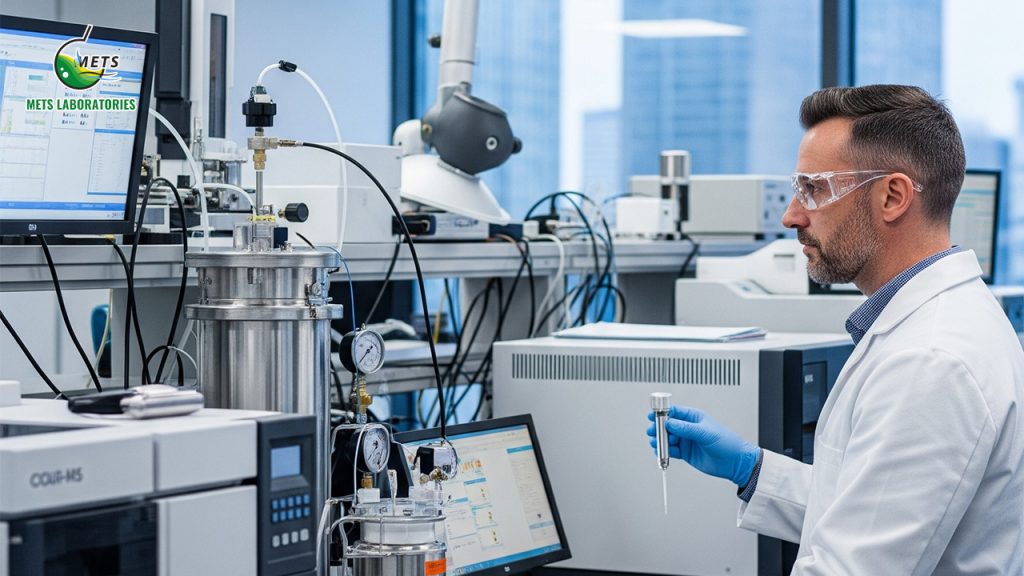
Laboratory Analysis using state-of-the-art instruments (GC-MS, AAS, FTIR)
Customized Reporting with clear risk interpretation
Regulatory Compliance Support (CPCB, SPCBs, ISO, etc.)
Data Analytics and Trend Forecasting
Indoor Air Quality Assessments (IAQ)
Emergency Air Quality Response
We are ISO/IEC 17025: 2017 accredited and committed to ethical, scientifically sound practices.
Ambient Air Testing is a bridge between public trust and regulatory compliance. By testing air quality: • Consumers feel safer in homes, parks, schools, and workplaces. • Authorities can enforce laws and develop smarter policies. • Companies demonstrate responsibility, improving their social and environmental credentials. Transparent environmental data builds credibility. It shows that businesses and governments care—not just about rules, but about the people they serve. Clean air fosters social well-being and market resilience, meeting international thresholds defined by the World Health Organization (WHO) ambient air quality guidelines. At METS Laboratories, we help you protect lives and reputations through reliable testing and science-led insights.
Frequently Asked Questions
How often should ambient air be tested?
For general compliance, quarterly testing is standard. However, high-risk or industrial zones may require monthly or even continuous monitoring.
Is ambient air testing required by law?
Yes. Under the Air (Prevention and Control of Pollution) Act, 1981 and CPCB norms, specific industries and infrastructure projects must monitor and report ambient air quality.
Can METS Laboratories help with regulatory submissions?
Absolutely. We provide documentation and reports compliant with CPCB, SPCB, EIA, and ISO/IEC 17025: 2017 standards.
How long does sampling and analysis take?
Sampling typically takes 24–48 hours, and analysis/reporting is completed within 5–7 working days, depending on scope and parameter count.
What if pollutant levels are too high?
We offer mitigation guidance and connect you with environmental consultants or mitigation technology providers as needed.
Can individuals or housing societies request testing?
Yes. We support community-led testing initiatives and indoor/outdoor surveys for residential areas.
Is the testing equipment portable?
Yes. We have both portable and fixed equipment options, suitable for various field conditions.
Does METS Laboratories offer data interpretation and advisory?
Yes. We don’t just give you numbers—we help you understand them and act accordingly.