Introduction – Why Flammability Testing for Textiles Matters
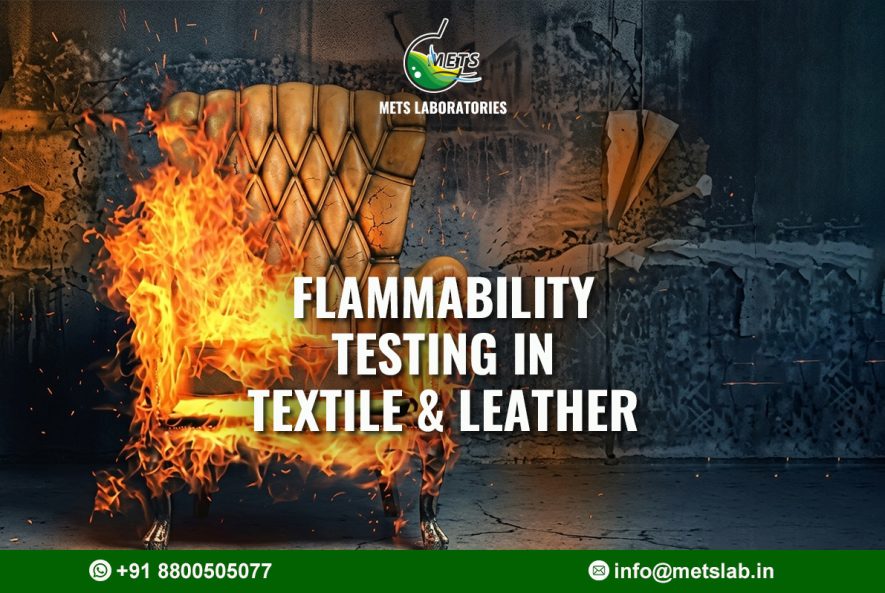
Flammability testing is one of the most critical safety evaluations for textile and leather products. As global safety rules tighten, rigorous flammability testing for textiles and leather has become a mandatory step to prevent product recalls. Determining how easily a fabric ignites or how fast it burns allows manufacturers to mitigate fire risks before items ever reach consumer markets.
Fabrics used in clothing, upholstery, footwear, protective wear, and automotive interiors can easily ignite when exposed to heat or flame.
Improperly treated or highly flammable materials can lead to fire hazards, severe injuries, and even fatalities.
What is Flammability Testing for Textiles and Leather?
Flammability testing determines how easily a material ignites and how it behaves when exposed to flame or heat.
It evaluates ignition time, flame spread, burning behavior, and after-flame characteristics.
Common material types tested:
Textiles (cotton, polyester, blends)
Leather and synthetic leather
Upholstery fabrics
Protective clothing materials
Automotive interior fabrics
Why is This Fire Safety Testing Important for Manufacturers?
Key Reasons:
Ensure fire safety of end users
Meet global regulatory requirements
Prevent rapid flame spread in accidents
Required for export and product certification
Risks of Non-Compliance:
Product rejection in export markets
Legal penalties and recalls
Loss of certifications (OEKO-TEX, etc.)
High safety risk to consumers
Applicable Standards & Regulations for Flammability Testing for Textiles
ISO 6940 / ISO 6941 – Textile flammability (vertical & limited flame spread)
ISO 15025 – Protective clothing flame resistance
ASTM D6413 – Vertical flame test (textiles)
ASTM D1230 – Flammability of apparel textiles
EN 1103 / EN ISO 11612 – Protective clothing requirements
FMVSS 302 – Automotive interior materials (USA)
OEKO-TEX® Standard 100 – Safety compliance requirement
Flammability Testing for Textiles: Standard Classification Criteria
Parameter
Description
Ignition Time
Time taken to catch fire
Flame Spread Rate
How fast flame travels
After-flame Time
Burning after removal of flame source
Char Length
Damaged length after burning
Dripping Behavior
Whether molten droplets form
Fire Safety Analysis and Test Method Overview
Sample conditioning under controlled temperature & humidity
Exposure to flame using standardized burner (vertical or horizontal orientation)
Measurement of ignition time and flame spread
Recording after-flame and after-glow time
Evaluation of char length and damage pattern
Common Instruments Used:
Flammability chamber
Vertical flame tester
Horizontal flame tester
Gas burner with timing control system
Who Needs Professional Flammability Testing for Textiles?
Textile manufacturers
Garment exporters
PPE and safety wear manufacturers
Automotive interior suppliers
Furniture and upholstery brands
Leather goods manufacturers
Conclusion
Flammability testing ensures that textile and leather products meet essential fire safety standards before reaching consumers. It plays a vital role in protecting lives, improving product quality, and ensuring compliance with international regulations.
Proper material selection, flame-retardant treatment, and quality control significantly reduce fire hazards in end-use applications. To fully secure your supply chain and verify fire-retardant performance alongside comprehensive hazardous and restricted chemicals testing standards, partner with our accredited laboratory today.
Frequently Asked Questions(FAQs)
Which instruments are used?
Vertical flame tester, horizontal flame tester, and standardized burners.
Which standards are most common?
ISO 6941, ASTM D6413, ISO 15025, and FMVSS 302.
Is flammability testing mandatory?
Yes, for protective clothing, automotive textiles, and many export markets.
Manufacturers and Exporters Recommend Us
Dedicated professionals committed to providing you with accurate and reliable testing services. Get METS Lab services today from the best lab experts & get the accurate reports from our laboratory.