

- Mets Admin
- August 4, 2026
- Testing Insights
- 0 Comments
Introduction to Comprehensive Virus Testing Services
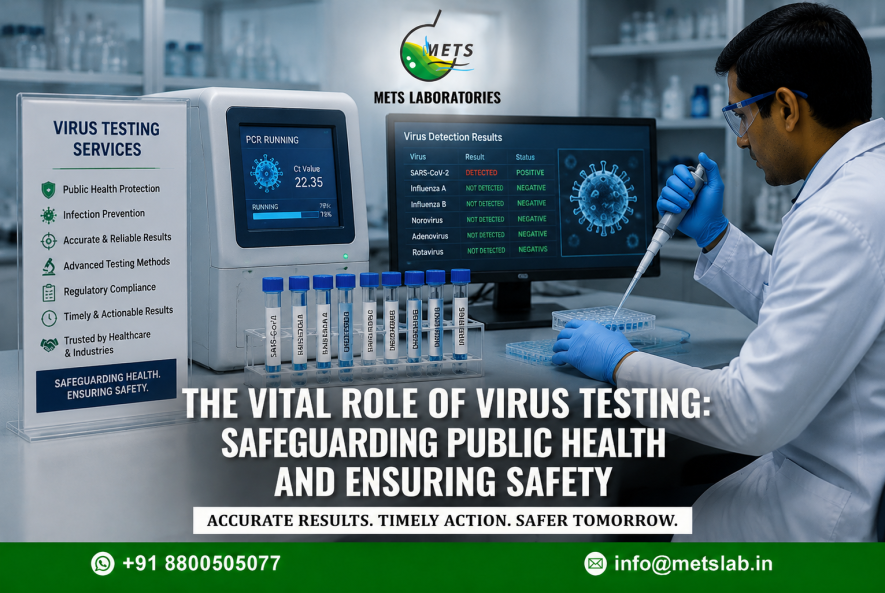
Professional virus testing services play a vital role in modern healthcare and public health strategy. These comprehensive laboratory methods detect viral infections, monitor immune responses, and ensure the absolute safety of biological products. Accurate and timely diagnostic procedures help identify pathogens early, guide appropriate clinical treatments, and mitigate the spread of infectious diseases. Without reliable laboratory screening, emerging viruses can spread unchecked, leading to higher morbidity and strained healthcare infrastructure. Furthermore, viral surveillance evaluates vaccine effectiveness and screens biological supplies to prevent contamination—making diagnostic accuracy essential for both individual patient care and broader population health security.
Why Is Diagnostic Virus Testing Important for Public Health?
Virus testing helps in preventing widespread outbreaks and ensure safety of public health. In the pharmaceutical and biological industries, it is mandatory to test raw materials, cell banks, and final products at multiple manufacturing stages to demonstrate the absence of unexpected viruses that could compromise patient safety. Early detection identifies infections promptly to allow for timely treatment and isolation of infected individuals, reducing transmission. Helps clinicians decide on appropriate antiviral treatments or other medical interventions based on the specific virus detected.
Used in public health surveillance to monitor disease trends, identify emerging variants, and evaluate vaccine effectiveness .Essential for screening blood products, tissues, and biopharmaceuticals to prevent contamination and ensure they are safe for recipients .

Common Challenges Faced in Viral Testing Projects
Virus testing projects frequently encounter significant operational and technical hurdles. Complex workflows involving multiple sample types, stringent handling protocols, and varying storage conditions often lead to processing delays and human errors. Incorrectly reporting no infection, which can delay treatment and risk further spread. This is more common with less sensitive tests like antigen assays, especially during early or late stages of infection . Additionally, limited access to high-quality reference materials and standardized controls affects result reproducibility across different laboratories. Many projects struggle with Improper specimen collection, handling, or transport can degrade viral RNA, leading to inaccurate results . Resource constraints, including high costs of advanced equipment like High-Throughput Sequencing (HTS) and shortage of skilled personnel, further restrict testing capabilities. These challenges collectively impact project timelines, increase operational costs, and elevate the risk of undetected viral contamination, underscoring the need for robust, technology-driven testing solutions.
Key Analytical Parameters Evaluated During Testing
Several critical parameters determine the reliability and effectiveness of virus testing methods. Reproducibility measures test consistency through standard deviation and coefficient of variation, ensuring repeated tests yield similar results under identical conditions. Limit of Detection (LoD) defines the lowest viral concentration a test can reliably identify—essential for catching infections in early stages. Accuracy encompasses both sensitivity (ability to correctly identify positive cases, ideally >90%) and specificity (ability to correctly rule out negatives), directly impacting diagnostic trustworthiness. Assay Robustness evaluates test performance under varying conditions, monitoring invalid rates and error frequency to ensure operational stability. Additional parameters include linearity (detection range), diagnostic odds ratio, and positive/negative predictive values. Together, these metrics validate test performance, guide method selection, and ensure regulatory compliance for reliable virus detection in clinical and industrial settings.


Types of Biological Materials and Products Commonly Tested
Virus testing encompasses a diverse range of materials across clinical, pharmaceutical, and environmental sectors. Clinical Samples form the cornerstone of diagnostic testing, including blood, serum, nasal/throat swabs, cerebrospinal fluid, and various tissue specimens—each requiring specific collection and handling protocols to preserve viral integrity. Biological Products are rigorously tested in the pharmaceutical industry, particularly cell banks used for vaccine production, virus seeds, and unprocessed harvest materials, ensuring adventitious virus-free manufacturing processes. Additionally, Environmental Samples play a growing role in public health surveillance, with testing of drinking water, wastewater, and process water helping detect community viral spread and emerging threats. Each material type demands tailored extraction methods, validated assays, and appropriate controls to ensure accurate, reliable results across different testing applications.
Public Health Risks of Using Untested Biological Materials
Using untested materials poses severe and far-reaching risks across healthcare, pharmaceutical, and environmental sectors. Product Contamination is the most immediate threat—undetected adventitious viruses can compromise raw materials, cell banks, and final products, rendering them unsafe for human use. Regulatory Non-Compliance follows, as failure to meet mandatory testing standards invites heavy penalties, product seizures, and manufacturing shutdowns. More critically, untested materials can trigger Disease Outbreaks, endangering patient populations and communities through contaminated biological products or environmental exposure. The financial impact is substantial, including costly product recalls, litigation expenses, and facility decontamination. Reputational Damage often proves irreversible, eroding consumer trust and investor confidence. Additionally, undetected viral presence in clinical samples can lead to misdiagnosis, delayed treatment, and compromised patient care.
Relevant Standards and Regulatory Compliance Considerations
Compliance with established standards is non-negotiable for credible virus testing laboratories. ISO/TS 16099:2025 provides comprehensive quality assurance requirements for PCR-based virus detection methods, specifying general requirements for in vitro amplification of nucleic acid sequences to ensure comparable and reproducible results across different organizations. Laboratories must also adhere to ISO 15189 for medical laboratory quality management and ISO/IEC 17025 for testing competence. Additionally, regulatory bodies like the US FDA, EMA, and WHO provide guidelines for viral safety testing of biological products. NABL accreditation in India ensures laboratories meet stringent technical and quality benchmarks. Validation and verification protocols must demonstrate test sensitivity, specificity, and robustness under defined conditions. Regular proficiency testing, equipment calibration, and documentation practices further ensure ongoing compliance. Adhering to these standards protects public health, builds stakeholder trust, and facilitates global regulatory acceptance.
How METS Laboratories Supports Your Virus Testing Services Needs
METS Laboratories offers comprehensive virus testing services designed to meet the stringent demands of the pharmaceutical and biotech industries. Our services include:
- Viral Clearance & Safety Studies:Supporting product development with robust viral clearance validation studies in line with ICH Q5A(R2) and other global guidance’s .
- Contaminant Detection:Utilizing advanced molecular techniques, including PCR and NGS, for the sensitive detection of endogenous and adventitious viruses .
- Method Validation:Assisting with the design and execution of validation studies for in-house testing methods.
- Accredited Expertise: Our laboratories adhere to international quality standards (e.g., ISO/IEC 17025) to ensure the accuracy and reliability of your results.
Conclusion: Protecting Public Health Through Precision Diagnostics
Utilizing accredited virus testing services is the cornerstone of effective disease management, public health safety, and quality assurance in the biopharmaceutical industry. From understanding individual health status to ensuring the integrity of global supply chains, accurate and reliable testing is paramount. With the ever-present threat of emerging viruses and the increasing complexity of biological therapeutics, access to expert laboratory support is essential.
To learn more about our complete bio-safety capabilities, explore our specialized microbiological testing services or partner with METS Laboratories for your viral diagnostic needs. Contact METS Laboratories today to discuss how our accredited testing solutions can support your organization, ensure regulatory compliance, and safeguard public health.
Frequently Asked Questions (FAQs)
What is the difference between a PCR test and an antigen test for viruses?
What causes a false positive virus test result?
What are the key steps in validating a virus test?
What role did virus testing play in managing the COVID-19 pandemic?
Manufacturers and Exporters Recommend Us
Dedicated professionals committed to providing you with accurate and reliable testing services. Get METS Lab services today from the best lab experts & get the accurate reports from our laboratory.