


- Mets Admin
- June 16, 2026
- Testing Insights
- 0 Comments
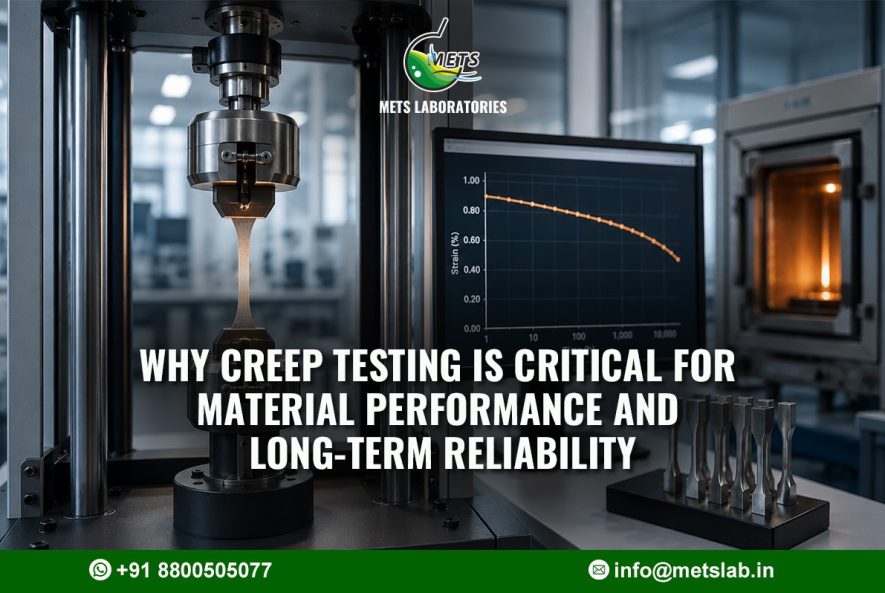
Introduction – Why Creep Testing for Materials Matters
In the modern manufacturing and engineering landscape, product durability dictates market success. This is especially true in rapidly growing industrial hubs like Delhi NCR, Gurugram, and Manesar. These regions host massive production clusters for automotive components, structural plastics, and heavy engineering goods. To prevent premature structural deformation under constant stress, implementing routine creep testing for materials is absolutely critical. Understanding how structural components hold up over extended operational life cycles allows engineering firms to eliminate failure risks completely.
With increasing demand for high-performance materials in sectors like plastics, rubber, construction, and aerospace, manufacturers must ensure their products withstand long-term stress without catastrophic failure. One of the most critical evaluations for this purpose is creep testing
What Is Creep Testing for Materials?
Creep testing is a method used to measure how a material deforms over time when subjected to a constant load or stress under controlled conditions. It helps determine the long-term stability and deformation behavior of materials.
Creep is the term used to describe the plastic deformation of a material over an extended period of time. Even small loads at elevated temperatures over a long period can cause permanent deformation in materials such as metals, ceramics, and plastics.

What Characteristic Values Are Determined with Creep Testing for Materials?
- Time for rupture
- Permanent strain
- Creep rupture strain
- Creep rupture necking
- Creep limit time
- Stain limit time (yield point)
- Creep modulus (the ratio of stress to strain as a function of the duration of the load application)
- Creep strength
- Creep strain
- Stress relaxation
Why Creep Testing for Materials Is Important for Manufacturers
Implementing a rigorous creep testing program provides major benefits to manufacturers:
- Improved Product Lifespan
Understanding how a material changes shape over five, ten, or twenty years allows manufacturers to design products with a predictable lifespan. It prevents components from sagging, warping, or stretching out of tolerance before their intended service life ends.
- Reduced Failure Under Long-Term Load
Components like structural beams, O-rings, and pressurized pipes are under constant stress. Creep testing helps engineers design parts that maintain their shape and function, preventing sudden structural failures during operation.
- Better Material Selection
Not all raw materials are equal, even if they share similar baseline data sheets. Creep testing allows procurement and R&D teams to compare different material grades, fillers, and polymer blends to find the most cost-effective option that meets long-term durability goals.
- Enhanced Customer Satisfaction
Products that maintain their structural integrity over years of continuous use build brand trust. By eliminating early wear and deformation, manufacturers protect their market reputation and reduce warranty claims.
- Compliance with Quality Standards
Many major industries—such as automotive, aerospace, and municipal infrastructure—cannot use untested materials. Creep testing ensures compliance with domestic and international quality frameworks like ISO, ASTM, and BIS.


Common Causes of High-Stress Failure and Creep
- Prolonged exposure to constant load
- High temperature conditions
- Poor material selection
- Manufacturing defects
- Improper design
- Environmental factors
How Creep Testing for Materials Is Performed in the Lab
- Sample preparation
- Load application
- Temperature control
- Deformation measurement
- Data analysis
Common Industry Standards for Creep Testing for Materials
Several international standards specify creep testing procedures:
- ASTM International ASTM E139 – Standard Test Methods for Conducting Creep, Creep-Rupture, and Stress-Rupture Tests
- International Organization for Standardization ISO 899 – Plastics Determination of Creep Behaviour
- International Electrotechnical Commission IEC standards for insulating materials
- British Standards Institution BS standards for material creep evaluation
Compliance with these standards ensures reliable and comparable test results.
Key Products That Require Creep Testing for Materials
- Plastic pipes
- Rubber components
- Automotive parts
- Structural materials
- Packaging materials
Benefits of Reliable Creep Testing for Materials for Global Exporters
For export-oriented manufacturing units operating out of industrial hubs like Gurugram, Manesar, and Noida, international compliance is key to commercial survival. Creep testing gives exporters several distinct advantages:
- Reduced Rejection of Shipments: Verifying long-term material stability prevents products from warping during long sea transits or failing quality checks at destination ports.
- Improved Buyer Confidence: Providing third-party creep test reports proves to international procurement managers that your components can handle long-term field use.
- Consistent Product Quality: Regular creep testing acts as an advanced quality firewall, ensuring that variations in raw material batches do not compromise product durability.
- Better Compliance with International Standards: Accessing high-value markets like the USA, European Union, and Japan requires adhering to strict ASTM, ISO, and DIN protocols. Creep testing fulfills these requirements.
- Stronger Reputation in Global Markets: Consistently meeting international life expectancy standards helps Indian manufacturers transition from low-cost suppliers to premium, trusted engineering partners
Conclusion
Creep testing is an essential tool for understanding how materials perform under sustained loads over long periods. By evaluating deformation behavior and creep resistance, manufacturers can ensure product durability, safety, and compliance with industry requirements. Whether for metals operating at high temperatures or plastics used in consumer products, creep testing plays a vital role in quality assurance and material characterization.
Organizations that incorporate creep testing into their quality control and product development processes can significantly reduce the risk of failure while enhancing customer confidence in their products. To verify your raw material integrity and ensure long-term mechanical stability, explore our accredited mechanical and physical testing services tailored to global engineering standards.
How METS Laboratories Supports Your Creep Testing for Materials Requirements
METS Laboratories provides comprehensive material testing services to support manufacturers and exporters. With experienced analysts and advanced equipment, the lab ensures accurate and reliable results.
Services include:
- Detailed test reports
- Compliance support
- Customized testing solutions
- Quick turnaround time
METS Laboratories helps industries maintain quality, improve performance, and meet regulatory requirements effectively.
Frequently Asked Questions (FAQs)
What is creep testing?
Why is creep testing important?
Which materials are commonly tested for creep?
At what temperature is creep testing conducted?
What are the three stages of creep?
How is creep different from stress relaxation?
What factors affect creep behavior?
Which industries use creep testing?
How long does a creep test take?
Manufacturers and Exporters Recommend Us
Dedicated professionals committed to providing you with accurate and reliable testing services. Get METS Lab services today from the best lab experts & get the accurate reports from our laboratory.