


- Mets Admin
- June 9, 2026
- Testing Insights
- 0 Comments
Introduction
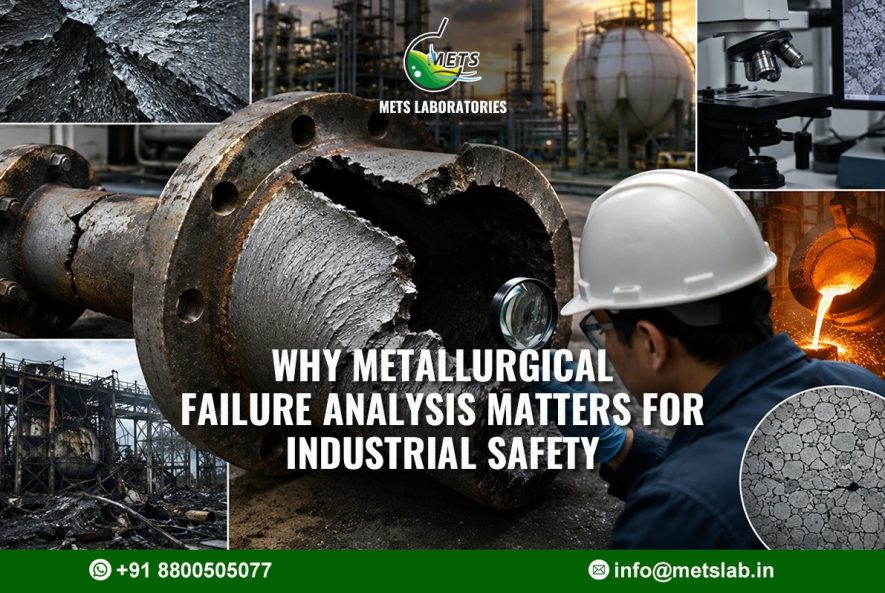
In industrial sectors where structural safety, performance, and operational longevity are critical, high-quality metallurgical products play an essential role. From precision automotive components and heavy construction materials to aerospace assemblies and critical machinery, unexpected metal failures can result in costly unscheduled downtimes, severe safety hazards, or even catastrophic accidents. Therefore, conducting a professional metallurgical failure analysis is vital to determining the root cause of these breakdowns and preventing future operational disasters.
Therefore, understanding exactly why a material breaks down is vital to protecting your assets. This is precisely where comprehensive metallurgical failure analysis becomes necessary—helping technical engineering teams identify the root cause of material breakdowns while actively preventing future operational issues.
What is Metallurgical Failure Analysis?
Metallurgical failure analysis is a systematic, highly technical investigation aimed at determining the exact scientific reasons why a metallic component fails or fractures during its operational service. It intentionally combines fundamental engineering principles, advanced material science, and various non-destructive analytical techniques to uncover structural weak points and recommend definitive corrective actions.
In addition, conducting this detailed investigation does not merely stop at improving component design and manufacturing processes. It also serves as legally valid technical documentation that aids in formal insurance claims, third-party legal disputes, and strict industrial quality control audits.

Common Causes of Metallurgical Failures
Understanding the underlying factors behind structural metal failures is the primary key to improving overall component performance and longevity. Some of the most common causes detected in our testing laboratory include:
- Fatigue Failure: This occurs due to repeated cyclic mechanical stresses over time, even if the applied operational stress stays well below the material’s actual yield strength.
- Environmental Corrosion: External chemical factors like humidity, ambient salt exposure, or aggressive industrial chemicals can degrade raw metals over time, leading to rapid corrosion failures.
- Stress Corrosion Cracking (SCC): The dangerous combination of constant tensile stress and a corrosive environment causes deep micro-cracks that are often impossible to detect until sudden failure occurs.
- Mechanical Overstress & Overloading: When an industrial component is subjected to a physical load far beyond its designed maximum capacity, it will deform permanently or fracture.
- Manufacturing & Welding Defects: Initial deficiencies such as internal micro-porosity, unwanted material inclusions, improper thermal heat treatment, or welding flaws heavily contribute to early failure.
Key Techniques Used in Failure Analysis of Metals
To deliver absolute precision, professional industrial testing laboratories utilize a mix of advanced analytical, chemical, and non-destructive testing (NDT) methodologies to execute full metallurgical failure analysis:
Comprehensive Visual Inspection: This serves as the mandatory first step in an investigation, helping technicians map out surface defects and macro-fracture patterns.
Advanced Fractography (SEM/Optical): Microscopic analysis of broken surfaces under a Scanning Electron Microscope (SEM) reveals definitive clues about the exact failure mode—identifying whether it was brittle, ductile, or fatigue-related.
Detailed Metallographic Examination: This process involves cutting, mounting, polishing, and chemical etching of metal cross-sections to examine microstructures under high-power microscopes.
Precision Hardness Testing: This is used to verify whether the alloy was correctly heat-treated and to locate any soft or abnormally hard spots across the stress zone.
Elemental Spectroscopy (EDS / XRF / OES): This determines the exact chemical composition of the metal to quickly identify accidental material mismatches or chemical contamination.
Non-Destructive Testing (NDT Protocols): Utilizing advanced methods like ultrasonic testing, dye penetrant inspection, or magnetic particle testing helps identify subsurface flaws without damaging the actual sample.


Industrial Applications Across Sectors
The practical application of material science diagnostics plays a definitive role across multiple major global frameworks:
- Automotive Industry: Used to investigate component failures in high-stress systems like engines, steering linkages, axles, or assemblies.
- Building & Construction: Used to analyze structural collapses, beam cracking, or foundational reinforcement failures in metal frameworks.
- Oil & Gas Sector: Crucial for pipeline rupture analysis, pressure vessel cracking, and weld joint degradation due to sour gas or chemical corrosion.
- Aerospace Infrastructure: Employed to inspect micro-fatigue cracks in aircraft skin panels, turbine blades, and landing gear.
Key Benefits of Professional Material Testing
- Optimizes future industrial product design and tensile performance.
- Enhances workplace safety, public reliability, and asset management.
- Reduces unexpected operational downtime and maintenance overhead costs.
- Mitigates legal vulnerabilities with rigorous engineering evidence for insurance claims.
Conclusion
Ultimately, the execution of deep metallurgical failure analysis is not just about pointing out what went wrong with a piece of metal—it is about gaining actionable technical insights that drive better designs, stronger materials, and safer industrial working spaces.
Are you currently facing recurring material breakdowns, or do you require an independent root-cause investigation for an insurance claim? METS Laboratories provides comprehensive, accredited analytical testing to mitigate your structural risks.
[Contact our expert technical engineering team today to schedule your metallurgical consultation.]
Frequently Asked Questions (FAQs)
What is the primary objective of performing a metallurgical failure analysis?
Which industrial sectors rely most heavily on metallurgical failure analysis?
How long does a standard metallurgical failure investigation take to complete?
What type of samples or materials can be evaluated for failure analysis?
Can metallurgical failure analysis reports be used in legal or insurance disputes?
Manufacturers and Exporters Recommend Us
Dedicated professionals committed to providing you with accurate and reliable testing services. Get METS Lab services today from the best lab experts & get the accurate reports from our laboratory.