


- Mets Admin
- August 14, 2026
- Testing Insights
- 0 Comments
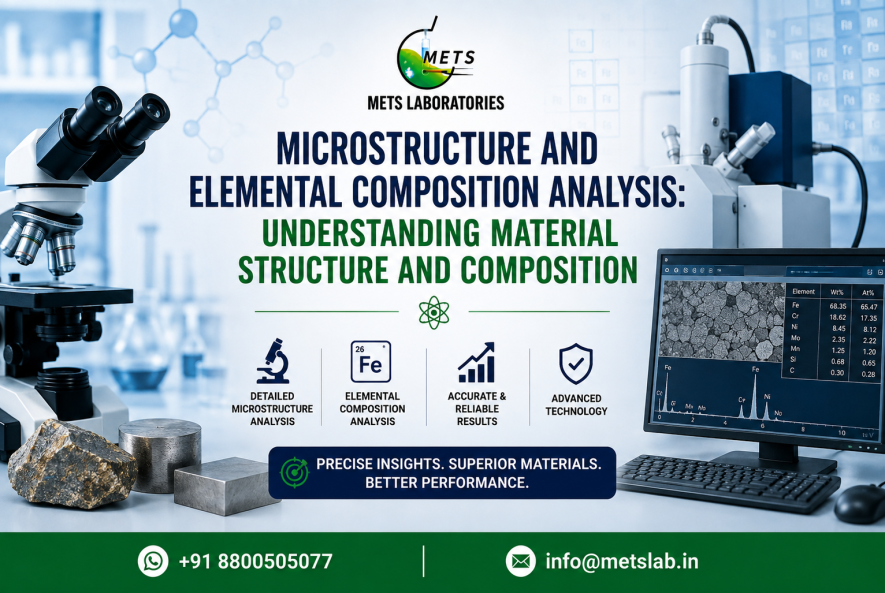
Introduction to Microstructure and Elemental Composition Analysis
The performance of a material depends not only on its visible appearance or basic strength but also on its internal structure and chemical makeup. Performing microstructure and elemental composition analysis allows engineers to evaluate critical features such as grain size, phase distribution, non-metallic inclusions, porosity, and micro-defects. These metallurgical characteristics directly dictate mechanical strength, hardness, corrosion resistance, wear performance, and long-term service life.
Microstructure and elemental composition analysis provides manufacturers, engineers, researchers, and quality professionals with valuable information about the condition and characteristics of a material.
These analyses are widely used for material verification, quality control, process evaluation, failure investigation, research and development, and comparison against specified material requirements.
What Is Microstructure and Elemental Composition Analysis?
Microstructure and elemental composition analysis involves a range of laboratory techniques used to characterize the physical structure and chemical composition of a material.
The appropriate analytical method depends on the material type, test objective, required detection level, and applicable specification.
Microstructural Analysis
Microstructural analysis examines the internal features of materials, particularly metals and alloys. Depending on the material and test requirement, examination may include:
- Grain structure and grain size
- Phase morphology and distribution
- Non-metallic inclusions
- Porosity and voids
- Cracks and other discontinuities
- Carbides, precipitates, or other constituents
- Decarburization or other surface-related microstructural changes
Metallographic examination generally involves appropriate sectioning, mounting, grinding, polishing, and etching, followed by examination using optical or electron microscopy. ASTM E3 provides guidance for preparation of metallographic specimens and emphasizes the importance of proper specimen preparation for revealing material structure.
Elemental Composition Analysis
Elemental analysis determines the chemical elements present in a material and, depending on the technique, their approximate or quantitative concentrations.
The choice of technique depends on factors such as the material matrix, elements of interest, concentration range, sample form, and required analytical sensitivity.

Why Is Microstructure and Elemental Analysis Important for Metals?
1. Material Verification
Analysis can help verify whether a material’s observed microstructure and elemental composition are consistent with the specified material grade or product requirements.
This is particularly useful for incoming raw material inspection, supplier verification, and quality control.
2. Process and Heat-Treatment Evaluation
Manufacturing processes such as casting, forging, welding, annealing, quenching, tempering, and other heat treatments can alter the microstructure of metals and alloys.
Metallographic examination can help determine whether the expected structural characteristics have been achieved and identify features that may indicate an unsuitable processing condition.
3. Failure Analysis
When a component fails unexpectedly, microstructural and compositional analysis can help identify possible contributing factors.
Examination may reveal features such as:
- Inclusions
- Porosity
- Cracks
- Abnormal grain structure
- Unwanted phases
- Material contamination
- Incorrect alloy composition
- Heat-treatment-related changes
These findings can be combined with other evidence to support a failure investigation.
4. Compliance With Material Specifications
Many material specifications include requirements relating to chemical composition, grain size, inclusion content, or microstructure.
Testing against the applicable specification can provide objective analytical information for quality and conformity assessment.


Industrial Applications Across Manufacturing and Metallurgy
Microstructure and elemental composition analysis is used across a wide range of industries, including:
- Automotive and transportation
- Aerospace
- Construction and infrastructure
- Oil and gas
- Power generation
- Manufacturing and engineering
- Metal and alloy production
- Welding and fabrication
- Medical and healthcare products
- Electronics and electrical industries
- Research and product development
The analytical approach is selected according to the material, application, and specific information required.
How METS Laboratories Supports Advanced Material Characterization
METS Laboratories supports manufacturers, suppliers, engineering companies, and product developers with material characterization and analytical testing based on the specific material and test requirement.
Material Examination
Testing can be planned to examine the microstructure, grain characteristics, inclusions, defects, and other relevant features of suitable materials.
Elemental Analysis
Depending on the material and analytical requirement, elemental characterization can be performed using appropriate analytical techniques such as EDS/EDX, XRF, ICP-OES, ICP-MS, or other applicable methods, subject to the laboratory’s available capability and scope.
Failure and Root-Cause Investigation
Microstructural and compositional information can be combined with other relevant test results to assist clients in investigating material-related failures and identifying potential contributing factors.
Standard-Based Testing
Where applicable, testing can be performed with reference to recognized standards such as ASTM E3 for metallographic specimen preparation, ASTM E112 for grain size determination, and ASTM E45 for inclusion content in steel.
Detailed Technical Reporting
Test reports can document the applicable method, sample information, observations, analytical results, images, and other relevant findings to support material verification and technical decision-making.
Conclusion: Unlocking Material Performance Through Analysis
Conducting accurate microstructure and elemental composition analysis provides valuable insight into the condition, chemical composition, processing history, and potential performance of materials. Routine evaluation enables manufacturers to prevent unexpected component failure, optimize heat treatment processes, and maintain strict quality standards across global supply chains.
To discover how our microstructural characterization supports mechanical load-bearing evaluation, explore our guide on aggregate testing for construction or Contact METS Laboratories today to speak with a senior metallurgist.
From routine material verification to complex failure investigations, appropriate analytical testing can help manufacturers and engineers make informed decisions about material selection, manufacturing processes, quality control, and product reliability.
Selecting the right analytical technique and applicable standard is essential because no single method provides complete information for every material or application.
METS Laboratories provides material testing and analytical support based on the specific sample, test objective, applicable standard, and client requirements.
Frequently Asked Questions (FAQs)
What is microstructure analysis?
What is elemental composition analysis?
Which techniques are used for material characterization?
What standards are commonly used for metallographic analysis?
Can microstructure analysis identify the cause of material failure?
How long does material characterization take?
Manufacturers and Exporters Recommend Us
Dedicated professionals committed to providing you with accurate and reliable testing services. Get METS Lab services today from the best lab experts & get the accurate reports from our laboratory.