


- Mets Admin
- September 8, 2026
- Testing Insights
- 0 Comments
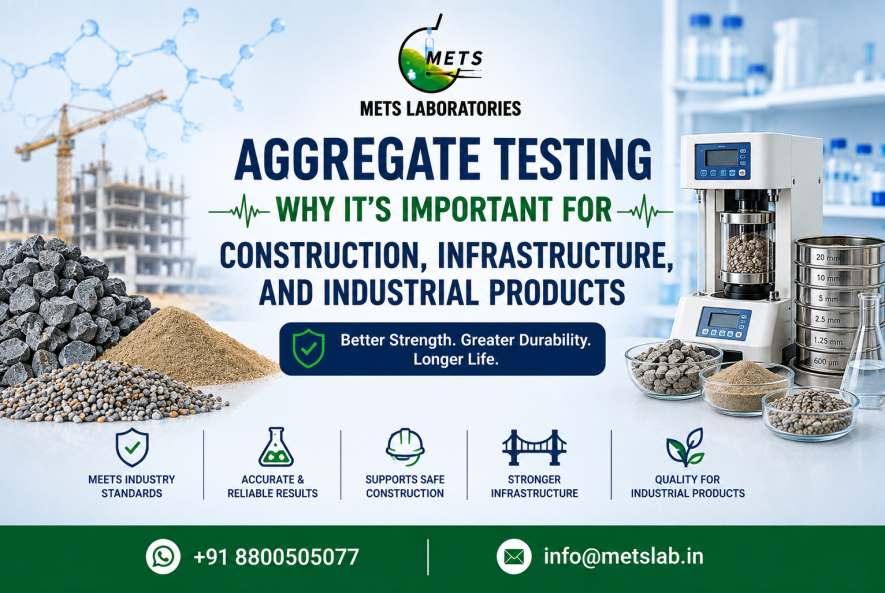
Introduction to Aggregate Testing for Construction
In today’s building sector, conducting rigorous aggregate testing for construction and infrastructure projects is essential due to stricter building codes, environmental regulations, and public safety expectations. To meet these rigorous standards, advanced physical, mechanical, and chemical evaluation—particularly particle size analysis, strength assessment, and petrographic examination—is vital. These testing techniques provide precise, reliable data on gradation, Los Angeles abrasion resistance, alkali-silica reactivity, and deleterious material content, safeguarding structural integrity from quarry extraction to completed project.
Certifying aggregates as compliant extends beyond regulatory obligation; it builds client confidence and protects contractor reputation. By analysing mechanical properties, chemical composition, and physical durability, laboratories can verify raw materials and finished mixes with certainty, preventing premature failure or structural defects. This assurance is vital for markets with strict quality and sustainability requirements, where substandard aggregates can disqualify a project. Ultimately, robust testing empowers engineers and developers to build confidently while upholding their commitment to safety, longevity, and environmental stewardship.
Why Is Aggregate Testing for Construction Important?
Rigorous testing for aggregate properties—including gradation, flakiness, clay content, crushing strength, and freeze-thaw resistance—is essential. It acts as the final safeguard against material variability, misclassification, or supplier fraud. For example, studies have shown that a significant percentage of imported aggregates fail to meet local specifications for Los Angeles abrasion or sulphate soundness, proving that such risks are real. Testing provides scientific proof for certification, ensuring materials meet regulatory and project-specific standards. This helps contractors earn trust, prevent costly rework, and access valuable public infrastructure and high-spec commercial markets. For project managers, testing is a key risk management tool that reduces legal and safety liabilities. Ultimately, it serves as a “trust but verify” system, ensuring that supply chain claims about aggregate quality and performance are accurate and defensible.

Key Physical and Chemical Parameters Evaluated
To overcome these challenges, laboratories employ a multi-faceted approach using a suite of analytical techniques. These methods assess several key parameters to ensure comprehensive assurance.
- Particle Size Distribution (Sieve Analysis) – Determines gradation for mix design and workability.
- Mechanical Strength (Los Angeles Abrasion, Impact, Crushing Value) – Measures resistance to wear and breakage.
- Durability (Soundness, Freeze-Thaw, Magnesium/Sulphate Test) – Assesses resistance to weathering and environmental cycles.
- Deleterious Materials (Clay Lumps, Friable Particles, Organic Impurities) – Identifies contaminants that weaken concrete or asphalt.
- Chemical Reactivity (Alkali-Silica Reaction, Sulphate Content) – Prevents harmful expansion and cracking in concrete.
- Petrographic Analysis (Microscopic Examination) – Evaluates mineralogy and potential for alkali-aggregate reaction.
- Shape & Texture (Flakiness, Elongation, Angularity) – Affects compaction, bonding, and ultimate strength.
Types of Aggregate Materials Commonly Tested
A wide array of aggregate materials are subject to these tests to ensure compliance across the supply chain. This includes:
- Natural Aggregates: Crushed stone, gravel, sand, and marine-dredged materials.
- Recycled Aggregates: Reclaimed concrete, asphalt millings, and construction demolition waste.
- Manufactured Aggregates: Lightweight aggregates (expanded clay/shale), slag, and synthetic materials.
- Specialty Aggregates: Railway ballast, filter media, roofing granules, and refractory materials.
Structural Risks of Using Untested Aggregates
Utilising materials without proper aggregate testing exposes contractors and developers to significant and multifaceted risks:
- Structural Failure and Liability: Poor-quality aggregates can lead to cracking, spalling, or collapse, endangering lives and resulting in massive lawsuits.
- Project Delays and Rework: Non-compliant materials halt construction, causing expensive downtime and schedule overruns.
- Contract Penalties and Disputes: Failing to meet specified quality grades may result in withheld payments or legal disputes with clients.
- Regulatory Rejection: Public works and infrastructure projects often require certified materials; failure to comply bars market access.
- Reputation Damage: A high-profile failure linked to substandard aggregates can erode decades of trust and future business opportunities.
- Environmental Violations: Leaching of harmful substances (e.g., sulphates, heavy metals) from untreated aggregates can breach environmental permits.
Relevant Standards (IS, ASTM, BS) and Regulatory Compliance
Testing laboratories must adhere to rigorous standards to ensure their results are reliable and defensible. Key standards include:
- ISO/IEC 17025:2017: The overarching standard for the competence of testing and calibration laboratories. Accreditation ensures robust quality management and accurate results.
- ASTM International Standards (e.g., C33, C131, C88, C1260, D692): Widely used for aggregate testing in concrete and asphalt applications.
- BS EN Standards (e.g., 1097, 933, 13242, 1367): European norms for mechanical, physical, and chemical properties of aggregates.
- National Regulations (e.g., CPWD, MORTH, AASHTO): Mandatory compliance with local infrastructure and highway specifications.
- Standardised Test Methods: Laboratories employ validated methods such as ASTM C117 (material finer than No. 200 sieve), ASTM C289 (potential alkali reactivity), and EN 1367-2 (magnesium sulphate soundness) to ensure reproducibility and reliability.


How METS Laboratories Supports Your Aggregate Testing Needs
METS Laboratories is a trusted partner for construction and infrastructure firms ensuring aggregate product integrity. As an ISO/IEC 17025:2017 accredited lab, METS offers comprehensive testing for gradation, mechanical strength, durability, chemical reactivity, and deleterious content. Their advanced facilities provide physical and chemical analyses, including sieve analysis, Los Angeles abrasion, petrographic microscopy, and X-ray fluorescence for chemical composition. These services help contractors reduce risks, achieve compliance, and obtain scientific evidence for quality certification. By verifying aggregate purity and performance, METS gives engineers peace of mind, protects public safety, safeguards company reputation, and secures access to domestic and international infrastructure markets. With reliable testing, construction firms can confidently meet regulatory, quality, and sustainability standards.
Conclusion: Ensuring Infrastructure Durability
In today’s demanding building environment, scientific aggregate testing for construction quality, durability, and chemical safety is essential. Modern analytical methods like sieve analysis, abrasion testing, and petrography provide the accuracy needed to protect public safety, meet IS/ASTM regulations, and maintain brand integrity.
To learn how coarse and fine aggregate quality directly impacts structural load-bearing performance, explore our guide on concrete cube compressive strength testing or Contact METS Laboratories today to schedule material testing for your project.
METS Laboratories supports construction firms nationwide with accredited, expert testing services. They help businesses confidently certify their aggregates and finished structures as safe and compliant. By choosing METS, engineers can verify material authenticity, meet high standards, and secure their supply chains. Contact METS Laboratories today to discuss your aggregate testing needs and ensure structural integrity.
Frequently Asked Questions (FAQs)
What is the difference between Los Angeles Abrasion and Impact Value tests?
How can you detect alkali-silica reactivity in aggregates?
What is the typical limit for fine material passing the No. 200 sieve in concrete aggregates?
Why is it important to test recycled aggregates separately from natural ones?
Manufacturers and Exporters Recommend Us
Dedicated professionals committed to providing you with accurate and reliable testing services. Get METS Lab services today from the best lab experts & get the accurate reports from our laboratory.