

- Mets Admin
- July 24, 2026
- Testing Insights
- 0 Comments
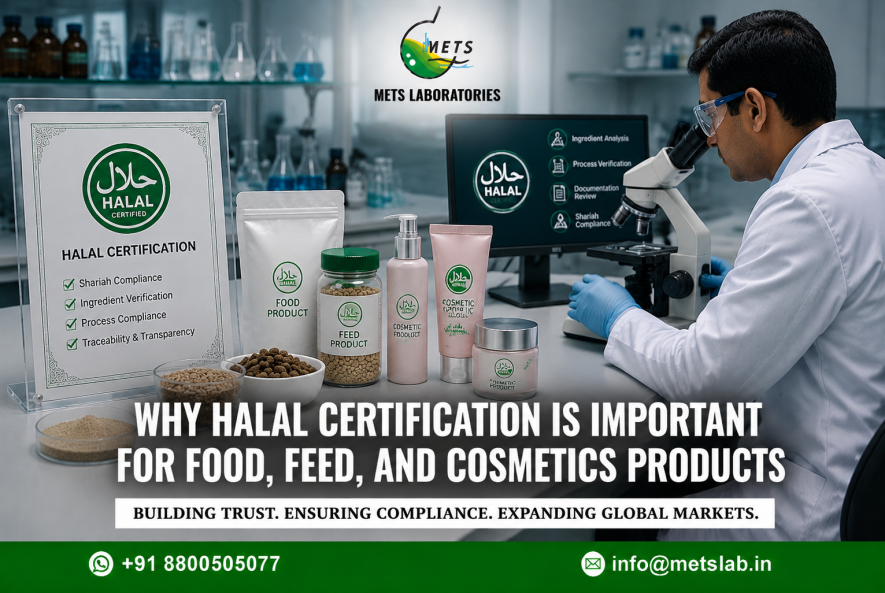
Introduction to Halal Certification for Food Feed and Cosmetics
In today’s global marketplace, securing reliable Halal certification for food feed and cosmetics has become vital due to rising religious principles, ethical values, and food safety standards. To meet these rigorous compliance mandates, advanced molecular testing—particularly DNA-based analysis—is essential. These scientific techniques provide precise, sensitive detection of prohibited substances like porcine derivatives and GMOs, safeguarding product integrity from farm to finished goods.
Certifying a product as compliant extends beyond regulatory obligation; it builds consumer trust and protects brand reputation. By extracting and examining genetic material, laboratories can verify raw materials and finished goods with certainty, preventing inadvertent contamination. This assurance is vital for markets with strict Halal requirements, where porcine DNA or GMO presence can disqualify a product. Ultimately, robust testing empowers brands to market confidently while upholding their commitment to transparency and consumer well-being.
Why Is Molecular Halal Testing Important?
Rigorous testing for Halal, porcine, and GMO-free status is essential. It acts as the final safeguard against cross-contamination, mislabeling, or fraud. For example, a study in Indonesia found that 61% of beef meatball samples actually contained pork DNA—proving that such risks are real. Testing provides scientific proof for certification, ensuring products meet religious and consumer standards. This helps brands earn trust, prevent costly recalls, and access valuable Halal and non-GMO markets. For manufacturers, testing is a key risk management tool that reduces legal and reputation risks. Ultimately, it serves as a “trust but verify” system, making sure that supply chain claims about product purity are accurate and defensible.

Key Parameters Evaluated During Halal Testing
To overcome these challenges, laboratories employ a multi-faceted approach using a suite of molecular testing techniques. These methods assess several key parameters to ensure comprehensive assurance.
- DNA/RNA Extraction & Quantification
- Genetic Marker Detection (Species Identification & Authenticity Testing)
- PCR / qPCR Testing (Pathogen-Specific Gene Targets)
- Viral Detection (Environmental Viral Markers)
- Microbial Source Tracking & Molecular Fingerprinting
Types of Materials Commonly Tested for Compliance
A wide array of materials are subject to these tests to ensure compliance across the supply chain. This includes:
- Food & Feed: Raw meat (beef, chicken), processed meat products (meatballs, sausages, canned meat), gelatine, sweets, marshmallows, gummy candies, animal feed and seeds.
- Cosmetics: Skin creams, mask packs, beauty and hygiene products, lip balms, and products containing plant extracts.


Commercial Risks of Using Untested Raw Materials
Utilizing materials without proper Halal, porcine, and GMO testing exposes brands to significant and multifaceted risks:
- Loss of Consumer Trust and Brand Reputation: A major scandal involving the discovery of porcine or GMO content can erode decades of consumer trust overnight.
- Market Access Denied: Products may be rejected at borders or withdrawn from shelves in countries with strict halal requirements.
- Legal Penalties and Fines: Selling mislabeled products is a violation of consumer protection laws and food safety regulations, leading to fines and legal action.
- Product Recalls: The cost of recalling a contaminated product from the market is astronomical, encompassing logistics, disposal, and wasted inventory.
- Religious and Ethical Violations: For a significant portion of the population, the accidental consumption of pork or GMO is a serious religious and ethical violation, which can lead to public backlash and boycotts.
Standards Governing Halal Certification for Food Feed and Cosmetics
Testing laboratories must adhere to rigorous standards to ensure their results are reliable and defensible. Key standards include:
- ISO/IEC 17025:2017: This is the overarching standard for the competence of testing and calibration laboratories. Accreditation to this standard ensures the laboratory operates with a robust quality management system and produces accurate results.
- OIC/SMIIC 35:2020: This is the specific standard for halal accreditation, outlining the requirements for testing laboratories to provide services for halal certification.
- Standardized Methods: The use of validated methods is critical. Laboratories often employ international, national, or in-house methods based on standards like ISO 21569, ISO 24276, and ISO 21571 for GMO and species identification. The MIQE guidelines provide essential parameters for qPCR methods to ensure reproducibility and reliability.
How METS Laboratories Supports Testing and Verification
METS Laboratories is a trusted partner for brands ensuring product integrity. As an ISO/IEC 17025:2017 accredited lab, METS offers comprehensive testing for Halal, porcine, and GMO-free status. Their advanced facilities provide molecular analyses including DNA extraction, real-time PCR, and species identification. These services help brands reduce risks, achieve compliance, and obtain scientific evidence for certification. By verifying product purity, METS gives manufacturers peace of mind, protects consumer safety, safeguards brand reputation, and secures access to domestic and international markets. With reliable testing, brands can confidently meet religious, legal, and quality standards.
Conclusion: Securing Market Access with Accredited Testing
In today’s complex supply chains, scientific testing for Halal, porcine, and GMO-free status is essential. Modern DNA methods like qPCR provide the accuracy needed to protect consumers, meet regulations, and maintain brand integrity. For manufacturers seeking market expansion, utilizing accredited Halal, Porcine, and GMO-Free Assurance testing services is a smart investment in consumer trust and global market access.
METS Laboratories supports brands in Gurugram and beyond with accredited, expert testing services. They help businesses confidently certify their products as pure and compliant. By choosing METS, manufacturers can verify authenticity, meet high standards, and secure their supply chains. Contact METS Laboratories today to discuss your testing needs and ensure product integrity.
Frequently Asked Questions (FAQs)
What is the difference between PCR and qPCR?
How can you detect porcine DNA in highly processed foods like gelatin?
What is the limit of detection for porcine DNA in a typical qPCR test?
Why is it important to test cosmetics for porcine DNA?
Manufacturers and Exporters Recommend Us
Dedicated professionals committed to providing you with accurate and reliable testing services. Get METS Lab services today from the best lab experts & get the accurate reports from our laboratory.