

- Mets Admin
- March 23, 2026
- Testing Insights
- 0 Comments
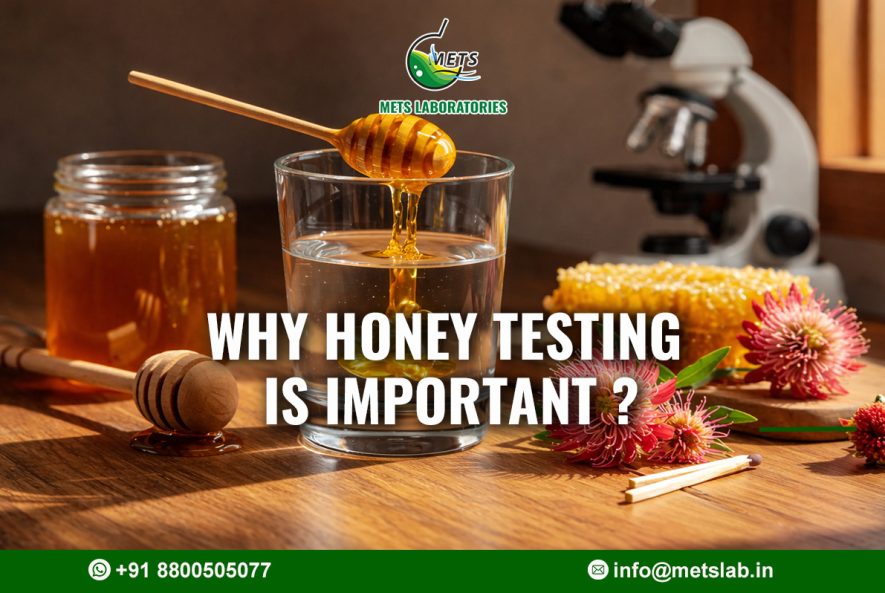
Introduction – Why Honey Product Testing Matters
Honey is widely valued not just as a natural sweetener, but also for its exceptional nutritional and medicinal properties. However, the quality, authenticity, and purity of raw batches can vary significantly due to factors like illegal sugar syrup adulteration, improper heat processing, and environmental contamination. Therefore, implementing comprehensive honey product testing plays a crucial role for modern food brands and exporters. This systematic verification builds long-term consumer trust. Consequently, with increasing public awareness, third-party lab results reassure buyers that they are purchasing a genuine, safe, and legally compliant product.
What is Honey Product Testing?
Honey product testing is the scientific analysis of honey samples to evaluate their purity, composition, safety, and quality using laboratory methods.
Scope of Honey Testing
The scope of honey testing is broad and includes several important aspects:
- Physico-Chemical Parameters
These determine the basic quality and composition of honey:
- Moisture Content
Indicates water level; high moisture can cause fermentation. - pH and Acidity
Show freshness and helps detect spoilage. - Electrical Conductivity
Helps identify floral origin and mineral content. - Hydroxymethylfurfural (HMF)
Indicates overheating or aging of honey.
- Sugar Composition (Carbohydrate Profile)
- Fructose and Glucose (main natural sugars)
- Sucrose (should be within limits)
- Reducing Sugars
Abnormal levels may indicate adulteration or poor quality.
- Enzyme Activity
- Diastase Activity
- Invertase Activity
These enzymes indicate freshness and natural origin. Low levels may suggest overheating or storage issues.
- Adulteration Tests
- Added sugar syrups (Eg., Cane sugar, Corn syrup)
- Artificial sweeteners (Eg. Aspartame, Acesulfame K, Etc. )
Advanced methods (like isotope analysis) confirm authenticity.
- Microbiological Parameters
- Yeasts and molds
- Total Plate Count
- Salmonella
- coli
- aureus
Ensures honey is safe for consumption.
- Contaminant Analysis
Tests for harmful substances such as:
- Pesticide Residues
- Antibiotics
- Heavy metals (lead, arsenic, etc.)
Important for health safety and export compliance.
- Pollen Analysis (Melissopalynology)
- Identifies floral and geographical origin
- Confirms labeling claims (e.g., monofloral honey)
- Sensory Evaluation
- Color
- Taste
- Aroma
- Texture
Used to assess overall consumer acceptability.

Why Honey Product Testing is Essential for Quality Control
Honey product testing is mandatory or strongly recommended to ensure that the honey sold in the market is safe, genuine, and of good quality. The reasons are both legal and practical:
- Food Safety Requirements
Governments and food safety authorities require testing to make sure honey is safe for human consumption. It must be free from harmful substances like pesticides, antibiotics, and heavy metals.
- Prevention of Adulteration
Honey is one of the most commonly adulterated food products. Testing helps detect:
- Added sugar syrups
- Artificial sweeteners
- Dilution with water
- Regulatory Compliance
Food laws and standards (such as those set by authorities like FSSAI in India) make testing compulsory for:
- Manufacturing
- Export and import
- Commercial sale
- Quality Assurance
Testing ensures that honey meets standard quality parameters such as:
- Moisture content
- Acidity
- Sugar composition
- Enzyme activity
This helps maintain consistent quality and shelf life.
- Consumer Protection
Consumers rely on labels and claims. Testing ensures that:
- The product matches its label
- It is safe and authentic
- There is no fraud or misrepresentation
- Brand Reputation and Trust
Regular testing helps companies build credibility. Verified honey products increase consumer confidence and brand value.
In Simple Words
Honey product testing is mandatory or recommended because it protects health, prevents fraud, ensures legal compliance, and guarantees quality, making it essential for both producers and consumers.
Regulatory Standards Governing Honey Product Testing
Honey product testing is guided by national and international standards to ensure that honey is pure, safe, and of consistent quality. These regulations define the limits and parameters that honey must meet before it is sold or exported.
- Indian Standards (India-Specific)
Food Safety and Standards Authority of India (FSSAI)
- The main authority regulating honey in India.
- Specifies standards under the Food Safety and Standards Regulations.
- Key requirements include:
- No added sugar or adulterants
- Limits for moisture, sucrose, and acidity
- Restrictions on antibiotics and contaminants
Bureau of Indian Standards (BIS)
- Provides quality certification (e.g., IS standards for honey).
- Covers:
- Purity criteria
- Testing methods
- Labeling guidelines
- International Standards 🌍
Codex Alimentarius Commission
- Joint body of FAO and WHO.
- Sets globally accepted standards for honey.
World Health Organization (WHO)
- Provides general food safety guidelines.
- Helps ensure honey is safe for consumption worldwide.
European Food Safety Authority (EFSA)
- Regulates honey in the European Union.
- Very strict rules for:
- Other Important Guidelines
Labeling Regulations
- Honey must clearly mention:
- Source (natural/raw/processed)
- Net weight
- Manufacturer details
- Batch number and expiry
Export & Import Regulations
- Countries may require:
- Residue testing reports
- Certificates of analysis (COA)
- Compliance with Codex or local laws


Who Requires Professional Honey Product Testing?
Honey testing is required by:
Honey testing is important for anyone involved in the production, processing, sale, or regulation of honey. Different stakeholders rely on testing to ensure that honey meets required quality, safety, and purity parameters set by authorities like the Food Safety and Standards Authority of India and the Codex Alimentarius Commission.
- Beekeepers (Apiculturists)
- To check the quality and purity of raw honey
- To ensure proper harvesting and storage
- Honey Processors & Manufacturers
- To maintain standard quality during processing and packaging
- To test parameters like HMF, sugar composition, and enzyme activity
- Food Companies & Brands
- Companies that use honey as an ingredient (in foods, beverages, or medicines)
- Exporters & Importers
- Must meet international standards before trading
- Require testing reports for:
- Pesticides
- Antibiotics
- Heavy metals
- Regulatory Authorities
- Government bodies monitor honey quality in the market
- Ensure compliance with legal standards and prevent adulteration
- Laboratories & Quality Control Agencies
- Conduct testing and provide certification reports
- Help businesses prove compliance and maintain credibility
- Retailers & Distributors
- To verify that the products they sell are authentic and safe
Helps protect brand reputation and customer trust.
How to Choose the Right Partner for Honey Product Testing
When selecting a honey product testing laboratory, consider:
- International Accreditations: Verify that the facility holds a valid ISO/IEC 17025 accreditation and necessary government approvals to ensure your test certificates are legally valid for local retail or export clearance.
- Advanced Adulteration Detection: Ensure the lab is equipped with high-precision instruments like IRMS (Isotope Ratio Mass Spectrometry) and HPLC to detect sophisticated modern adulterants like corn, rice, or cane sugar syrups.
- Comprehensive Testing Parameters: The lab must be a one-stop shop capable of checking quality markers (moisture, HMF, diastase activity), purity profiles (fructose/glucose ratios), and safety metrics (heavy metals, pesticides, and microbial counts).
- Specialized Food Matrix Expertise: Choose a partner with deep, proven experience specifically in food and agricultural products testing, as food scientists understand how geographic and botanical origins naturally affect honey data.
- Efficient Turnaround Times (TAT): Select a laboratory that offers seamless sample logistics, robust chain-of-custody tracking, and fast, clear engineering reports to keep your production pipeline moving without costly shipping delays.
An experienced laboratory ensures reliable results and compliance assurance.
How METS Lab Can Support Your Honey Product Testing
Our laboratory provides comprehensive Honey testing services
- Trace-level analysis
- Support for ISO/ FSSAI registration and export compliance
- Regulatory guidance and technical support
Conclusion
Honey testing plays a vital role in ensuring that honey is pure, safe, and of high quality before it reaches consumers. With increasing risks of adulteration and contamination, proper testing has become essential across the entire supply chain.
Frequently Asked Questions(FAQs)
Is Fiehe’s testing mandatory for Honey product?
How long does Honey testing take?
Which parameters are commonly tested in Honey?
Is the test report valid for export?
When should testing be repeated?
Manufacturers and Exporters Recommend Us
Dedicated professionals committed to providing you with accurate and reliable testing services. Get METS Lab services today from the best lab experts & get the accurate reports from our laboratory.