
Industrial Textiles Testing – METS Laboratories
METS Laboratories provides reliable Industrial Textiles Testing to help manufacturers, suppliers and industrial businesses evaluate the quality, strength and performance of technical textile products. These textiles are used in products in which performance and durability are paramount.
As an industrial textile testing laboratory, we help our clients evaluate textile properties based on the material type, usage, customer requirements and applicable test methods. Some textiles we test include fabric for industrial uses, geotextiles, conveyor belts, ropes and webbing, and tarps and covers.
Our Industrial Textile Testing Services support quality control, product development and material evaluation. It is very important for manufacturers and suppliers of textiles to have their products tested to ensure they meet the desired performance levels.
What Is Industrial Textile Testing?
Industrial Textile Testing is the process of assessing the physical, mechanical and functional properties of textile materials for industrial usage. Unlike clothing fabrics, which come in contact with human skin, industrial textiles are in contact with different environments and conditions which may be extreme and demanding. Therefore they must be tested to withstand those conditions.
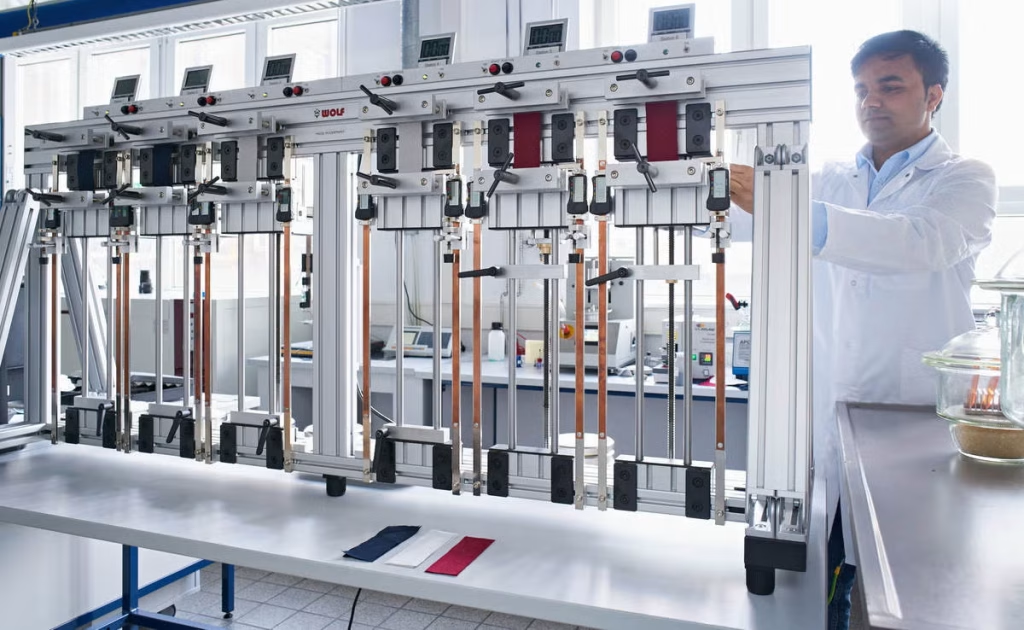
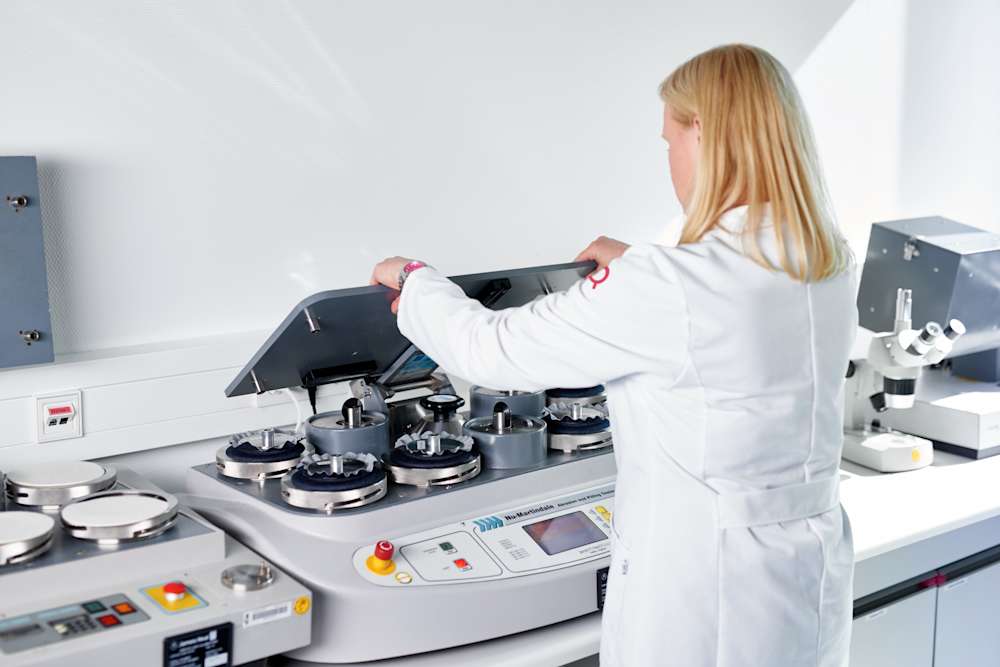
A textile product is assessed to determine whether it meets the requirements for its intended use. Some of the tests which may be performed on textile materials include determination of tensile strength, tear resistance and abrasion, bursting strength, fluid permeability and resistance to flame.
A professional Industrial Textile Testing Laboratory helps manufacturers to identify material weaknesses, maintain consistent quality and assess compliance with relevant specifications. The selection of test methods depends on the material, intended application and applicable standards.
Industrial Textile Products We Test
Industrial textiles are used in nearly every aspect of our everyday lives including construction, transport, agriculture and manufacturing. Every product has its own set of performance requirements, making it important to choose the right tests for its intended use.
Geotextiles
Geotextiles are used in road construction, drainage systems, retaining walls and erosion control. Testing may involve evaluation of tensile strength, puncture resistance, and permo-filtration characteristics, among others, to suit the material and the end use.
Conveyor Belts
Conveyor belts are used in manufacturing, warehouse and transport (mining and industries) to move materials. Tests may include tensile strength and elongation, lay adhesion and abrasion, among others.
Ropes, Webbing and Industrial Straps
Industrial ropes and webbing are used in securing, transporting and other industrial applications. Tests may include breaking strength, tensile strength, elongation and other characteristics, among others, as per the specification.
Tarpaulins and Protective Fabrics
Tarpaulins and protective fabrics are used to cover and protect against exposure to the environment. Tests may include tensile strength, resistance to tearing, and other application-specific characteristics.
Technical and Coated Fabrics
Technical fabrics are designed to meet particular functional requirements. Industrial Fabric Testing helps evaluate their mechanical properties, coating performance, resistance to wear and other characteristics relevant to their intended use.
Industrial Textile Testing Parameters
Testing parameters depend on the material, its construction and the conditions in which it will be used. Common evaluations may include:
- Tensile strength: Testing to determine the force that will pull the material apart.
- Tear resistance: Testing to evaluate the resistance to the propagation of a tear.
- Elongation: Testing to see how far a material will stretch under an applied load.
- Abrasion resistance: Testing to assess how the material will wear under friction.
- Bursting strength: Determines resistance to pressure applied in a direction perpendicular to the fabric surface, if applicable.
- Puncture resistance: Determines the resistance of a material to penetration, under specified test conditions.
- Air permeability: Determines the ability of air to pass through a textile material.
- Water permeability: Assesses the ability of water to flow through or across a material, using the appropriate method.
- Flame resistance: Determines the tendency of a material to burn, under specified test conditions.
- Adhesion strength: Evaluates the strength of the bond between layers of a coated or laminated product, if applicable.
These evaluations support Industrial Fabric Testing by helping manufacturers understand whether their materials meet defined performance specifications. Not all tests are suitable for all products, hence the selection of tests should be based on the fabric and the intended use.
Industrial Textile Testing Standards
There are standards developed to test textile products for evaluation of certain characteristics under specified and controlled conditions. Use of these standards ensures consistency and allows comparisons with other test results based on defined technical specifications.
Depending on the product and test requirement, relevant standards may include:
- ASTM standards: Methods of test for textile properties and geotextile strength and tear resistance.
- ISO standards: International methods of test for textile properties.
- BIS standards: Applicable Indian Standards for relevant products and test methods.
- Product-specific standards: May be applicable to conveyor belts, ropes and webbings, as well as protective fabrics and clothing.
The correct standard depends on the product, property being measured and customer requirements. Businesses should confirm that the required method is available within the laboratory’s testing scope. Where accreditation is required, the relevant accreditation scope should also be verified.
Why Is Industrial Textile Testing Important?
Industrial textiles are subjected to very strenuous conditions. Materials that do not meet specified requirements may suffer from premature wear, reduced performance and eventual failure during service.
Quality control: Testing enables verification that materials meet defined quality requirements and are maintained within specified limits from batch to batch.
Product development: Testing plays an important role during the assessment and development of new materials and textile constructions.
Performance evaluation: Testing is performed to validate that the measured properties of products are adequate for the intended use.
Problem identification: Testing may be performed to determine the cause of failure of materials or premature wear of a product.
Specification verification: Results are used by manufacturers and buyers to compare against agreed requirements and specifications.
Customer confidence: Documented results support technical discussions with customers, suppliers and project teams.
A reliable Industrial Textile Testing Laboratory provides objective information that helps businesses make informed decisions about material quality. Testing does not, however, guarantee safety of the product, nor compliance to standards and regulations.
Industries We Serve
Industrial textiles support a wide range of applications. Testing requirements vary according to the operating environment, product design and expected performance.
- Construction and infrastructure: Geotextiles and separation materials, reinforcement fabrics, drainage materials.
- Manufacturing: Industrial fabrics, coated textiles and technical textile components.
- Transportation and logistics: Conveyor belts, securing webbing and protective covers.
- Agriculture: Tarpaulins, protective fabrics and related textile materials.
- Mining and material handling: Industrial belts and textiles exposed to demanding conditions.
- Textile manufacturing: Quality Control and assessment of textile materials.
Businesses seeking Industrial Textile Testing in India can use appropriate testing to assess whether materials meet customer specifications and relevant technical requirements.
Who Needs Industrial Textile Testing Services?
Testing is beneficial to businesses involved in manufacturing, supplying, purchasing or using technical textile products.
- Industrial textile manufacturers looking to assess material quality during product development and production.
- Technical fabric suppliers who need test results to support product specifications.
- Geotextile manufacturers and suppliers evaluating the mechanical and hydraulic properties of their materials.
- Conveyor belt manufacturers assess strength, adhesion and wear-related properties.
- Importers and exporters require product evaluation against buyer specifications.
- Infrastructure contractors and consultants who need material test data for projects.
- Quality assurance teams responsible for checking products against defined acceptance criteria.
Our Industrial Textile Testing Services can be tailored to the requested properties, product type and applicable testing methods, subject to laboratory capability and scope.
Our Industrial Textile Testing Process
Step 1: Understand Your Requirements
Share details of your product, the material of construction, the intended application, and the properties you want us to evaluate.
Step 2: Select Appropriate Tests
The requested parameters and applicable methods are reviewed according to the material, specifications and available laboratory capabilities.
Step 3: Submit Samples
A representative sample of the product, within the limit of quantity, size and preparation as described for the selected tests, should be provided.
Step 4: Conduct Laboratory Testing
Testing is performed using the applicable procedures and specified conditions for the selected parameters.
Step 5: Review the Results
The measured properties are documented and can be assessed against the specifications provided by the customer.
Step 6: Receive the Test Report
The report outlines the results of the tests conducted, as per the requirements of reporting.
For Industrial Textile Testing in India, discussing your requirements before sample submission, enables clarification of the appropriate scope of testing and sample preparation.
Frequently Asked Questions
What is industrial textile testing?
Industrial textile testing evaluates the physical, mechanical and functional properties of textile materials used in industrial applications. It may include strength, tear resistance, abrasion, permeability and other tests selected according to the product's intended use.
What products can be tested?
Depending on the available testing scope, products may include geotextiles, conveyor belts, ropes, webbing, tarpaulins, coated fabrics and other technical textiles.
What tests are performed on industrial textiles?
Common tests include tensile strength, elongation, tear resistance, abrasion resistance, bursting strength, puncture resistance, permeability and flame resistance. The applicable tests depend on the product and its requirements.
Do you test geotextiles?
Geotextile testing may include tensile strength, puncture resistance, water permeability and other relevant properties. The test programme depends on the type of geotextile, its application and the required standards.
Can you test conveyor belts?
Conveyor belt testing may include tensile strength, elongation, adhesion between layers and abrasion resistance. Contact METS Laboratories to confirm the availability of the required test methods.
Do you test industrial ropes and webbing?
Ropes and webbing may be evaluated for tensile properties, breaking strength, elongation and other relevant characteristics. The appropriate method depends on the product construction and intended application.
Can industrial textile testing be done according to ASTM?
ASTM methods can be used where an applicable standard is available and the required testing capability is within the laboratory's scope. The specific method should be confirmed before sample submission.
Can you test products according to ISO standards?
ISO-based testing may be possible for applicable products and properties. The relevant standard and test availability should be confirmed according to the material and requested evaluation.
How long does industrial textile testing take?
Turnaround time depends on the product, number of test parameters, applicable methods and sample requirements. Contact METS Laboratories to obtain an estimated completion time.
-
Garments & Apparels Testing
-
Geo-Textiles Testing
-
Grey Fabrics Testing
-
Agro-Textiles Testing
-
Automotive Textiles Testing
-
Carpet & Rugs Testing
-
Diaper Testing
-
Fibre & Filaments Testing
-
Finished Fabric Testing
-
Medical Textile Testing
-
Packaging Textiles Testing
-
Protective Textiles Testing
-
Sports Textiles Testing
-
Terry Fabrics & Its Products Testing
-
Textile Rubber Composite Testing
-
Textiles & Fabrics Testing
-
Yarns & Cords Testing