


- Mets Admin
- July 14, 2026
- Testing Insights
- 0 Comments
Introduction to Essential Toy Testing Safety Parameters
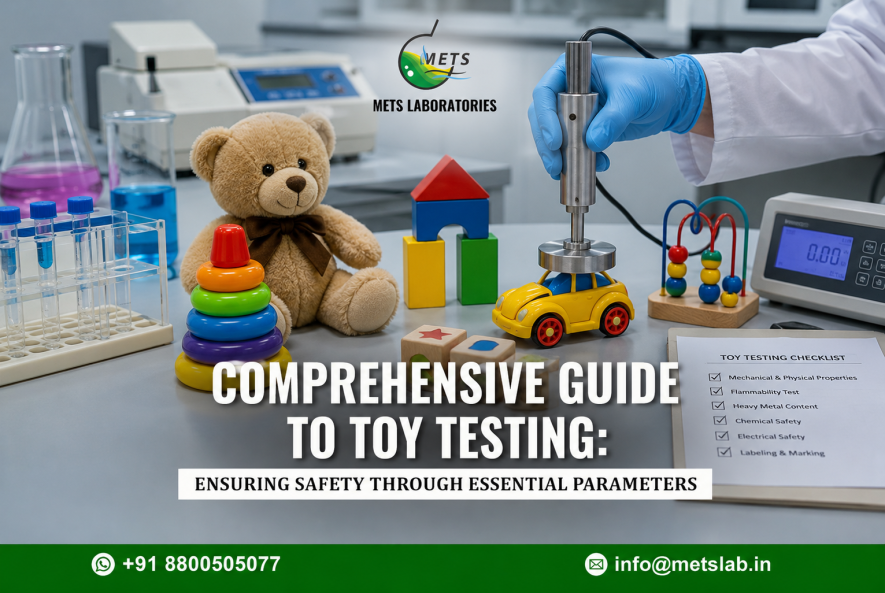
Toy testing safety parameters form a critical quality control framework that ensures products intended for children meet stringent international requirements before entering the market. Since children are uniquely vulnerable to injuries during play, toys must undergo comprehensive mechanical, physical, flammability, chemical, and electrical safety evaluations to identify potential hazards under both normal use and reasonably foreseeable abuse. Adhering to these strict evaluation metrics safeguards young consumers while protecting manufacturers from costly product recalls.
International safety standards such as ISO 8124, EN 71, ASTM F963, CPSIA, and EN 62115 establish the requirements for evaluating toy safety. These standards cover parameters including sharp edges, small parts, drop resistance, impact strength, flammability, chemical safety, battery safety, and labeling requirements. Compliance with these standards not only protects children but also enables manufacturers to access global markets while reducing product recalls and legal risks.
Why Understanding Toy Testing Safety Parameters is Crucial
Children often pull, twist, throw, bite, climb on, or even place toys in their mouths. Toy testing evaluates these real-life situations to ensure products remain safe throughout their intended use.
Comprehensive toy testing helps manufacturers:
- Protect children from injuries and choking hazards.
- Verify compliance with international regulations.
- Improve product durability and quality.
- Reduce product recalls and warranty claims.
- Build customer confidence and brand reputation.
- Meet export requirements for global markets.

Common Challenges Faced by Manufacturers
Manufacturers frequently encounter issues during product development and certification, including:
- Sharp edges or accessible sharp points.
- Detachable small parts that create choking hazards.
- Weak joints or poor structural strength.
- Non-compliant materials containing restricted chemicals.
- Failure during drop or impact testing.
- Battery compartment accessibility issues.
- Inadequate warning labels or age grading.
- Incomplete technical documentation for certification.
Early testing helps identify and correct these issues before products are released to the market.
Essential Toy Testing Safety Parameters and Methods
Mechanical and Physical Safety Testing
Mechanical testing verifies that toys can withstand normal use and reasonably foreseeable abuse without creating hazards.
Sharp Edge and Sharp Point Testing
Accessible metal, plastic, or glass edges and points are examined to ensure they do not cause cuts or puncture injuries. Testing is performed both before and after abuse testing to evaluate product safety throughout its life cycle.
Small Parts Testing
Small detachable components present one of the most serious choking hazards for children under three years of age. Components are evaluated using a standardized Small Parts Cylinder to determine compliance with safety requirements.
Tension and Torque Testing
Buttons, wheels, handles, eyes, decorative parts, and similar components are subjected to specified pulling and twisting forces to ensure they do not detach during use.
Drop Testing
Toys are repeatedly dropped from specified heights onto a hard surface to simulate accidental falls. The test evaluates structural integrity, identifies broken parts, and ensures no sharp edges or small parts become accessible.
Impact Testing
Impact resistance is assessed by applying controlled forces to evaluate whether toys crack, shatter, or become unsafe after sudden impacts.
Compression and Load Testing
Compression testing simulates forces caused by sitting, stepping, or accidental loading. Ride-on toys, toy furniture, and large plastic toys also undergo load and stability testing to verify they remain structurally sound without tipping or collapsing.
Bite Testing
Infant and toddler toys are tested to simulate biting during normal use. This ensures materials do not crack, splinter, or release hazardous components.
Kinetic Energy Testing
Projectile toys such as bows, arrows, dart toys, and toy guns are evaluated to ensure projectile energy remains below specified safety limits, minimizing the risk of eye and impact injuries.
Flammability Testing
Flammability testing evaluates how easily toy materials ignite and how quickly flames spread.
This testing is particularly important for:
- Soft-filled toys
- Plush toys
- Costumes and dress-up toys
- Toys worn on the head
- Children’s tents and playhouses
- Textile-based toys
Materials must comply with EN 71-2, ISO 8124-2, and other applicable flammability requirements.
Chemical Safety Testing
Chemical safety is equally important as mechanical safety.
Toy materials are tested for hazardous substances including:
- Lead
- Cadmium
- Mercury
- Chromium
- Phthalates
- Bisphenol A (BPA)
- Formaldehyde
- Restricted azo dyes
- Migration of elements (EN 71-3)
These evaluations help ensure children are not exposed to harmful chemicals during normal use.
Electrical and Battery Safety Testing
Electronic and battery-operated toys require additional safety assessments.
Testing includes:
- Battery compartment security
- Electrical insulation
- Leakage protection
- Overheating resistance
- Short-circuit protection
- Accessibility of batteries
- Electrical performance
Electrical toys are commonly evaluated according to EN 62115.
Acoustic (Sound Level) Testing
Electronic toys producing sounds or music are tested to ensure sound pressure levels remain within safe limits and do not pose a risk to children’s hearing.


Labeling, Age Grading, and Warning Verification
Proper labeling is an essential part of toy safety compliance.
Verification includes:
- Age grading
- Safety warnings
- Assembly instructions
- Manufacturer information
- Product traceability
- Care and usage instructions
- Compliance markings
Correct labeling helps consumers use toys safely and supports regulatory compliance.
Raw Materials Commonly Tested for Chemical Safety
Toy testing covers a wide variety of materials, including:
- Plastics
- Metals
- Wood
- Rubber
- Silicone
- Textiles
- Foams
- Paints and coatings
- Adhesives
- Electronic components
- Packaging materials
International Standards Governing Toy Testing Safety Parameters
Toy safety testing is performed according to internationally recognized standards, including:
- ISO 8124 Series
- EN 71 Series
- ASTM F963
- EN 62115 (Electrical Toys)
- CPSIA (USA)
- 16 CFR Part 1500 & 1501
- GCC Technical Regulation for Toys
Compliance with these standards supports product certification and global market acceptance.
Why Choose METS Laboratories India Pvt. Ltd. for Toy Compliance?
METS Laboratories India Pvt. Ltd. provides comprehensive toy testing services using advanced laboratory equipment and internationally accepted testing methods.
Our capabilities include:
- Mechanical and Physical Testing
- Chemical Safety Testing
- Flammability Testing
- Electrical Toy Testing
- Small Parts Evaluation
- Sharp Edge and Sharp Point Testing
- Drop, Impact, Compression, and Load Testing
- Battery Safety Evaluation
- Label Verification
- Testing as per ISO 8124, EN 71, ASTM F963, CPSIA, and EN 62115
Our experienced technical team delivers accurate, reliable, and timely test reports to help manufacturers achieve regulatory compliance, improve product quality, and ensure the highest level of child safety.
Conclusion: Mastering Toy Testing Safety Parameters
Toy testing is a vital step in ensuring that children’s products are safe, durable, and compliant with international safety standards. From mechanical strength and flammability to chemical composition and electrical safety, comprehensive testing helps identify potential hazards before products reach consumers.
Partnering with METS Laboratories India Pvt. Ltd. provides manufacturers, importers, and retailers with reliable testing solutions that support product certification, regulatory compliance, and global market access. By investing in comprehensive toy testing, businesses can protect children, strengthen consumer confidence, and deliver high-quality products that meet the highest safety standards.
Frequently Asked Questions (FAQs)
What are the primary toy testing safety parameters required for regulatory compliance?
Why is testing for small parts and sharp edges so critical?
Which international standards govern toy safety parameters?
How does chemical testing protect children from toxic substances?
What is the typical turnaround time for comprehensive toy testing at METS Lab?
Manufacturers and Exporters Recommend Us
Dedicated professionals committed to providing you with accurate and reliable testing services. Get METS Lab services today from the best lab experts & get the accurate reports from our laboratory.