

- Mets Admin
- May 26, 2026
- Testing Insights
- 0 Comments
Introduction
In the rapidly evolving construction industry, structural durability and occupant satisfaction are non-negotiable for long-term success. One of the most critical yet often overlooked quality parameters is waterproofing material testing, which evaluates the effectiveness of membranes, coatings, and sealants against water ingress. Poor waterproofing can lead to leaks, damp walls, structural corrosion, health hazards like mold, and costly post-construction repairs.
For builders in Gurugram—where high-rise buildings, basements, and rapid urbanization face varying groundwater levels and monsoon exposure—reliable waterproofing testing has become essential. Developers supplying to residential, commercial, and industrial projects must ensure their structures meet stringent safety and performance expectations. Professional testing support helps identify material weaknesses, improve application consistency, and ensure compliance with building codes before concrete is poured or finishes are applied.
What is Waterproofing Material Testing?
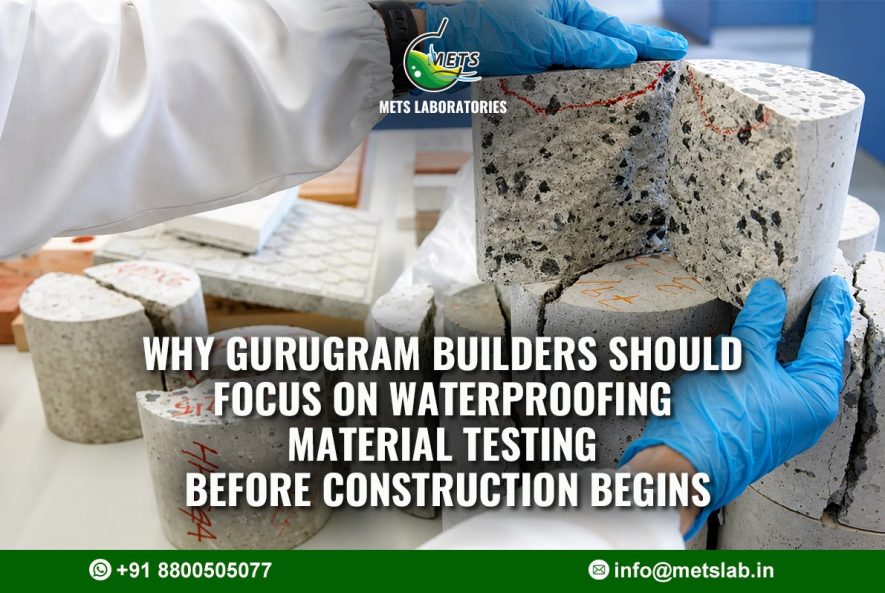
Waterproofing material testing is a quality assurance process used in construction to measure the resistance of materials to water penetration under pressure, hydrostatic head, or capillary action. The test determines whether applied or pre-formed waterproofing systems can withstand real-world conditions such as rainfall, groundwater seepage, and thermal movement.
As a vital component of comprehensive building material testing services, the process typically involves subjecting test specimens to controlled water pressure or immersion and measuring leakage, absorption, or bond strength. Reliable testing helps builders evaluate the performance of membranes, liquid-applied coatings, crystalline admixtures, and joint sealants. Waterproofing testing is commonly conducted during material selection, pre-application trials, and pre-construction quality checks to ensure long-term structural integrity.

Why Waterproofing Material Testing Is Important
Reliable waterproofing testing plays a major role in maintaining building quality and owner trust.
Ensures Structural Durability
Effective waterproofing prevents reinforcement corrosion, concrete spalling, and premature structural decay.
Improves Occupant Satisfaction
Leak-free homes and offices reduce complaints, repair costs, and negative reviews from residents or tenants.
Supports Brand Reputation
Builders associated with chronic leakage issues lose market credibility. Consistent testing helps maintain a premium brand image.
Reduces Construction Defects
Testing identifies application flaws or material inconsistencies before they are buried under finishes or backfill.
Helps Meet Building Codes & Warranties
Many municipal regulations and structural warranty providers require certified waterproofing test reports.
✅ Reliable waterproofing material testing helps builders improve project durability, reduce liability, and increase property value.
Common Problems Faced in Construction Projects
Builders frequently encounter waterproofing failures due to material and workmanship issues.
Incorrect Material Selection
Using membranes or coatings not suited for groundwater level or climate conditions leads to premature failure.
Leakage Through Basements & Terraces
Poor bond or insufficient coverage results in water seepage through below-grade walls, roofs, and wet areas.
Inconsistent Application Quality
Variations in thickness, curing time, or substrate preparation cause uneven waterproofing performance.
Material Compatibility Issues
Certain waterproofing materials may not adhere properly to concrete, metal, or existing coatings without primers or surface treatment.
Environmental Impact on Performance
UV exposure, temperature cycling, and chemical attack can degrade low-quality waterproofing materials over time.


Key Parameters Evaluated During Waterproofing Testing
Professional laboratories evaluate multiple performance parameters to ensure construction reliability.
- Hydrostatic Pressure Resistance – Measures ability to withstand water pressure without leakage.
- Tensile & Elongation Properties – Evaluates flexibility and crack-bridging ability.
- Peel Adhesion Strength – Tests bond between waterproofing layer and substrate.
- Water Absorption Rate – Determines how much moisture the material absorbs over time.
- Thermal Stability – Assesses performance under high and low temperature cycles.
- Chemical Resistance – Checks durability against soil chemicals, salts, and cleaning agents.
- Pinhole & Continuity Detection – Identifies voids or weak spots in applied membranes.
Types of Materials Commonly Tested
Waterproofing testing is performed on a wide range of construction materials used in residential, commercial, and industrial projects.
Membranes
- PVC
- TPO
- EPDM
- HDPE
- Bituminous self-adhesive
Liquid-Applied Coatings
- Polyurethane
- Acrylic
- Cementitious
- Epoxy
Admixtures & Sealants
- Crystalline waterproofing
- Silane/siloxane sealers
- Polyurethane sealants
- Waterstop strips
Why Gurugram Builders Need Reliable Material Testing Support
For builders in Gurugram and the NCR region, third-party laboratory testing offers several advantages:
Better Quality Assurance
Independent testing validates material performance and removes internal bias in vendor selection.
Faster Identification of Defects
Testing helps detect poor adhesion, pinholes, or low tensile strength before application on site.
Improved Project Efficiency
Data-driven testing enables right-first-time application, reducing rework and project delays.
Regulatory and Buyer Compliance
Many high-rise approvals, insurance providers, and RERA requirements expect certified test reports.
Enhanced Product Development
Builders can compare brands, formulations, and application systems for improved long-term performance.
Risks of Using Untested Waterproofing Materials
Skipping material verification or pre-construction testing can lead to serious business and project quality issues.
Structural Failures
Water ingress accelerates rebar corrosion, leading to cracks and reduced building lifespan.
Increased Repair Costs
Post-construction leak repairs often require breaking floors, walls, or finishes — extremely expensive.
Loss of Buyer Confidence
Homebuyers and commercial tenants will reject projects with persistent leakage complaints.
Financial Losses
Delay in handover, litigation, warranty claims, and penalties can erode project profitability.
Damage to Brand Reputation
Consistent waterproofing failures damage a builder’s credibility across all future projects.
Relevant Standards & Compliance Considerations
Builders often follow recognized testing standards and quality benchmarks to ensure waterproofing reliability.
Commonly referenced standards may include:
- ASTM D (waterproofing & membrane standards)
- ISO waterproofing test methods
- IS 15801 (India – liquid-applied polymeric waterproofing)
- BS 8102 (protection of below-ground structures)
- Builder-specific quality protocols from leading developers
Compliance with recognized standards helps builders improve project acceptance, financing approvals, and customer trust.
How METS Laboratories Supports Testing
METS Laboratories provides professional material and product testing support for the construction industry, including waterproofing evaluation.
Advanced Testing Facilities
The laboratory uses modern equipment for hydrostatic pressure, adhesion, tensile, and thermal cycling tests.
Experienced Technical Team
Qualified professionals conduct testing according to industry-recognized procedures and standards (ASTM, ISO, IS).
Reliable Test Reporting
Detailed reports help builders identify weak materials, compare suppliers, and maintain quality consistency.
Customized Testing Solutions
Testing programs can be tailored according to project type (basement, terrace, water tank), material specification, and consultant requirements.
Support for Quality Compliance
Laboratory testing assists builders in meeting NBC (National Building Code), municipal bylaws, and warranty conditions.
Conclusion
For builders in Gurugram, reliable waterproofing material testing before construction begins is essential for delivering durable, leak-free structures. Proper testing helps reduce post-handover failures, improve construction consistency, meet regulatory requirements, and protect brand reputation in a competitive real estate market.
Partnering with experienced testing laboratories enables builders to strengthen quality assurance processes and maintain compliance with national and international standards. Businesses seeking dependable waterproofing material testing and quality evaluation services can explore professional support from METS Laboratories to enhance structural performance and customer confidence.
Frequently Asked Questions
What is waterproofing material testing in construction?
Why is waterproofing testing important before construction?
Which waterproofing materials are commonly tested?
How often should builders conduct waterproofing testing?
Can third-party laboratories help improve construction quality?
What happens if waterproofing materials fail testing?
Manufacturers and Exporters Recommend Us
Dedicated professionals committed to providing you with accurate and reliable testing services. Get METS Lab services today from the best lab experts & get the accurate reports from our laboratory.