

Mon - Fri 8am - 8pm
336 Utah City Centre
Globe Icon
Globe Icon

Geo-Textiles Testing

Geo-Textiles Testing – METS Laboratories

Geotextiles play an important role in modern civil engineering to improve soil stability, support drainage and erosion control, and strengthen civil infrastructure. The performance of geotextiles depends on the right material selection and confirmation on the required parameters of the application.

METS Laboratories provides professional testing and evaluation to help businesses understand the physical and hydraulic properties of geotextile materials. As a Geotextile testing laboratory, we support quality assessment for applications involving roads, railways, drainage systems, retaining structures, landfills and other civil engineering projects.

Our geotextile testing services help evaluate the performance of geotextiles to withstand the forces of separation, puncture, and water flow. We have the ability to test geotextiles for other relevant performance parameters. The tests performed depend on the type of material, end-use, and the applicable standards and specifications.

We are committed to providing a full range of high quality laboratory testing services to geotextile manufacturers, material suppliers, project consultants, and contractors who build and maintain our infrastructures.

What Is Geotextile Testing?

Geotextile testing is evaluating the hydraulic, mechanical and physical properties of geotextiles to confirm performance under various engineering conditions. These tests help manufacturers and users of geotextiles assess performance under specific conditions, including tensile and puncture tests, flow of water through the material, and thickness of the material.

A Geotextile testing laboratory evaluates material characteristics to determine how a product may perform under its intended conditions. Depending on the application, testing may measure tensile behaviour, resistance to puncture, water flow characteristics, thickness and other relevant properties.

For instance, geotextiles used for road sub-bases are required to handle construction equipment tire loads and stresses during installation. Geotextiles used in separation and drainage functions must allow water to pass through but still retain soil particles as required in the design.

The appropriate geotextile testing services depend on the product’s construction, intended function and requirements established by the manufacturer, purchaser or project authority.

Our Geotextile Testing Services

METS Laboratories provides evaluation of properties of geotextiles for products or projects. The tests are selected based on the geotextile and the standard, if any, that applies to the geotextile.

  1.     Geotextile Tensile Strength Testing

Tensile strength tests measure the maximum pulling force geotextiles can withstand prior to failure. The testing method can also determine elongation and other tensile properties.

A Geotextile tensile strength test is particularly relevant for reinforcement, road construction, embankments and applications where the material is exposed to mechanical stresses Depending on the direction of the mechanical loads, testing can be required in the machine and cross-machine direction to understand differences in the material performance in the two directions.

The results help manufacturers and engineers compare materials and assess their suitability against specified project requirements.

  1.     Puncture Resistance Testing

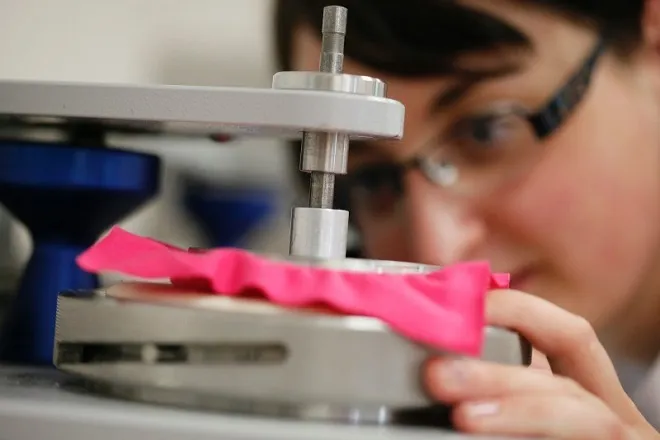
During service and installation, geotextiles can be subjected to concentrated loads from construction equipment and granular materials. Puncture resistance tests measure how geotextiles respond to such loads. The test method will be determined by the specific requirements of the standard or the test requirements for the product.

CBR puncture testing is commonly used to assess the resistance of geotextiles to penetration by a standard load. The test method is determined by the requirements stipulated in the relevant standard.

This type of testing is used to assess the performance of geotextiles in more rigorous construction environments such as the subgrade of a road, a drainage layer, and some protective uses.

  1.     Geotextile Permeability Testing

Water movement is a key consideration in geotextiles used for filtration and drainage. A Geotextile permeability test evaluates the material’s ability to allow water to flow through it under defined conditions.

Testing can evaluate whether water flows normally to the plane of the geotextile, or other hydraulic characteristics that are relevant to the application. The method selected should be consistent with the functionality of the geotextile and project requirements.

Information from these tests provides the design engineer with the ability to assess if a geotextile is appropriate for use in a subsurface drainage system, retaining walls, embankments, and filtration systems.

  1.     Additional Geotextile Property Evaluation

Other considerations are relevant when assessing geotextile quality. Depending on the material and the scope of the tests, some of these may include thickness and mass per unit area. Other characteristics may include the size of the openings, resistance to Ultraviolet (UV) light, and other performance related characteristics.

Testing should be based on the stipulations of the specification, the intended use of the geotextile, and applicable testing standards, rather than assuming all geotextiles are subjected to the same set of tests.

Geotextile Testing Parameters and Standards

There are multiple parameters for testing geotextiles to determine if the geotextile meets the requirements for its intended use. The exact parameters depend on the type of geotextile, the project requirements, and applicable standards.

Testing parameter

What it evaluates

Why it matters

Tensile strength

Resistance to pulling forces

Supports assessment of mechanical performance

Elongation

Extension under tensile loading

Helps understand deformation behaviour

Puncture resistance

Resistance to concentrated penetration forces

Relevant to installation and service conditions

Water permeability

Ability to transmit water under defined conditions

Important for drainage and filtration

Mass per unit area

Material mass relative to surface area

Helps assess consistency between products

Thickness

Material thickness under specified conditions

Relevant to product identification and design

Apparent opening size

Characteristic opening size of the geotextile

Helps assess soil retention and filtration suitability

UV resistance

Response to ultraviolet exposure under a specified procedure

Relevant when exposure to sunlight is expected

A Geotextile testing laboratory should select suitable methods based on the requirements of the material and the project. Depending on the test, applicable ASTM, ISO or other recognised national and international standards may be specified.

The standard and its edition should be confirmed before testing begins. This helps ensure that the test method, specimen preparation, conditioning and reporting requirements match the intended purpose of the evaluation.

Types of Geotextiles We Test

Geotextiles can be classified by their manufacturing process, structure, and use. Knowledge of these helps determine the type of tests that is appropriate for the geotextile.

  1.     Woven Geotextiles

Woven geotextiles are produced by interlacing yarns or filaments in a defined pattern. They are usually utilized in applications that require tensile properties and separation or reinforcement performance.

Woven geotextile testing may include tensile strength, elongation, puncture resistance and other properties specified for the product. The actual test programme depends on the material’s design and intended use.

  1.     Non-Woven Geotextiles

Non-woven geotextiles are typically manufactured by bonding or entangling fibres into a sheet. They are commonly used in filtration, drainage, separation and protection applications.

Non woven geotextile testing may involve evaluating tensile behaviour, puncture resistance, thickness, mass per unit area and hydraulic properties, depending on the product specification.

Both woven and non-woven products require test methods appropriate to their structure and intended function. The results should be interpreted against the relevant product requirements rather than applying a single acceptance criterion to every material.

Applications of Geotextile Testing in Civil Engineering

Geotextiles are used in a wide range of infrastructure and environmental projects. Testing helps project teams assess material characteristics before selecting or installing products.

Road construction: Geotextiles can help separate soil layers, support drainage and contribute to the performance of road structures. Testing helps verify whether the material meets specified mechanical and hydraulic requirements.

Railway infrastructure: Geotextiles may be used for separation, filtration and drainage around railway track structures. Material selection depends on the engineering design and expected service conditions.

Drainage systems: Geotextiles allow water to pass through while helping limit the movement of soil particles. Hydraulic testing helps assess their suitability for the intended drainage function.

Retaining walls and embankments: Depending on the design, geotextiles may provide filtration, separation or reinforcement. Their relevant properties should be evaluated according to the project’s engineering requirements.

Landfills and environmental protection: Geotextiles may form part of protective, drainage and filtration systems. Testing requirements depend on the complete system design and the specifications for each material.

Erosion control: Geotextiles are used in selected applications to support soil stability and help manage erosion. Testing provides information about specified material properties before use.

Why Is Geotextile Testing Important?

Geotextile testing aids in the manufacturing of geotextiles that meet the project requirements.

During production, testing supports quality control by differentiating production batches and verifying that materials satisfy specified requirements. Additionally, it assists manufacturers in assessing the consistency of their products during development and production.

As mentioned earlier, the results of test experiments aid in the selection of materials. Depending on the requirements of an application, a geotextile that is suitable for one application may not be suitable for another.

Also, testing aids engineers and project personnel in documenting compliance with the project specifications. Reliable test reports provide measurable results that help in material approval and procurement as well as quality assurance.

A Geotextile tensile strength test can help establish whether a material meets a specified tensile requirement, while a Geotextile permeability test can provide information relevant to drainage and filtration performance.

Testing does not guarantee the performance of an entire construction system on its own. Other factors including design, installation, soil conditions and long-term exposure must be taken into account.

Our Geotextile Testing Process

A clear and well documented process for testing helps ensure that the properties of interest to the customer are appropriately assessed and the results of such assessment can be properly interpreted.

Step 1: Understand Your Requirements

Provide the technical specifications, intended use of the product, and the standards that define the requirements. This helps in defining the scope of work.

Step 2: Select the Relevant Tests

Tests are determined by the type of geotextile, and the project requirements and standards. The laboratory should confirm the extent of testing to be performed before moving forward.

Step 3: Arrange Sample Submission

After receiving instructions from the laboratory on sample quantity, identification, and packaging, submit representative samples as required. Note that the quantity of samples required for testing may vary with the method of test and the manner in which the specimens are prepared.

Step 4: Conduct the Agreed Tests

The selected properties are evaluated using the applicable procedures and specified testing conditions.

Step 5: Review the Results

Measured values for the tests performed and other relevant information are reported. The results should be compared with acceptance limits, if any, as specified in the relevant project documents.

Step 6: Plan Your Next Steps

The report may be used in support of the selection of material for a project, to provide quality assurance for material used in a product, or for the documentation of a project. If further evaluation is warranted, additional testing may be arranged.

Why Choose METS Laboratories for Geotextile Testing?

Choosing a reliable partner for testing of geotextiles is important for assessment of how well a product meets performance requirements to comply with regulations for a project. METS Laboratories assists businesses in meeting project requirements through reliable testing of geotextile properties.

Our focus is to understand the purpose of testing to determine the relevant parameters, and choose an appropriate test method for the material to be evaluated.

Your scope should be confirmed before sample submission. If you’re unsure of your scope, contact our team and we’ll be able to confirm the testing possibilities and provide you with a quote.

As a Geotextile testing lab in India, METS Laboratories can help manufacturers, suppliers, contractors and project teams identify the testing requirements relevant to their products and specifications.

Whether you need a Geotextile tensile strength test, a Geotextile permeability test or a broader material evaluation programme, the appropriate scope should be confirmed before sample submission.

Contact our team to discuss your requirements, confirm the available testing scope and request a quotation.

Who Needs Geotextile Testing Services?

Geotextile testing services are needed by manufacturers, suppliers, specifiers, and users of geotextile products and materials.

Geotextile manufacturers use testing to monitor quality control of production and evaluate new products.

Construction and infrastructure companies use test reports for material selection of roads, railways and other civil engineering projects.

Material suppliers and distributors require test reports to define product specifications and meet customer requirements.

Civil engineering consultants use test reports to evaluate suitability of materials for a defined end use. Project authorities and material approving authorities require testing to assess material conformance to project requirements.

Government agencies and project authorities may require testing as part of material approval, procurement or quality assurance procedures, depending on the applicable project specifications.

For organisations seeking geotextile testing services, the most suitable approach is to define the intended application, required properties and relevant standards before selecting the test programme.

Frequently Asked Questions

What is geotextile testing?

Geotextile testing evaluates the physical, mechanical and hydraulic properties of geotextile materials used in civil engineering and infrastructure projects. It helps determine whether a material meets specified requirements for applications such as separation, reinforcement, filtration, drainage and erosion control.

What tests are performed on geotextiles?

Common tests include tensile strength, elongation, puncture resistance, water permeability, thickness, mass per unit area and apparent opening size. Additional tests may be required depending on the product, its intended application and the relevant standards.

Which standards are used for geotextile testing?

Depending on the aspect being evaluated and the requirement of the project, ASTM, ISO, and other recognized national or international standards may be applied. The specific standard, edition, and test method should be confirmed before testing.

What is the difference between woven and non-woven geotextile testing?

Woven geotextiles consist of yarns or filaments that are interlaced to create the fabric, and non-woven geotextiles consist of fibers that are bonded or entangled to create the fabric. Either type may be subjected to tests of tensile strength, puncture or other pertinent tests, and the accepted values of the tests depend on the structure of the geotextile and its use.

What is the purpose of geotextile permeability testing?

A Geotextile permeability test evaluates the ability of a geotextile to transmit water under defined test conditions. The results help assess its suitability for drainage and filtration applications where controlled water movement is important.

What is CBR puncture resistance testing?

This test is conducted to evaluate the resistance of a geotextile to puncture, using a specified test arrangement. The test is pertinent, for example, to construction of roads and other infrastructure to evaluate the geotextile's ability to withstand a localized concentrated load.

How long does geotextile testing take?

The type and number of tests to be conducted, condition of the sample, and the test method(s) to be applied determine the turnaround time. Further, the workload of the laboratory and the tests requested may influence the turnaround time. Contact METS Laboratories for an estimate of the turnaround time for the tests requested.

How much geotextile sample is required for testing?

The amount of sample required is dependent on the tests requested, the dimension of the sample, number of replicates and the applicable test methods.

It is best to check the required sample size and testing requirements with the laboratory before shipping samples.

Can geotextile testing be performed according to project specifications?

Testing can be performed according to project specifications, provided that the tests stipulated in the project specifications fall within the laboratory’s capabilities. Provide the relevant project specifications, standards, and acceptance criteria for evaluation before testing.

Is geotextile testing necessary for road construction projects?

Geotextile testing is important when material specifications or project quality requirements call for verification of relevant properties. It helps engineers and contractors evaluate material suitability for separation, reinforcement, drainage and other intended functions.