
Mon - Fri 8am - 8pm
336 Utah City Centre
Globe Icon
Globe Icon

Medical Textile Testing

What Is Medical Textile Testing?

Medical textiles are specific types of textiles that are designed for use in the healthcare and medical field. These may be used to make beds, bandages, and other medical equipment. Since these textiles will be in contact with patients, they must be evaluated to ensure that they will not cause any health problems to patients or healthcare workers.

Medical Textile Testing is a service provided by METS laboratories to help end users and service providers evaluate the suitability of the textiles they use in the medical field. These tests may cover a number of performance indicators such as strength, absorbency, liquid barriers, air permeability and others, depending on the product specification.

The METS Laboratories team helps to validate the performance of healthcare textiles. We are committed to ensuring that medical textile manufacturers are able to accurately assess the defects in their products and improve their performance for the benefit of patients by meeting the demands of their customers and the applicable laws and regulations.

Whether you manufacture disposable medical products or reusable healthcare textiles, the right testing approach can help you make informed decisions about material selection and product development.

Medical Textile Products We Test

A wide range of medical textile products are available. Tests performed are dependent upon the product, its design and its end use.

Our testing support can cover relevant properties of products such as:

  • Surgical gowns and drapes: strength and liquid barrier performance
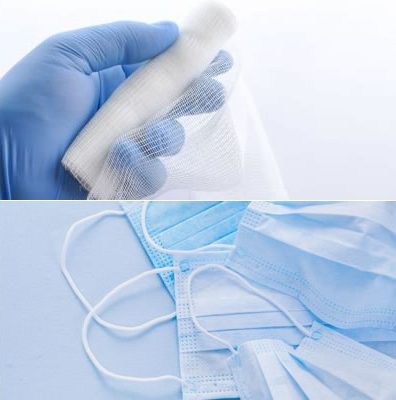
  • Masks and protective textile materials: filtration, breathability and barrier performance
  • Wound dressings and absorbent materials: liquid handling, product absorbency and physical performance
  • Hospital bed linen and reusable healthcare textiles: Assessment of fabric strength, dimensional stability and durability.
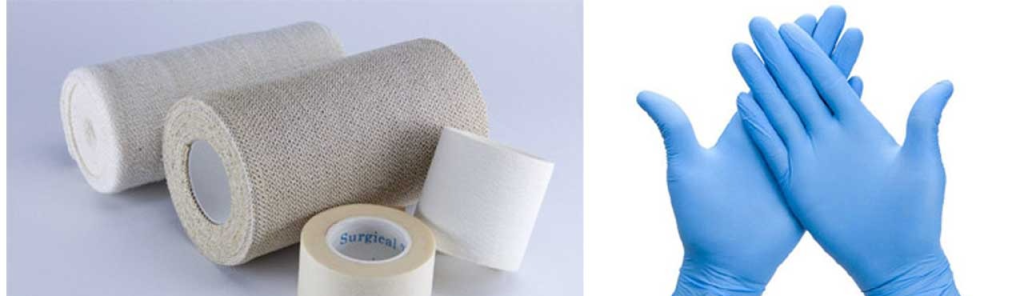
  • Medical bandages and gauze: Evaluation of absorbency, tensile properties and other relevant characteristics.
  • Disposable medical textiles: Testing of selected physical and functional properties based on the product specification.
  • Reusable medical fabrics: Assessment of durability and selected properties after repeated washing, where required.

As a Medical Textile Testing Laboratory, we understand that different products require different evaluation methods. We can assist in identifying relevant tests for your textile product.

Medical Textile Testing Parameters

The performance of medical textiles depends on several factors, including the raw material, fabric construction, finishing and intended use. Selecting the right tests helps manufacturers understand how their products are likely to perform under specified conditions.

Common testing parameters may include:

  1.     Tensile Strength and Elongation

This test evaluates the resistance of a textile to failure in tension. This is an indicator of how much force a material can take before breaking and how much it can stretch.

  1.     Tear Resistance

Tear resistance test is used to evaluate the resistance of textile to the propagation of a tear. This test is relevant for textiles used in patient health care (e.g. health care textiles, gowns, and drapes).

  1.     Absorbency and Liquid Handling

This test measures the ability of a textile to take up and retain fluids. This test is relevant for gauze, medical textile dressings and other similar textiles.

  1.     Liquid Barrier Performance

There are testing methods to evaluate the resistance of products to the penetration of body fluids under specified conditions. The method to be used is determined by the category of the product and the level of protection required.

  1.     Air Permeability

Air permeability is the ability of a fabric to allow free passage of air through it. It can be an important performance characteristic of a product, and if so, the test can help assess breathability of the product.

  1.     Dimensional Stability

The test evaluates if there is any change in the dimensions of the fabric after it has been subjected to a cleaning or other treatment. The test is relevant to reusable hospital textiles and other healthcare fabrics.

  1.     Filtration and Particle Barrier Properties

For some protective products, like medical masks, there may be a requirement to evaluate the barrier and/or filtration properties. The method to be used is determined by the product and the performance standard, if any, applicable to the product.

Medical Textile Testing Standards

Medical textile products may be subject to different national and international standards depending on their category, intended use and market requirements. It is important to choose the correct standard for the product.

Depending on the product and requested scope, relevant standards may include:

  • ISO standards: Standards relating to test methods for textile products and medical textiles.
  • ASTM standards: Methods for test of textile and medical textile products.
  • EN standards: Applicable standards for medical textiles in Europe.
  • AATCC methods: Applicable textile evaluation methods, including selected absorbency and other fabric performance tests.
  • Product-specific standards: Textile evaluation methods, including absorbency and other performance tests.

Not all of the standards apply to all medical textiles. For instance, a surgical gown has different performance requirements from those of wound dressing.

Before testing, the applicable product standard, acceptance criteria and the intended market should be confirmed by the manufacturer. Our Medical Textile Testing Services can be tailored to the agreed product standard, acceptance criteria and test requirements.

Why Is Medical Textile Testing Important?

Medical textiles are used in a variety of products that require the consistent and reliable performance of textile materials. Performance may impact the durability and function of a product.

Testing offers several practical benefits:

  • Supports product safety: Testing to evaluate characteristics of materials for product safety and performance.
  • Improves quality control: Identifying variations in production lot, and determining if the finished product meets specification.
  • Supports product development: Allowing comparisons of materials for product improvement, and evaluating the effects of finishing or fabric construction on physical properties.
  • Evaluates durability: Evaluating the effects of physical treatment on properties of interest.
  • Supports compliance activities: Testing to support compliance to relevant standards or customer requirements.
  • Builds customer confidence: Documented results help manufacturers communicate product performance more clearly.

Medical Textile Quality Testing is also useful when introducing a new product, changing a supplier or investigating material performance issues.

The right testing programme can help businesses make better decisions before products reach hospitals, healthcare distributors and other customers.

Who Needs Medical Textile Testing Services?

Medical textile testing is relevant to businesses involved in manufacturing, supplying and sourcing healthcare textile products.

Our services may be useful for:

  • Medical textile product manufacturers for the evaluation of product performance.
  • Manufacturers of protective masks and apparel for evaluation of product performance.
  • Wound dressing and bandage manufacturers for evaluation of product performance.
  • Healthcare procurement teams for evaluating the performance of textile products against specified requirements.
  • Textile mills for the evaluation of fabrics for suitability for specified medical applications.
  • Importers and exporters for the evaluation of product performance against the requirements of their customers.
  • QA teams for the evaluation of raw material and finished product performance against defined specifications.
  • Healthcare product brand for the evaluation of performance of the product manufactured by the 3rd party manufacturer against defined specifications.

Most importantly, services in medical textile testing offer businesses the opportunity to evaluate textile materials against specifications of defined standards.

Whether you are evaluating a new raw material or checking a finished product, the testing scope should reflect its intended use and the requirements you need to meet.

Applications of Medical Textiles

Medical textiles are used in several areas of healthcare, from everyday hospital operations to specialised medical procedures.

Surgical and Protective Applications

Performance of selected protective textile products such as surgical gowns and drapes may need to be evaluated for strength and resistance to liquid penetration.

Wound Care

Gauze, bandages and wound dressings may require evaluation of absorbency, tensile strength and liquid handling properties.

Hospital and Patient Care

Reusable textile products may need to be evaluated for strength, dimensional stability and other properties relevant to the use.

Hygiene and Disposable Products

The performance of disposable medical textiles is evaluated relative to their specific product requirements.

Specialised Healthcare Products

There are medical textiles that are designed for specific clinical applications. Testing of such textiles may require evaluations of other performance parameters, biological safety and/or regulatory aspects.

Healthcare Textile Testing helps manufacturers understand whether selected material properties align with the requirements of a particular application. The required tests should always be determined by the product specification and relevant standards.

Our Medical Textile Testing Process

At METS Laboratories, a clear testing process helps businesses understand what needs to be evaluated and how to proceed.

Step 1: Share Your Product Details

Provide information about your product (type, intended use, specified requirements, etc.)

Step 2: Identify the Required Tests

The testing scope depends on the product category, property, applicable standards and the laboratory’s limitations.

Step 3: Submit Your Samples

Prepare and submit representative samples according to the agreed sampling and testing requirements.

Step 4: Conduct the Tests

The agreed tests are performed using the applicable methods within the laboratory’s available scope.

Step 5: Review the Test Results

The Test results are reported to the client in order to evaluate if property requirements are met.

Step 6: Plan Your Next Steps

Clients decide on the next steps to be taken with respect to quality control, improving the product, assessing suppliers or attaining other regulatory requirements.

Our Medical Textile Testing Laboratory team can help clarify the testing requirements before you submit samples. Contact us to discuss your product and the tests you need.

How Is Medical Textile Testing Different From Regular Textile Testing?

Most regular textile tests cover tensile strength, color fastness, shrinkage, pilling and dimensional stability, to name a few. These evaluations are important for apparel, upholstery and other fabric end uses.

Beyond the regular textile testing, medical textiles may need to be assessed for other properties related to their intended healthcare usage.

Some examples for such evaluations include gauze pads or bed sheets. The bed sheet needs to be assessed for durability and launderability, while the gauze pad may be assessed for liquid barrier performance, if it is to be classified as a surgical gown.

Likewise, wound dressing may be assessed for liquid absorption and handling, while these may not be relevant for other regular textiles.

Medical textile testing needs to be evaluated on a case by case basis and takes into account the material, intended use and the applicable requirements. This usually helps reduce unnecessary testing, while assessing the critical characteristics of the product being tested.

Why Choose METS Laboratories for Medical Textile Testing?

Selecting a testing partner is an important part of maintaining product quality and consistency. Businesses need clear information about the applicable methods, sample requirements and scope of testing before proceeding.

METS Laboratories supports businesses seeking textile testing for medical and healthcare applications.

Product-Specific Testing Approach

Testing is done based on the type of textile, the end use and specified performance.

Support for Quality Control

Testing helps evaluate the consistency of materials, uncover defects and quality issues and aid in the improvement of the product.

Relevant Testing Methods

The proposed testing scope should be aligned with applicable standards and the laboratory’s available capabilities.

Support for Manufacturers and Suppliers

Both new and existing products are welcomed for testing and discussion of manufacturers’ requirements.

Clear Communication

Understanding the required tests before sample submission can help businesses plan their testing activities more efficiently.

If you are looking for Medical Textile Testing in India, contact METS Laboratories to discuss your product, applicable standards and required testing parameters. Specific tests and accreditation scope should be confirmed with the laboratory before placing an order.

Frequently Asked Questions

What is medical textile testing?

Medical textile testing evaluates the physical, mechanical and functional properties of textiles used in healthcare applications. Depending on the product, testing may include strength, absorbency, liquid barrier performance, air permeability and dimensional stability.

What medical textile products can be tested?

Products may include surgical gowns, drapes, medical masks, wound dressings, gauze, bandages, hospital linen and reusable healthcare fabrics. The available tests depend on the product and the laboratory's testing capabilities.

What tests are commonly performed on medical textiles?

Common tests include tensile strength, tear resistance, elongation, absorbency, dimensional stability and selected liquid barrier properties. Filtration and other specialised tests may be required for particular products.

Do you provide surgical gown testing?

Surgical gown testing requirements depend on the gown's intended use and applicable standards. Contact METS Laboratories to confirm the specific tests available for your product.

Do you provide surgical drape testing?

Surgical drapes may require evaluation of physical strength, liquid resistance and other specified performance properties. The appropriate testing scope should be confirmed according to the product requirements and available laboratory capabilities.

What is BFE testing?

Bacterial Filtration Efficiency (BFE) testing evaluates the ability of a suitable mask material or product to filter an aerosol containing bacteria under specified test conditions. It is distinct from other filtration tests, and the applicable method depends on the product standard.

Is biocompatibility testing required for every medical textile?

No. Biocompatibility evaluation depends on the product's intended use, nature of contact with the body, duration of contact and applicable regulatory requirements. Some products may require biological evaluation, while others may have different requirements.

Which standards are used for medical textile testing?

Relevant standards may include ISO, ASTM, EN and AATCC methods, along with product-specific requirements. The correct standard depends on the textile, intended application and target market.

Can you test medical textiles for export requirements?

Testing may support export-related quality and compliance activities, depending on the destination market and product category. Confirm the required standards and acceptance criteria before testing, and verify that the laboratory can perform the requested tests.

Do you test raw materials as well as finished medical textile products?

Testing requirements can cover selected raw materials, fabrics and finished products, depending on the requested scope. Contact the laboratory to confirm sample requirements and available methods for your material.

How long does medical textile testing take?

Turnaround time depends on the number of tests, selected standards, sample condition and laboratory workload. Contact METS Laboratories with your product details and required tests for an estimated timeline.