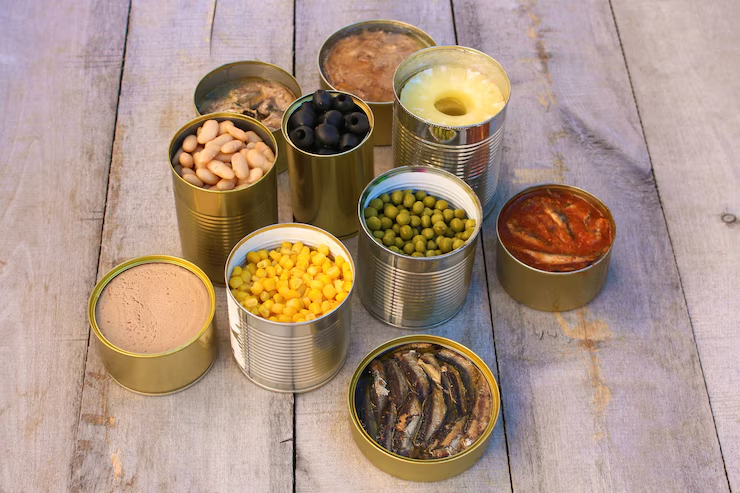


Canned & Processed Foods Testing – METS Laboratories
Product safety and quality is imperative to all food processors, manufacturers and suppliers. Canned and processed food products should be evaluated for quality, and possible contamination, before they are released to the market. Problems with product safety and quality can be due to many reasons including poor processing and contamination in the product or during packaging. Any of these issues can adversely affect the product’s quality, its shelf life and possibly affect consumers’ safety.
METS Laboratories provides professional Canned and Processed Food Testing services in India to help food manufacturers, processors, exporters and food businesses evaluate the safety, quality and compliance of their products. We offer various laboratory testing services for microbiological, chemical and nutritional analysis of food products.
We offer food testing services to manufacturers of canned vegetables, fruits, processed meats and fish, pickles and ready-to-eat food products. Manufacturers of the aforementioned products can also benefit by our food testing services to assess the product quality and detect food safety concerns.
Looking for reliable Canned Food Testing or Processed Food Testing services? Connect with METS Laboratories for testing support based on applicable national and international testing methods.
Comprehensive Canned and Processed Food Testing Services
The type of tests to be conducted on food products depends upon the type and nature of food, method of processing and preservation, and the intended shelf life of the food product. At METS Laboratories, our Canned and Processed Food Testing services help evaluate important food safety and quality parameters through appropriate laboratory analysis.
Microbiological Testing
Food products can get contaminated at various stages from processing to storage to packaging. Testing is done to evaluate the safety of the product with respect to the microorganisms that may have an adverse effect on the food.
Our microbiological analysis can include:
- Total Plate Count (TPC)
- Yeast and Mould Count
- Coliform Testing
- Escherichia coli (E. coli)
- Salmonella detection
- Staphylococcus aureus
- Listeria monocytogenes, where applicable
- Other relevant foodborne microorganisms
Microbiological analysis is particularly important for manufacturers dealing with preserved foods, canned products and ready-to-eat meals.
Chemical and Contaminant Testing
Food safety concerns and regulatory compliance may be impacted by the presence of unwanted substances and contaminants in food. The type of analysis required will be determined by the food product.
Depending on the product, testing may include:
- Heavy metals such as lead, arsenic, cadmium and mercury
- Pesticide residues
- Residual processing chemicals
- Food contaminants
- Undeclared or restricted substances, where applicable
- Other product-specific chemical parameters
Our Processed Food Testing solutions help manufacturers assess potential chemical contamination and maintain consistent product quality.
Nutritional Analysis
Accurate nutritional information enables manufacturers to develop accurate food product labelling and inform consumers about the nutritional value of foods.
Our nutritional testing parameters may include:
- Protein
- Total fat
- Carbohydrates
- Dietary fibre
- Total sugars
- Added sugars, where applicable
- Moisture
- Ash
- Energy value
- Sodium and salt content
These results help label food products with nutrition information and assist manufacturers in evaluating the quality of their food products.
Food Additives and Preservatives Testing
The use of food additives and preservatives is regulated. These are added to foods to increase their stability and to prolong their shelf life.
Testing may cover:
- Permitted preservatives
- Benzoic acid and benzoates
- Sorbic acid and sorbates
- Sulphites
- Artificial colours
- Sweeteners
- Other applicable food additives
This testing helps manufacturers evaluate additive levels against relevant product and regulatory requirements.
Food Packaging Migration Testing
Food packaging is essential to preserve the quality of the food product and to protect it against contamination. Certain food packaging materials may come in contact with food and release undesirable substances that may affect the food safety and quality.
Food packaging migration testing helps evaluate the potential transfer of substances from packaging materials into food or food simulants.
It is especially relevant to canned food containers, food contact plastics and flexible food packaging materials.
Shelf-Life and Stability Testing
In order to determine how the product may change over time and to set appropriate quality standards, many manufacturers perform testing on food products to evaluate parameters relevant to safety and quality under various storage conditions.
Depending on the food product, testing may include:
- Microbiological stability
- Moisture changes
- pH and acidity
- Colour and appearance
- Texture and sensory characteristics
- Oxidation and rancidity indicators
- Packaging integrity
These evaluations help manufacturers establish appropriate product storage and shelf-life specifications.
Types of Canned and Processed Foods We Test
Canned and processed foods vary in their raw materials, processing conditions and storage requirements. METS Laboratories supports product-specific Canned and Processed Food Testing for a wide range of food categories.
Canned Fruits and Vegetables Testing
To can fruits and vegetables properly, multiple factors must be correctly controlled including processing, preservation and packaging.
Our testing can cover canned peas, sweet corn, mushrooms, tomatoes, pineapple, peaches, mixed vegetables and other preserved products.
Canned Meat, Fish and Seafood Testing
Canned meats and seafood products require assessment of processing quality, chemical contaminants and microbiological safety.
Testing may cover canned tuna, sardines, salmon, chicken, meat preparations and other preserved seafood and meat products.
Processed and Packaged Food Testing
We encourage testing of packaged food products to assess their microbiological, chemical and nutritional safety.
This may include canned and processed foods such as snack foods, instant and prepared meals, frozen meals, pizza, and other processed food products.
Sauces, Pickles and Condiments Testing
Products such as sauces, chutneys and pickles may contain different food additives and various preservatives.
Testing helps assess parameters such as pH, acidity, microbiological quality, preservatives and relevant chemical characteristics.
Jams, Jellies and Preserved Food Testing
Jams, jellies, fruit spreads and other preserved foods require evaluation of their chemical composition and safety.
Soups, Gravies and Curries Testing
Ready-to-eat soups, gravies and canned curries may be evaluated for microbiological safety, nutrition and other chemical parameters.
Important Parameters Tested in Canned and Processed Foods
Depending on the type of food, the ingredients used, and the process employed, many parameters may need to be evaluated. Our Canned Food Testing Laboratory services can support the evaluation of the following parameters.
Microbiological Testing Parameters
- Total Plate Count
- Yeast and Mould
- Coliforms
- E. coli
- Salmonella
- Staphylococcus aureus
- Other relevant pathogens
Chemical Testing Parameters
- Heavy metals
- Pesticide residues
- Preservatives
- Food additives
- Acidity and pH
- Relevant chemical contaminants
Nutritional Testing Parameters
- Protein
- Fat
- Carbohydrates
- Moisture
- Ash
- Dietary fibre
- Energy value
- Sodium
Physical Quality Testing
Physical quality evaluation may include:
- Colour and appearance
- Texture and consistency
- Net quantity and drained weight, where applicable
- Product uniformity
- Foreign matter examination
- Packaging condition
Food Packaging Safety Testing
Packaging evaluation may include:
- Overall migration testing
- Specific migration testing, where applicable
- Packaging material safety evaluation
- Food-contact material assessment
- Container and closure integrity evaluation, where applicable
Canned Food Safety and Microbiological Testing
Canned food products undergo processing to destroy any potentially dangerous microorganisms. However, if the processing and canning is not properly done, or if the containers are damaged or the food is not stored properly, the food may still be unsafe. Products may also become unsafe if they are contaminated after canning.
One important concern in low-acid canned foods is Clostridium botulinum, a microorganism associated with botulism under specific conditions. Proper commercial sterilisation and validated processing controls are therefore essential.
Our Canned Food Testing solutions can help manufacturers evaluate relevant microbiological parameters and identify potential contamination concerns.
Depending on the product and testing requirements, laboratory evaluation may include:
- Aerobic and anaerobic microbial testing
- Total Plate Count
- Yeast and Mould
- Relevant pathogenic microorganisms
- Product pH and acidity
- Other product-specific microbiological parameters
Routine microbiological tests alone cannot verify the commercial sterility of canned foods. Further evaluation by an expert, assessment of the container’s integrity and validation of the thermal process may also be necessary.
Laboratory Methods Used for Canned and Processed Food Analysis
Reliable laboratory practices, combined with appropriate sample preparation and analysis, allow for the identification of food additives and contaminants. The method of choice is dependent on the food matrix and the analyte of interest.
METS Laboratories supports analytical testing using relevant laboratory methods, including:
HPLC Analysis
High-Performance Liquid Chromatography (HPLC) is used for the analysis of selected food components, preservatives, additives, vitamins and other chemical substances.
GC-MS Analysis
Gas Chromatography-Mass Spectrometry (GC-MS) supports the identification and analysis of selected volatile and semi-volatile compounds, pesticide residues and other chemical contaminants.
ICP-MS Analysis
Inductively Coupled Plasma-Mass Spectrometry (ICP-MS) is used for trace-level elemental analysis, including heavy metals such as lead, cadmium, arsenic and mercury.
PCR and Molecular Testing
PCR-based methods can help detect specific microorganisms or their genetic material in food samples, depending on the validated method and sample requirements.
ELISA Testing
Enzyme-Linked Immunosorbent Assay (ELISA) methods are used for selected food safety applications, including allergen detection and the analysis of certain contaminants.
ISO, AOAC, BIS and FSSAI Methods
Food testing methods may be selected from relevant ISO, AOAC, BIS and FSSAI-prescribed methods, depending on the product, parameter and applicable requirements.
Why Is Canned and Processed Food Testing Important?
Food testing is of prime importance in maintaining the quality of food products and safety of the end consumers. It helps ensure regulatory compliance, assesses and evaluates product quality and parameters across different batches, helps assess the product’s shelf life, and ultimately boosts the consumer’s confidence in the food manufacturer’s product.
Professional Processed Food Testing offers several benefits:
- Improves food safety: Evaluates and determines the potential food safety risks and contaminations.
- Supports regulatory compliance: Evaluates parameters to interpret and implement food safety regulatory requirements.
- Maintains product quality: Assesses quality parameters of the food product across different batches.
- Supports shelf-life evaluation: Helps food manufacturers to assess and evaluate the quality of their product during storage.
- Builds consumer confidence: Reliable testing results support transparent quality assurance practices.
- Supports export requirements: Helps businesses assess product-specific testing requirements for their intended export markets.
- Reduces quality-related risks: Helps identify potential issues before products reach consumers.
For food manufacturers, regular testing is a practical way to strengthen quality control and maintain consistency across products.
FSSAI and International Food Safety Compliance
Manufacturers and processors of food in India must adhere to relevant food safety and quality regulations. Testing of food products is based on many factors such as type of food, ingredients used in manufacturing, process and intended market.
METS Laboratories supports businesses with relevant food testing services to help them evaluate product quality and safety.
FSSAI Food Safety Requirements
The Food Safety and Standards Authority of India (FSSAI) has notified requirements for food, additives, contaminants, labeling and packaging.
Testing helps food businesses evaluate relevant parameters against applicable FSSAI requirements.
Codex Alimentarius Standards
Codex Alimentarius has published various standards, guidelines and codes of practice which provide food safety and quality requirements.
Export Food Testing Requirements
Food products exported to different countries may require compliance with the food safety and quality requirements of the importing country as well as the needs of the buyer.
Food Packaging Regulations
Food packaging materials must meet relevant food-contact safety requirements. Appropriate migration and packaging evaluation can help manufacturers assess potential risks associated with food-contact materials.
Our Canned and Processed Food Testing Process
At METS Laboratories, we aim to make the testing process straightforward for food manufacturers, processors and suppliers.
Step 1 – Sample Submission
The first step is to contact us for sample size, package, transport and delivery instructions specific to your food product.
Step 2 – Test Parameter Selection
Our team will suggest relevant test parameters based on the nature of the product and the requirements.
Step 3 – Laboratory Analysis
Appropriate methods and procedures will be used to evaluate the food samples.
Step 4 – Testing and Reporting
Based on the test parameters, the analytical results will be reported.
Step 5 – Technical Support
Our team can assist with understanding the testing scope, results and relevant testing requirements.
Who Needs Canned and Processed Food Testing Services?
Businesses involved in food manufacturing, processing, packing, distributing or exporting need food testing services.
Our services can benefit:
- Canned food manufacturers
- Processed food manufacturers
- Food processing industries
- Ready-to-eat meal manufacturers
- Ready-to-cook food brands
- Meat and seafood processing companies
- Fruit and vegetable processing units
- Pickle, sauce and condiment manufacturers
- Frozen food manufacturers
- Food packaging companies
- Food exporters and importers
- Food quality assurance and research teams
Realizing continuous improvement of product quality is essential for food processing companies. Therefore, appropriate testing must be carried out on raw materials and finished products to ensure product safety and meet regulatory requirements.
Why Choose METS Laboratories for Food Testing?
One of the most important considerations when checking product quality and safety is choosing the right test laboratory.
METS Laboratories provides food testing services based on the needs of its clients which include food manufacturers and processors.
Why work with METS Laboratories?
- Comprehensive food testing solutions across relevant product categories.
- Microbiological, chemical and nutritional testing support.
- Product-specific testing parameter selection.
- Testing using relevant national and international methods, subject to laboratory scope.
- Support for food manufacturers, processors and exporters.
- Clear laboratory test reports.
- Professional assistance throughout the sample testing process.
Our objective is to help food businesses make informed decisions about product quality, safety and testing requirements.
Contact METS Laboratories today to discuss your sample, required parameters and testing needs.
You can request a quote for the testing services you require and take the next step in improving the safety and quality of your food products.
Frequently Asked Questions
What is canned and processed food testing?
Canned and processed food testing involves laboratory analysis of food products to evaluate their microbiological safety, chemical composition, nutritional value, contaminants and overall quality. It helps manufacturers assess product safety and applicable regulatory requirements.
Which types of canned and processed food products can be tested?
Various products can be tested, including canned fruits, vegetables, meat, fish, seafood, sauces, pickles, jams, soups, gravies, frozen foods and packaged meals. The testing parameters depend on the product category and intended use.
What parameters are tested in canned food samples?
Common parameters include Total Plate Count, yeast and mould, coliforms, Salmonella, heavy metals, pesticide residues, preservatives, pH, acidity, nutritional composition and other product-specific quality indicators.
Why is microbiological testing important for canned and processed foods?
Microbiological testing helps identify relevant microorganisms that may affect food safety and quality. It is particularly important for evaluating contamination risks associated with processing, handling, packaging and storage.
How can laboratory testing detect harmful bacteria in canned food?
Laboratories use appropriate microbiological and molecular methods to detect or identify specific microorganisms. Depending on the organism and testing objective, methods may include culture-based techniques and PCR-based analysis.
What chemical contaminants are tested in processed food products?
Depending on the product, chemical contaminant testing may include lead, arsenic, cadmium, mercury, pesticide residues, selected processing contaminants and other relevant chemical substances.
How is shelf-life testing performed for canned and processed foods?
Shelf-life evaluation involves monitoring selected microbiological, chemical and physical quality parameters under defined storage conditions over a specified period. The testing plan depends on the product and its intended storage conditions.
Is food testing required for FSSAI compliance in India?
Food testing requirements depend on the applicable FSSAI regulations, food category and specific compliance obligations. Manufacturers may need laboratory testing to demonstrate conformity with relevant food safety and quality standards.
What is food packaging migration testing and why is it important?
Food packaging migration testing evaluates whether substances from food-contact materials can transfer into food or food simulants. It helps assess packaging safety and compliance with applicable requirements.
Which laboratory methods are used for canned and processed food analysis?
Common analytical methods include HPLC, GC-MS, ICP-MS, PCR and ELISA, along with microbiological and other chemical testing techniques. The appropriate method depends on the food sample and the parameter being analysed.
How can food manufacturers book canned and processed food testing services at METS Laboratories?
Food manufacturers can contact METS Laboratories through the website or call +91-8800505077. Share your product details and testing requirements with the team to discuss suitable parameters, sample submission instructions, timelines and pricing.
-
Food Additives & Preservatives Testing
-
Fortified Food Testing
-
Processed Food Nutrition Value Testing
-
Nutraceuticals & Functional Foods Testing
-
Residue Analysis
-
Animal Food & Feeds Testing
-
Bakery & Confectionery Products Testing
-
Beverages (Alcoholic & Non-Alcoholic) Testing
-
Cereals, Pulses & Cereal Products Testing
-
Coffee & Cocoa Products Testing
-
Dioxin and Furans Testing
-
Edible Colours & Flavors Testing
-
Edible Oils & Fats Testing
-
Edible Salts Testing
-
Eggs & Egg Products Testing
-
Essential Nutrients Including Vitamins Testing
-
Fruit & Fruit Products Testing
-
Gelatin And Other Gums Testing
-
Herbs, Spices & Condiments Testing
-
Honey & Honey Products Testing