Reliable Leather Accessories Testing for Quality and Compliance
Leather accessories are used every day, making quality, durability, and material safety important considerations for manufacturers, brands, importers, and retailers. From handbags and wallets to belts and small leather goods, each product must meet appropriate quality expectations before reaching the market.
At METS Laboratories, our Leather Accessories Testing services help businesses assess material performance, physical properties, colourfastness, and chemical safety. Our testing approach supports informed quality-control decisions and helps identify potential product issues before they affect customers or business operations.
Whether you manufacture genuine leather products or accessories made from synthetic leather, Leather Accessories Testing can help evaluate how materials perform under specified test conditions. The appropriate testing programme depends on the product type, material composition, intended use, buyer requirements, and applicable standards.
Our team helps businesses identify relevant testing parameters and understand the results so they can make better decisions about product quality and compliance.
Types of Leather Accessories We Test
Different accessories use different materials, finishes, fasteners, coatings, and construction methods. Our testing recommendations are tailored to the product being evaluated and the requirements provided by the client.
Leather Accessories Testing may be relevant to the following product categories:
Handbags and purses: Assessment of leather quality, colour transfer, abrasion resistance, and selected hardware properties.
Wallets and cardholders: Evaluation of material durability, surface finish, colourfastness, and wear-related characteristics.
Leather belts: Testing of material strength, finish durability, buckle components, and relevant physical properties.
Leather backpacks and travel accessories: Assessment of selected material, stitching, abrasion, and colourfastness properties.
Leather briefcases and laptop bags: Evaluation of material performance, surface durability, and construction-related characteristics.
Small leather goods: Testing of accessories such as key holders, passport covers, organisers, and cases.
Fashion accessories: Assessment of leather trims, decorative components, coated surfaces, and other relevant materials.
Synthetic leather accessories: Testing of suitable physical and chemical properties based on the composition and intended use of the material.
Our Leather Accessories Testing recommendations consider the complete product where appropriate, including the leather or alternative material, lining, coatings, metal fittings, and other components that may affect quality or safety.
Leather Accessories Testing Services and Parameters
A reliable testing programme should reflect how an accessory is manufactured, handled, stored, and used. Selecting appropriate parameters helps businesses evaluate specific risks rather than relying on a generic test package.
Our Leather Accessories Testing services may include the following assessments, subject to laboratory capability and the agreed test scope.
Physical and mechanical testing
Physical testing helps assess selected performance characteristics of leather and leather-based materials. Depending on the product, relevant parameters may include tensile strength, tear strength, thickness, flexing behaviour, and resistance to surface damage.
These assessments can help manufacturers identify weaknesses in material selection or construction.
Abrasion and wear resistance
Accessories such as handbags, belts, and wallets are exposed to repeated handling and friction. Suitable abrasion or wear tests help evaluate how the surface responds to specified conditions.
The results can support material comparisons and quality-control decisions during product development.
Colourfastness testing
Colour transfer can affect the appearance of leather accessories and may cause staining on clothing or other surfaces. Leather colourfastness testing evaluates colour resistance under relevant conditions, such as rubbing or exposure to water, depending on the selected method.
This assessment is particularly useful for coloured leather, dyed materials, and products with contrasting finishes.
Flexing and finish performance
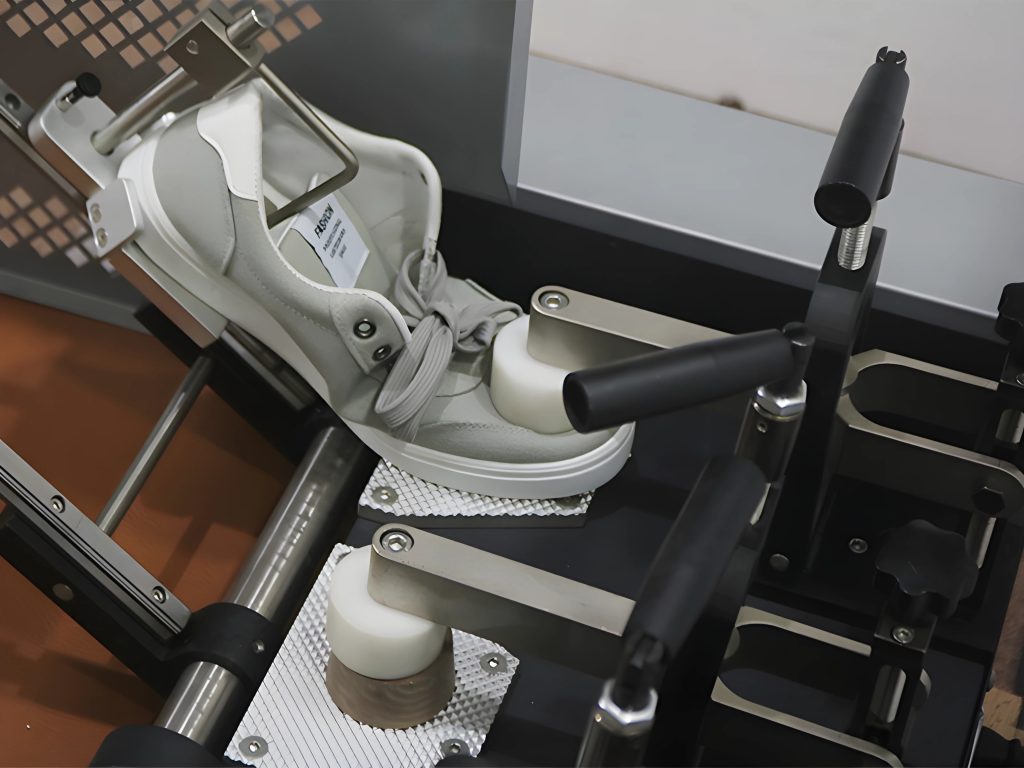
Repeated bending can cause certain materials or surface finishes to crack, peel, or deteriorate. Appropriate flexing assessments can help evaluate material behaviour under specified conditions.
The choice of method depends on whether the sample is genuine leather, coated leather, or a synthetic alternative.
Component and hardware assessment
Buckles, zippers, clasps, rivets, and decorative fittings can affect an accessory’s usability and overall quality. Where included in the testing scope, relevant components may be assessed for selected mechanical or chemical properties.
Leather Accessories Testing can therefore support a broader quality-control programme that considers both the main material and the finished product.
Chemical Safety and Restricted Substance Testing
Chemical safety is an important part of evaluating leather accessories, particularly products intended for regular skin contact or sale in markets with specific chemical restrictions.
Our Leather Accessories Testing recommendations can include relevant chemical assessments based on the product composition, customer specifications, and applicable regulations.
Leather chemical testing may cover selected substances such as:
Chromium VI in leather, where applicable.
Restricted azo colourants and relevant aromatic amines.
Formaldehyde, where required by the applicable specification.
Selected heavy metals in materials, coatings, or accessories.
Other restricted substances identified by the buyer or relevant compliance requirements.
Chromium VI testing is particularly relevant to certain leather products because its presence may raise chemical safety and regulatory concerns. Testing requirements should be determined according to the product category, target market, and applicable legal or buyer specifications.
For accessories containing metal fittings, synthetic coatings, adhesives, or multiple materials, the test plan may need to consider individual components separately.
Our Leather Accessories Testing process helps businesses identify appropriate chemical parameters before samples are submitted. This makes it easier to establish a testing scope that reflects actual product risks and compliance obligations.
Leather Testing Standards and Compliance Requirements
Testing standards provide defined methods for evaluating product properties under controlled conditions. The appropriate standard depends on the material, test objective, product type, and market in which the accessory will be sold.
Leather Accessories Testing may involve relevant ISO, EN, or other recognised methods, where applicable to the requested parameter and within the laboratory's available scope.
Examples of standards and methods that may be relevant include:
ISO 3376: Determination of tensile strength and elongation of leather.
ISO 3377 series: Methods for determining tear load of leather.
ISO 11640: Assessment of colourfastness to cycles of to-and-fro rubbing.
ISO 17075 series: Methods for determining chromium VI content in leather.
These standards address specific testing parameters; they do not automatically establish that a complete accessory complies with every applicable requirement.
For example, a handbag may require physical testing of its leather, colourfastness assessment, and chemical testing of selected components. A belt may require a different combination of tests depending on its construction and intended use.
METS Laboratories can help identify suitable test methods based on the information supplied by the client. The final testing scope should be confirmed before sample submission.
Our Leather Accessories Testing Process
A clear process helps clients understand what information is needed, which tests are appropriate, and how the results can be used.
Step 1: Share your product details
Provide information about the accessory, material composition, intended application, target market, and any buyer specifications or compliance requirements.
Step 2: Identify the required tests
The testing scope is determined according to the product's characteristics and the parameters that need to be evaluated. Our team can help clarify relevant testing options.
Step 3: Confirm sample requirements
Sample quantity, condition, preparation, and submission requirements depend on the selected methods. These details should be confirmed before dispatch.
Step 4: Laboratory evaluation
The submitted samples are evaluated using the agreed methods, subject to the laboratory's available testing scope and applicable procedures.
Step 5: Review the test report
The report presents the results for the parameters tested. Clients can use the findings to review material quality, investigate potential issues, and support relevant quality-control or compliance activities.
Step 6: Plan corrective action, if required
Where results identify concerns, manufacturers can review material specifications, suppliers, finishes, or production processes and determine whether further testing is necessary.
Our Leather Accessories Testing process is designed to give businesses a clearer understanding of product performance and the evidence available to support their quality decisions.
Why Choose METS Laboratories?
Choosing a suitable laboratory is an important part of product quality management. Businesses need testing that matches their requirements, clear communication about sample preparation, and results that can be interpreted against the relevant specifications.
METS Laboratories supports clients with a structured approach to Leather Accessories Testing.
Product-specific test planning: Testing recommendations are based on the material, product type, and stated requirements.
Physical and chemical assessment options: Relevant testing parameters can be identified according to the requested scope.
Quality-control support: Test results can help businesses investigate material issues and compare samples against defined specifications.
Compliance-focused guidance: The testing plan can consider relevant standards and target-market requirements.
Clear communication: Clients can discuss their testing objectives and clarify sample submission requirements before proceeding.
Support for different businesses: Manufacturers, suppliers, exporters, importers, and product brands can enquire about suitable testing options.
Our objective is to help businesses make informed decisions about material quality, product consistency, and applicable testing requirements.
Industries We Serve
Leather accessories are manufactured and supplied across multiple industries. Each sector may have different expectations regarding product appearance, durability, chemical safety, and documentation.
Our Leather Accessories Testing services may support businesses operating in:
Fashion and lifestyle: Brands producing handbags, wallets, belts, and other fashion accessories.
Leather goods manufacturing: Manufacturers evaluating material quality and finished-product performance.
Retail and private-label businesses: Companies sourcing accessories from multiple suppliers and checking products against specifications.
Export and import: Businesses preparing products for buyer assessments and applicable destination-market requirements.
E-commerce brands: Sellers seeking to improve product consistency and investigate customer complaints about material performance.
Product sourcing and procurement: Teams comparing materials or suppliers during product development and purchasing.
Testing requirements vary by product and destination market. A testing plan should be selected according to the specific risks, applicable standards, and customer expectations rather than assuming that every product needs the same set of tests.
Frequently Asked Questions
What is leather accessories testing?
Leather Accessories Testing involves evaluating the physical, mechanical, colourfastness, and chemical properties of leather accessories or their constituent materials. The purpose is to assess selected product characteristics against defined test methods, buyer specifications, or applicable requirements.
Which leather accessories can be tested?
Depending on the available testing scope, products may include handbags, purses, wallets, belts, backpacks, briefcases, cardholders, passport covers, and other small leather goods. The suitable tests depend on the product's construction and material composition.
Which tests are commonly required for leather accessories?
Commonly considered tests include tensile strength, tear resistance, abrasion resistance, colourfastness to rubbing, flexing performance, and selected chemical assessments. The exact requirements depend on the accessory, material, buyer specifications, and target market.
Why is chromium VI testing important for leather?
Chromium VI testing helps determine whether the tested leather contains chromium VI at a level relevant to the specified requirement. It is important because certain markets and product categories restrict chromium VI in leather articles. The applicable limit and test method should be confirmed for the intended market.
Can synthetic leather accessories be tested?
Yes. Synthetic leather accessories can be evaluated using suitable methods for their material composition. Depending on the product, assessments may cover abrasion, flexing, colourfastness, coating performance, and selected chemical parameters. Methods designed specifically for genuine leather may not be suitable for every synthetic material.
Which standards apply to leather accessories testing?
Applicable standards depend on the parameter being tested. Relevant methods may include ISO 3376 for tensile strength, the ISO 3377 series for tear load, ISO 11640 for colourfastness to rubbing, and ISO 17075 for chromium VI in leather. Product-specific buyer requirements and destination-market regulations should also be considered.
How much does leather accessories testing cost?
The cost depends on the number of tests, sample requirements, selected methods, product composition, and reporting requirements. Contact METS Laboratories with your product details and required parameters to request a suitable quotation.
How can I request leather accessories testing?
Contact METS Laboratories at +91-8800505077 or through the website's enquiry form. Share your product type, material details, intended market, and any required testing standards. The team can then help clarify the next steps and confirm the proposed testing scope.