Safety footwear protects workers from common workplace hazards, including falling objects, heavy equipment, sharp materials and slippery surfaces. For manufacturers and suppliers, ensuring that safety shoes meet the required performance standards is essential for product quality, workplace safety, and regulatory compliance.
METS Laboratories provides safety footwear testing services for manufacturers, exporters, footwear brands and industrial suppliers. Our testing services help businesses evaluate the protective properties, durability, and overall performance of safety shoes and industrial footwear.
Depending on the footwear category and applicable standards, testing may include impact resistance, compression resistance, slip resistance, puncture resistance, outsole durability, and material strength.
As a safety footwear testing laboratory, METS Laboratories helps businesses understand relevant Indian and international testing requirements, identify potential product weaknesses, and support quality control decisions.
Workers in construction, manufacturing, warehouses, engineering workshops and industrial facilities face several risks that can lead to foot injuries. Safety footwear is designed to reduce these risks, but its protective performance must be evaluated under specified testing conditions.
Poor-quality toe caps, weak soles, inadequate grip or unsuitable materials can affect footwear performance. Laboratory testing helps manufacturers identify such issues before their products reach customers.
Professional safety shoe testing services help businesses:
Evaluate the protective performance of safety shoes and boots.
Assess resistance to impact and compression.
Measure slip resistance under specified conditions.
Identify weaknesses in soles, uppers, and protective components.
Evaluate products against applicable safety footwear standards.
Improve product development and manufacturing quality control.
Support relevant product compliance and certification processes.
The required tests depend on the footwear design, intended workplace application, and standards applicable to the target market.
Safety Footwear Testing Parameters
Safety footwear testing includes physical, mechanical and performance
evaluations designed to assess different protective features.
METS Laboratories can discuss the appropriate testing requirements based
on the footwear type, materials, intended use and applicable standards.
1. Impact Resistance Testing
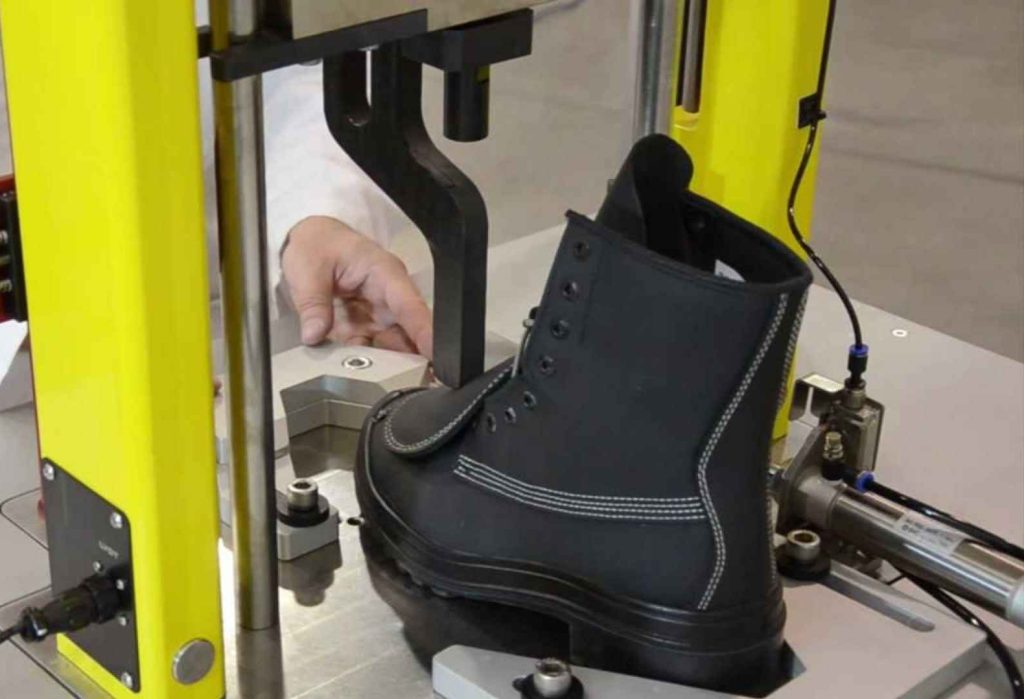
Impact resistance testing evaluates the ability of a protective toe cap
to withstand a specified impact.
This test is particularly important for safety footwear used in environments
where falling tools, equipment or heavy materials may create injury risks.
Testing helps manufacturers determine whether the protective toe cap meets
the impact resistance requirements of the applicable standard.
2. Compression Resistance Testing
Compression resistance testing assesses how well protective toe caps
withstand a specified compressive force.
Safety shoes used in warehouses, construction sites and manufacturing
facilities may be exposed to heavy objects or equipment that can place
pressure on the toes.
This test helps evaluate the protective performance of the toe cap
under defined laboratory conditions.
3. Slip Resistance Testing
Slip resistance is an important performance characteristic of industrial
footwear, particularly in workplaces with smooth, wet or potentially
slippery floors.
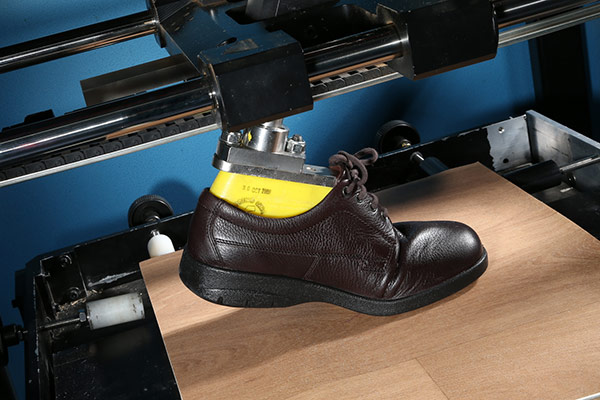
Slip resistance testing evaluates footwear traction on specified surfaces
using recognised test methods. Results can help manufacturers assess
outsole designs and identify potential performance concerns.
However, actual slip resistance can vary depending on flooring materials,
contaminants, environmental conditions and footwear maintenance.
4. Sole and Outsole Performance Testing
The outsole contributes to footwear durability, grip, flexibility and
overall performance.
Depending on the footwear design and applicable standard, sole testing may include:
Abrasion resistance
Flexing resistance
Sole bond strength
Tear resistance
Other relevant durability assessments
These tests help manufacturers evaluate how footwear components perform
under specified conditions and identify potential issues such as
excessive wear or sole separation.
5. Puncture Resistance Testing
Puncture resistance testing evaluates protective components designed to
reduce the risk of sharp objects penetrating the footwear sole.
This characteristic is particularly relevant for workers exposed to nails,
metal fragments, sharp debris and similar hazards.
The testing method depends on the type of protective insert, footwear
construction and applicable standard.
6. Upper Material and Seam Strength Testing
The upper material and stitching contribute to the overall durability
and construction of safety footwear.
Testing may assess characteristics such as:
Tensile strength
Tear resistance
Seam strength
Other relevant material properties
These evaluations help manufacturers identify weaknesses in footwear
materials and assess their suitability for the intended application.
7. Water Resistance Testing
Safety footwear used in wet environments may require additional testing
to evaluate its resistance to water penetration or absorption.
Depending on the product category, relevant evaluations may include:
Water penetration
Water absorption
Water resistance of the complete footwear
Other specified moisture-related properties
The appropriate tests depend on the protection claimed for the product
and the requirements of the relevant standard.
8. Electrical and Special Protection Testing
Some safety footwear is designed for workplaces involving electrical
hazards or other specialised risks.
Depending on the footwear classification, testing may involve electrical
properties, thermal performance or other protective characteristics.
Different electrical footwear categories serve different purposes.
Testing requirements must therefore be selected according to the intended
protection and applicable standards.
Types of Safety Footwear We Test
Different workplaces require footwear with specific protective features. METS Laboratories welcomes enquiries regarding the following safety footwear categories, subject to the laboratory's confirmed testing scope.
1. Industrial Safety Shoes
Industrial safety shoes are commonly used in factories, warehouses, engineering workshops, and manufacturing facilities.
Relevant testing may include:
Impact resistance
Compression resistance
Slip resistance
Sole durability
2. Steel-Toe Safety Shoes
Steel-toe safety shoes contain protective metal toe caps designed to withstand specified impact and compression forces.
Testing evaluates whether the protective components meet the requirements established by the applicable footwear standard.
Testing helps assess the performance of composite toe caps and other footwear components against relevant safety requirements.
4. Safety Boots
Safety boots are used in construction, heavy manufacturing, utilities, and outdoor industrial environments.
Depending on their design and protective features, testing may cover:
Impact resistance
Compression resistance
Puncture resistance
Water-related performance
Outsole durability
5. Slip-Resistant Work Footwear
Slip-resistant work footwear is designed to provide traction under specified conditions.
Laboratory testing evaluates footwear performance on defined surfaces and helps manufacturers assess outsole suitability.
6. Specialised Protective Footwear
Certain footwear products are designed for specific workplace hazards, including electrical, thermal, or chemical exposure.
Testing requirements depend on the protective claims, product classification, and relevant standards.
7. Safety Footwear Testing Standards
Safety footwear testing standards define the performance requirements and methods used to evaluate protective footwear. The applicable standard depends on the product category, intended market, and protective features.
Commonly Referenced Safety Footwear Standards
Standard
Description
IS 15298 Series
Indian standards relating to personal protective equipment and safety footwear.
ISO 20345
Requirements for safety footwear and its protective performance.
ISO 20344
Test methods for footwear designed as personal protective equipment.
ASTM F2412
Test methods for evaluating protective properties of footwear.
ASTM F2413
Performance requirements for protective footwear.
Manufacturers should confirm the applicable edition of each standard before testing.
For products supplied in India, businesses should also review current Bureau of Indian Standards (BIS) requirements, applicable Quality Control Orders, and any mandatory certification obligations.
Important: Laboratory testing and product certification are not the same. A test report provides results for the evaluated samples and parameters. Certification or a declaration of full compliance may require additional assessments under the relevant regulatory framework.
METS Laboratories can help customers discuss suitable testing requirements based on their product specifications and intended market.
Our Safety Footwear Testing Process
A clear testing process helps manufacturers select the appropriate parameters and obtain meaningful results for product evaluation.
Step 1: Understanding Your Testing Requirements
Customers share details about the footwear type, materials, protective features, target market, and required testing standards.
These details help establish the appropriate testing requirements.
Step 2: Selection of Test Parameters
Relevant tests are identified based on the product specifications and applicable standards.
The testing plan may include physical, mechanical, material or protective performance evaluations.
Step 3: Sample Submission
Customers submit representative footwear samples or components according to the laboratory's instructions.
The required sample quantity and preparation depend on the selected testing methods.
Step 4: Laboratory Testing
The submitted samples undergo the agreed evaluations using the applicable testing procedures.
The tests assess specified footwear characteristics under controlled laboratory conditions.
Step 5: Test Report
Following evaluation, a test report documents the tests performed and the results obtained.
Manufacturers can use these findings to review product performance, identify potential improvements, and support relevant quality-control or conformity assessment activities.
Who Needs Safety Footwear Testing Services?
Who Needs Safety Footwear Testing?
Safety footwear testing is valuable for businesses involved in manufacturing, importing, exporting, distributing, and purchasing protective footwear. Testing helps these businesses evaluate product performance, review quality, and assess footwear against applicable specifications and requirements.
1. Safety Footwear Manufacturers
Manufacturers use laboratory testing to evaluate product designs, protective components, and production quality.
2. Footwear Brands
Footwear brands may require testing to assess whether their products meet their specifications and applicable performance requirements.
3. Exporters and Importers
Businesses supplying international markets may need to evaluate footwear against destination-market standards and buyer requirements.
4. Industrial Footwear Suppliers
Suppliers can use test results to review the protective characteristics of footwear intended for industrial customers.
5. Retailers and Private-Label Brands
Retailers and private-label businesses may require independent product evaluations as part of their supplier assessment and quality-control processes.
6. Product Development Teams
Testing helps product development teams compare materials, protective components, and footwear designs before finalising products.
7. Industrial Procurement Teams
Procurement professionals may use relevant test information when assessing protective footwear for workplace applications.
Why Choose METS Laboratories for Safety Footwear Testing?
Choosing a suitable testing laboratory helps businesses understand product performance requirements and plan their testing activities effectively.
METS Laboratories supports manufacturers, footwear brands, exporters, and industrial suppliers seeking guidance on safety footwear testing requirements.
Testing Based on Product Specifications
Every footwear category has different performance requirements.
METS Laboratories can discuss testing parameters based on footwear construction, protective features, materials, and intended use.
Support for Product Quality Control
Laboratory test results help manufacturers evaluate product consistency, investigate potential weaknesses, and improve quality-control decisions.
Focus on Applicable Testing Standards
Safety footwear requirements vary across products and markets.
Testing needs can be reviewed with reference to relevant Indian and international standards, subject to confirmed laboratory capabilities and scope.
Assistance for Manufacturers and Exporters
Manufacturers serving domestic and international markets may face different customer specifications and regulatory requirements.
Understanding these requirements before testing can help businesses plan their product evaluations more effectively.
Clear Sample and Reporting Requirements
Discussing test parameters, sample quantities, and reporting expectations in advance helps manufacturers prepare for the testing process.
For assistance, contact METS Laboratories with your footwear specifications and testing requirements.
Frequently Asked Questions
What is safety footwear testing?
Safety footwear testing evaluates protective shoes and boots against specified performance requirements. Common evaluations include impact resistance, compression resistance, slip resistance, puncture resistance and outsole durability.
Why is safety footwear testing necessary?
Testing helps manufacturers assess the protective performance and quality of safety footwear. It can identify potential material or construction weaknesses and support product development, quality control, and applicable compliance processes.
. What tests are performed on safety shoes?
Common safety shoe tests include impact resistance, compression resistance, slip resistance, puncture resistance, abrasion resistance, flexing resistance, and material-strength testing. The applicable parameters depend on the footwear category and relevant standard.
Which standards apply to safety footwear in India?
The IS 15298 series is commonly referenced for safety footwear in India. Manufacturers should confirm the applicable standard, current BIS requirements, and relevant Quality Control Orders before making compliance claims.
What is the difference between ISO 20345 and ISO 20344?
ISO 20345 establishes performance requirements for safety footwear, while ISO 20344 specifies test methods for evaluating footwear designed as personal protective equipment. Both standards serve different but related purposes.
Can steel-toe and composite-toe safety shoes be tested?
Yes. Steel-toe and composite-toe footwear can be evaluated using appropriate test methods. The required assessments depend on the protective toe cap, footwear construction, and applicable standard.
What is slip resistance testing for safety shoes?
Slip resistance testing evaluates footwear traction on specified surfaces under controlled conditions. The results help manufacturers assess outsole performance, although actual workplace slip risks depend on several additional factors.
How much does safety footwear testing cost?
Safety footwear testing costs depend on the selected parameters, number of samples, applicable standards, and reporting requirements. Contact METS Laboratories with your product details to request a quotation.
How many samples are required for safety footwear testing?
Sample quantities vary depending on the testing methods and parameters selected. The laboratory can confirm the required sample sizes, quantities and submission instructions before testing.
How can I request safety footwear testing services?
You can contact METS Laboratories at +91-8800505077. Share your footwear category, materials, protective features, target market, and required standards to discuss suitable testing options.
Looking for reliable safety footwear testing services for your industrial footwear products?
METS Laboratories welcomes enquiries from safety shoe manufacturers, exporters, footwear brands and industrial suppliers.
Whether you need to evaluate protective toe caps, slip resistance, outsole durability, or other footwear characteristics, our team can discuss the relevant testing requirements based on your product specifications and applicable standards.