

- Mets Admin
- November 7, 2026
- Testing Insights
- 0 Comments
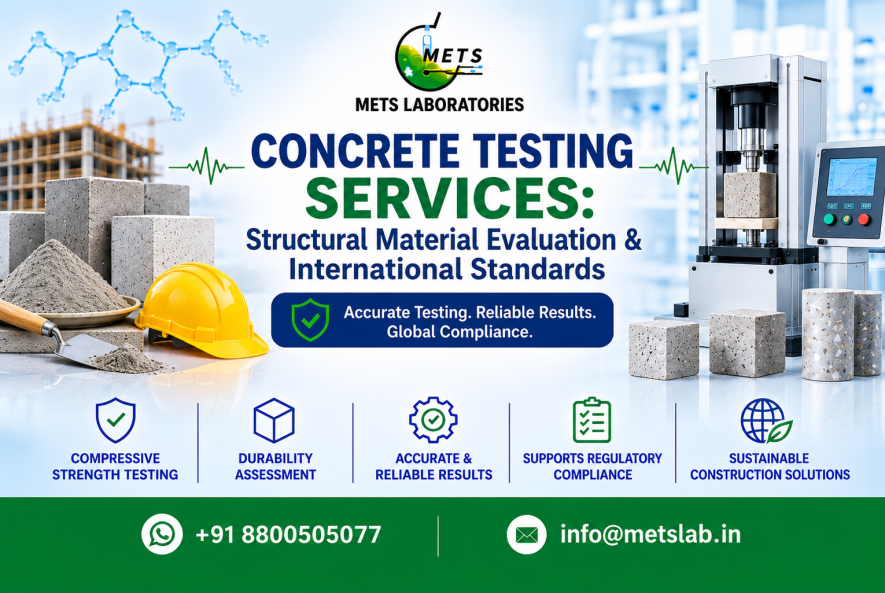
An accredited tile testing laboratory evaluates the mechanical, physical, thermal, and surface durability of ceramic tiles, masonry units, structural glass, aggregates, and protective coatings. Operating under ISO/IEC 17025 compliance, laboratory analysis measures breaking strength, water absorption, deep abrasion, efflorescence, specular gloss, and impact resistance in accordance with ISO 10545, ASTM C67, IS 13630, and ASTM C1048 standards to prevent installation failures.
Architectural surface materials—including ceramic tiles, masonry bricks, Autoclaved Aerated Concrete (AAC) blocks, structural glass, aggregates, and protective paint coatings—define the aesthetic, structural, and environmental endurance of modern commercial and residential infrastructure. However, exposure to mechanical loads, thermal shock, moisture absorption, and atmospheric weathering can cause cracking, debonding, fading, or catastrophic material failure. Partnering with an ISO/IEC 17025 accredited tile testing laboratory ensures that masonry and surface products satisfy international building codes, meet environmental safety mandates, and fulfill global export specifications.
Introduction to Masonry and Surface Evaluation
Third-party testing conducted at a qualified tile testing laboratory involves comprehensive physical, mechanical, optical, and chemical analysis of interior and exterior building envelope materials. Evaluating parameters such as flexural strength, moisture expansion, chemical resistance, and surface adhesion allows engineers, real estate developers, and tile exporters to verify batch consistency before installation.
By subjecting surface samples to standardized environmental stress testing, analytical laboratories generate defensible compliance data that protects project timelines and corporate reputations.

Why Are Surface and Masonry Evaluations Vital for Quality Assurance?
Architectural surfaces must withstand high foot traffic, environmental pollution, temperature fluctuations, and structural loads.
- Preventing Surface Debonding and Cracking: High water absorption in tiles or masonry units leads to freeze-thaw cracking, sub-floor moisture failure, and tile delamination.
- Guaranteeing High-Load Performance: Unverified AAC blocks or structural bricks can collapse under load-bearing walls if compressive tolerances are compromised.
- Ensuring Weathering Resilience: Industrial protective coatings and structural glass must resist UV degradation, acid rain, high-wind pressure, and impact stress.
- Global Export Acceptance: International trade across Europe, the GCC, North America, and Asia requires third-party certification under ISO, ASTM, and EN standards prior to customs clearance.
Comprehensive Masonry & Surface Testing Capabilities
A complete architectural surface evaluation spans raw materials, load-bearing units, structural glazing, and protective finishes:
A. Fine & Coarse Aggregate Characterization
Concrete and mortar durability begins at an accredited aggregate testing laboratory. Physical testing evaluates sieve gradation, Flakiness and Elongation Index, Specific Gravity, Crushing Value (ACV), and Alkali-Silica Reactivity (ASR) in accordance with ASTM C127, ASTM C128, and IS 2386 to prevent alkali-aggregate expansion.
B. Structural Masonry: Bricks & AAC Blocks
Comprehensive brick testing services evaluate burnt clay bricks, concrete blocks, and fly ash bricks for compressive strength, initial rate of absorption, efflorescence (salt staining), and dimensional tolerances under ASTM C67 and IS 3495. For lightweight structural systems, routine AAC block testing measures dry density, moisture content, and compressive yield under IS 2185 (Part 3) to prevent thermal bridge cracking.
C. Glazing & Protective Coatings
Evaluations at a specialized glass testing laboratory assess toughened, laminated, and insulated structural glass units for surface compression, fragmentation patterns, impact resistance, and solar heat gain coefficients (SHGC) under ASTM C1048 and EN 12150. Simultaneously, technical paint testing services evaluate liquid and powder coatings for wet adhesion (cross-hatch method), dry film thickness (DFT), salt spray corrosion resistance, and abrasion resistance under ASTM D3359 and ISO 4624.
International Standards Governing Surface & Masonry Certification
Executing defensible quality assurance requires testing in accordance with standardized international specifications:
Material Scope | Governing Standard | Core Testing Parameters |
Ceramic & Porcelain Tiles | ISO 10545 / IS 13630 | Water absorption, modulus of rupture, breaking strength, deep abrasion, thermal shock. |
Masonry Bricks | ASTM C67 / IS 3495 | Compressive strength, 24-hour cold water absorption, 5-hour boiling water absorption, efflorescence. |
AAC Lightweight Blocks | IS 2185 (Part 3) / EN 771-4 | Compressive strength, block dry density, drying shrinkage, thermal conductivity. |
Structural & Toughened Glass | ASTM C1048 / EN 12150 | Flat glass temper, impact resistance, fragmentation count, flexural strength. |
Coating & Industrial Paints | ASTM D3359 / ISO 4624 | Cross-hatch adhesion, salt spray resistance, pencil hardness, impact flexibility. |


Global Sample Testing via an Accredited Laboratory Network
Material exporters, tile manufacturers, real estate developers, and civil contractors worldwide rely on central laboratory facilities operating in industrial hubs like IMT Manesar for independent quality verification.
Equipped with automated flexural testing rigs, vacuum hydration chambers, spectrophotometers, and salt-fog environmental chambers, accredited labs provide an ideal balance of technical authority and rapid turnaround times. Exporters regularly ship tile samples, block cuts, glass coupons, and coated panels via international courier for certified analysis prior to dispatching commercial shipments.
Conclusion: Elevating Architectural Performance Through Testing
Rigorous surface and masonry testing protects building investments, ensures life safety, and guarantees smooth regulatory clearance across global markets. Independent testing gives architects, engineers, and project leads complete confidence in their material selections.
To discover how structural testing extends to load-bearing concrete and rebar systems, read our guide on concrete testing services and structural standards, examine our master guide on building material testing laboratory standards, or review our breakdown of tile testing and international compliance. Contact METS Laboratories today to schedule certified surface and masonry testing.
Frequently Asked Questions (FAQs)
What is the significance of the water absorption test in ceramic tile testing?
Why is efflorescence testing important for masonry bricks?
What core parameters are evaluated during AAC block testing?
How is impact resistance evaluated for architectural structural glass?
Manufacturers and Exporters Recommend Us
Dedicated professionals committed to providing you with accurate and reliable testing services. Get METS Lab services today from the best lab experts & get the accurate reports from our laboratory.