

- Mets Admin
- October 2, 2026
- Testing Insights
- 0 Comments
Introduction
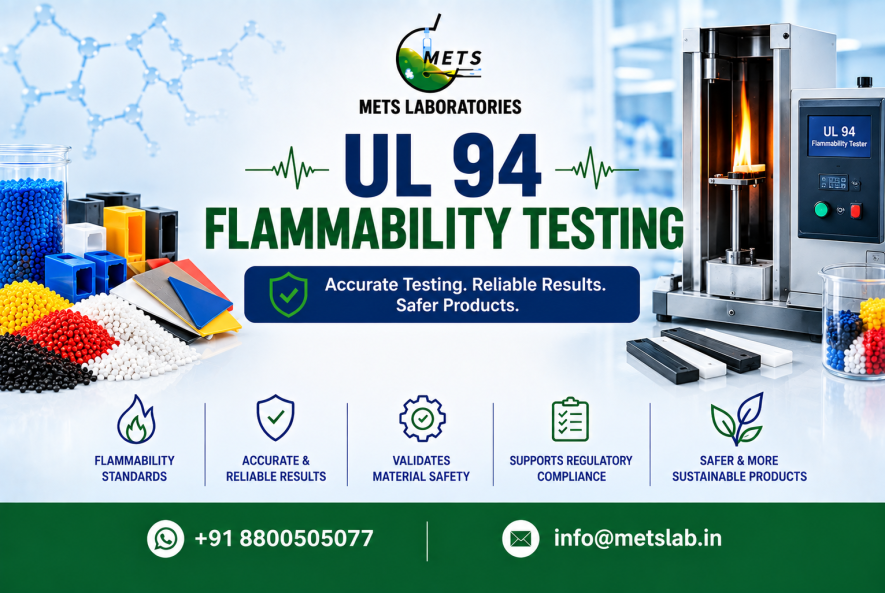
UL 94 flammability testing is one of the most widely recognized methods for evaluating how materials behave when exposed to fire. It determines whether a material will ignite, how quickly flames spread, and whether the fire self-extinguishes. Originally developed by Underwriters Laboratories (UL), this standard is now referenced globally across industries such as electronics, automotive, construction, and consumer goods. Understanding UL 94 testing is essential for manufacturers who want to ensure product safety, meet regulatory requirements, and avoid costly recalls. In this guide, we’ll explain what UL 94 testing involves, why it matters, the common problems projects face, key parameters evaluated, materials tested, risks of using untested materials, relevant compliance standards, and how METS Laboratories supports businesses through reliable flammability testing.
Why Is Testing Important?
UL 94 testing plays a critical role in ensuring that materials used in electrical and electronic products meet strict fire safety requirements. Without proper testing, manufacturers risk placing unsafe products on the market.
Product Safety – Prevents fire hazards in electrical and electronic equipment
Regulatory Compliance – Required by many safety standards and certification bodies
Market Access – Essential for selling products in many global markets
Brand Protection – Reduces risk of recalls, lawsuits, and reputational damage
Material Selection – Helps engineers choose appropriate materials for specific applications
By verifying flammability performance early, companies avoid costly redesigns and build consumer trust.

Key Parameters Evaluated During Testing
UL 94 testing relies on precise measurements to determine a material’s flammability rating. Each parameter provides critical insight into how the material behaves under fire exposure, and together they establish whether a plastic is suitable for its intended application.
Afterflame time measures how long the material continues burning after the flame is removed, while afterglow time tracks the glowing that persists once flaming stops. Dripping behavior reveals whether molten material falls and ignites the cotton indicator below, and flame spread shows how far the flame travels along the specimen. Specimen thickness significantly affects performance, as thinner sections often burn differently than thicker ones. Orientation matters too, since horizontal and vertical testing conditions produce different results. Finally, ignition time indicates how quickly the material catches fire when exposed to a flame. Together, these parameters determine whether a material qualifies for ratings such as HB, V-2, V-1, V-0, 5VB, or 5VA.
Types of Materials Commonly Tested
UL 94 testing applies to a wide range of materials across multiple industries, ensuring that each one meets the required fire safety standards for its specific application.
Thermoplastics and engineering plastics form the largest category, including materials like ABS, polycarbonate, nylon, and PBT. Printed circuit board substrates are tested to prevent ignition within electronic assemblies, while wire and cable insulation must resist flame spread to protect critical infrastructure. Electronic enclosures and housings rely on UL 94 ratings to contain potential internal fires, and automotive interior components are evaluated to meet passenger safety regulations. Construction and building materials are tested where flammability performance is critical, though they often require additional large-scale testing. Adhesives, foams, and composites present unique challenges due to their porous or layered structures. Finally, textiles and films used in electronics, such as insulation barriers and flexible circuits, are tested to confirm they self-extinguish properly.
Risks of Using Untested Materials
Using materials that have not undergone UL 94 flammability testing exposes manufacturers to serious and often irreversible consequences. The most critical risk is fire hazard, which can lead to property damage, injury, or even loss of life. Products that fail to meet regulatory requirements may be blocked from entering key markets, resulting in lost revenue and missed opportunities.
If untested materials reach consumers, the consequences escalate quickly. Product recalls generate substantial financial losses, including logistics, replacement, and legal costs. Companies may also face lawsuits and liability claims if their products cause harm. Certification bodies can reject products outright, forcing costly redesigns and delaying market launch. Over time, these failures damage brand reputation and erode customer trust, making recovery difficult.
Ultimately, skipping UL 94 testing may appear to save time and money upfront, but the long-term risks far outweigh any short-term savings.
Relevant Standards & Compliance Considerations
UL 94 testing does not exist in isolation. It aligns with several international standards and directives that together form a comprehensive framework for fire safety and material compliance.
IEC 60695-11-10 serves as the international equivalent for horizontal and vertical burning tests, allowing results to be recognized across borders. ISO 9772 and ISO 9773 address foams and thin films, which behave differently from solid plastics and require specialized test methods. ASTM D635 measures the horizontal burning rate of plastics, offering another recognized benchmark. RoHS and REACH regulate material composition, restricting hazardous substances that may affect both flammability and environmental safety. IEC 62368-1 sets the safety standard for electronic equipment, tying flammability performance directly to end-product certification.
Compliance with these standards ensures your products meet global safety expectations and simplifies market access across multiple regions.
How METS Laboratories Supports Testing
METS Laboratories provides comprehensive UL 94 flammability testing services designed to help manufacturers achieve compliance efficiently and confidently.
The laboratory is equipped with state-of-the-art testing equipment, ensuring precise and repeatable results for every specimen. An experienced technical team guides clients through the entire process, from sample preparation to final reporting. Accurate and timely reporting helps companies meet tight project deadlines without compromising data integrity. METS also offers support for material selection and reformulation, helping clients identify better formulations when initial results fall short. Guidance on compliance and certification simplifies the path to market approval, while testing for both horizontal and vertical burning covers the full range of UL 94 requirements. Customized testing solutions address the unique needs of diverse industries, from electronics to automotive.
Whether you’re developing new products or validating existing materials, METS Laboratories helps you achieve the ratings you need.


Conclusion
UL 94 flammability testing is critical for ensuring product safety, meeting regulatory requirements, and protecting your brand. Whether you’re in electronics, automotive, construction, or consumer goods, understanding and applying UL 94 standards is essential for successful market entry and long-term customer trust.
Untested or non-compliant materials expose manufacturers to fire hazards, recalls, legal liability, and reputational damage. By investing in proper testing early, companies reduce risk, avoid costly delays, and demonstrate a genuine commitment to safety. The right testing partner makes this process smoother, faster, and more reliable.
Partner with METS Laboratories for accurate, reliable, and timely UL 94 testing. Our experts help you navigate compliance, improve material performance, and bring safer products to market with confidence.
Frequently Asked Questions (FAQs)
What does UL 94 V-0 mean?
How long does UL 94 testing take?
Can a material pass UL 94 at one thickness but fail at another?
Is UL 94 mandatory?
What is the difference between UL 94 HB and V-0?
Manufacturers and Exporters Recommend Us
Dedicated professionals committed to providing you with accurate and reliable testing services. Get METS Lab services today from the best lab experts & get the accurate reports from our laboratory.