

- Mets Admin
- September 29, 2026
- Testing Insights
- 0 Comments
Introduction
What Is Fire Propagation Testing?
Fire propagation testing evaluates how building materials and assemblies respond when exposed to fire conditions. It measures critical behaviors including flame spread across surfaces, heat release rates, and the ability of structural elements to maintain integrity during fire exposure. Two primary standards govern this testing: ASTM E119 assesses fire resistance of building construction assemblies, measuring loadbearing ability, heat transmission, and flame passage containment. BS 476 Parts 6 & 7 specifically address fire propagation and surface spread of flame, providing a fire propagation index and classification based on flame travel rate. These tests generate comparative performance data essential for material selection, regulatory compliance, and fire risk assessment in construction projects.
Why Is Testing Important?
Fire propagation testing is critical because materials that appear flame-retardant in small-scale tests may burn vigorously in actual fire conditions. Untested or substandard materials contribute to rapid fire growth, structural failures, and increased life safety risks. Rigorous testing ensures materials meet regulatory requirements, provides verifiable performance data for risk assessments, and supports safer building design decisions. Beyond compliance, fire propagation testing protects occupants by slowing fire spread, allowing adequate evacuation time and improving emergency response effectiveness. It also safeguards property investments by preventing catastrophic structural damage, reduces liability exposure for architects, builders, and manufacturers, and enables informed material selection that balances safety, performance, and cost throughout a building’s lifecycle.

Common Problems Faced in Testing Projects
Fire propagation testing projects frequently encounter several recurring challenges that compromise building safety and compliance. Use of substandard materials leading to premature failures and building defects remains widespread, particularly when suppliers substitute approved products with cheaper alternatives. Reliance on untested products without verified fire performance data creates significant liability risks and unpredictable fire behavior. Inadequate understanding of fire behavior at different scales and heat flux levels causes designers to misinterpret small-scale test results for real-world applications. Non-compliance with evolving standards results in regulatory rejection, costly redesigns, and project delays. Poor documentation of material specifications and test traceability undermines certification efforts and complicates regulatory audits. Addressing these problems requires rigorous supplier verification, accredited testing partnerships, and comprehensive quality assurance protocols from project inception through completion.
Key Parameters Evaluated During Testing
Fire propagation testing evaluates several critical performance parameters that determine material safety and compliance:
- Fire Propagation Index (BS 476 Part 6)— Measures a material’s contribution to fire growth, expressed through sub-indices for ignition, heat release, and thermal effects.
- Surface Spread of Flame Classification (BS 476 Part 7)— Classifies materials from Class 1 (best) to Class 4 based on lateral flame travel rate across vertical surfaces.
- Fire Resistance Ratings (ASTM E119)— Evaluates loadbearing capacity, heat transmission limits, and integrity under standard fire exposure, typically expressed in time ratings (30, 60, 90, 120 minutes).
- Heat Release Rate— Quantifies the energy released during combustion, directly influencing fire growth potential.
These parameters collectively provide a comprehensive fire performance profile, enabling informed material selection and regulatory compliance verification.
Types of Materials Commonly Tested
Fire propagation testing applies to a diverse range of construction materials, each presenting unique fire behavior characteristics:
- Structural assemblies:Walls, partitions, columns, beams, floor/ceiling systems that must maintain loadbearing capacity during fire exposure.
- Interior finishes:Wall panels, ceiling materials, and decorative linings that influence flame spread across occupied spaces.
- Insulation products:Mineral fiber, gypsum-based, and foam insulation materials used in thermal and acoustic applications.
- Timber and engineered wood:Plywood, chipboard, and structural timber products widely used in residential and commercial construction.
- Concrete and masonry:Blocks, bricks, and aerated concrete offering inherent fire resistance properties.
- Cables and wiring:Fire-resistant and halogen-free cables critical for emergency systems and life safety circuits.
- Textiles and upholstery: Furniture fabrics and foam padding that affect fire growth in furnished spaces.
Risks of Using Untested Materials
Using untested materials in construction projects introduces serious safety, legal, and financial risks that can compromise entire building developments:
- Rapid fire spreaddue to unknown surface flame characteristics, potentially trapping occupants and overwhelming evacuation routes.
- Structural failureduring fire exposure without verified resistance ratings, risking collapse and catastrophic loss.
- Regulatory non-complianceleading to project rejection, costly remediation, or legal liability for responsible parties. Increased smoke and toxic gas production from inappropriate flame retardants, endangering occupant health during evacuation.
- Accelerated deteriorationand high maintenance costs from substandard materials that fail prematurely.
- Insurance and liability exposurefrom unverified performance claims, potentially voiding coverage and exposing stakeholders to litigation.These cumulative risks make certified fire propagation testing essential for responsible material selection.
Relevant Standards & Compliance Considerations
ASTM E119 applies to masonry units and composite structural assemblies including loadbearing and non-loadbearing walls, columns, girders, beams, and floor/roof assemblies. BS 476 Part 6 evaluates fire propagation contribution, while Part 7 classifies surface spread of flame for flat materials used in walls and ceilings. Both standards provide comparative performance data under specific test conditions and should not be extrapolated to actual fire scenarios without engineering evaluation. National building codes frequently reference these standards for regulatory compliance.


How METS Laboratories Supports Testing
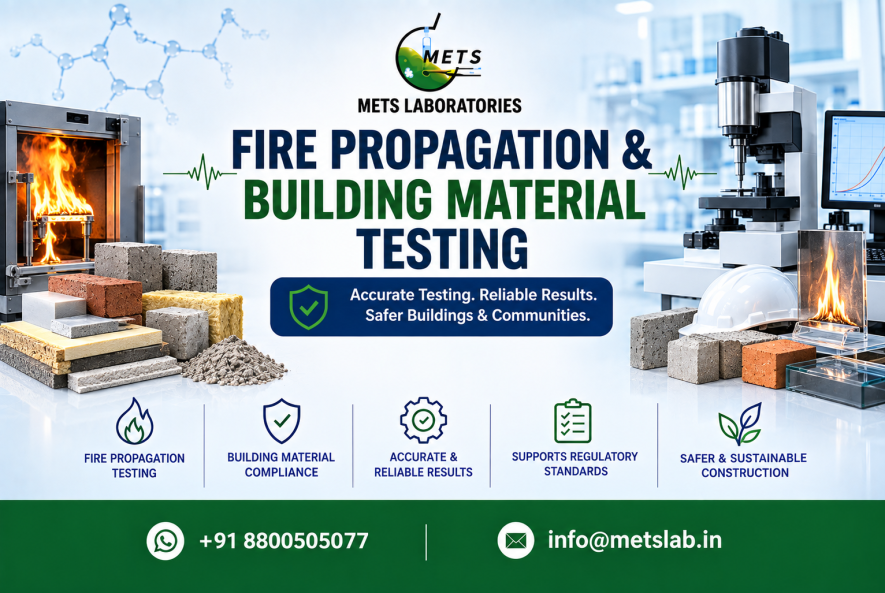
METS Laboratories provides comprehensive fire safety testing services covering fire propagation, thermal exposure, flame spread, and fire resistance for building materials. Their capabilities include testing for flame spread and smoke development, heat release rate analysis, and fire resistance evaluation for structural elements. The laboratory supports wire and cable testing to IEC and EN standards including fire resistance and smoke density measurements. METS Laboratories delivers independently verified test data suitable for regulatory submissions, risk assessments, and product certification. With accredited facilities and experienced technical teams, they ensure accurate, reproducible results aligned with ASTM E119, BS 476, and international standards. Their end-to-end support helps manufacturers, architects, and project teams demonstrate compliance, reduce liability, and deliver safer, code-compliant buildings with confidence.
Conclusion
Fire propagation testing is not merely a regulatory checkbox—it is a fundamental safety requirement for building materials. ASTM E119 and BS 476:1997 provide structured frameworks for evaluating how materials behave under fire conditions, generating data that informs material selection, risk assessment, and code compliance. Untested materials introduce unacceptable risks to life safety and structural integrity, including rapid fire spread, structural collapse, and significant legal liability. Partner with accredited testing laboratories like METS Laboratories to ensure your building products meet verified performance standards. Their comprehensive testing capabilities, independent verification, and regulatory expertise empower manufacturers, architects, and project teams to make confident, compliant decisions. Prioritize certified fire propagation testing today—protect lives, property, and reputations while building safer, more resilient structures for the future.
Frequently Asked Questions (FAQs)
What is the difference between ASTM E119 and BS 476?
What does a Class 1 surface spread of flame rating mean?
Can small-scale fire tests predict real fire performance?
How long does fire propagation testing take?
Manufacturers and Exporters Recommend Us
Dedicated professionals committed to providing you with accurate and reliable testing services. Get METS Lab services today from the best lab experts & get the accurate reports from our laboratory.